Showing posts with label magnolia. Show all posts

Friday, 24 February 2023

Wings and weather around visits to The Beast

On Tuesday I rang the bell to mark an end to five weeks of radio/chemotherapy which, it's hoped, will have frazzled my bowel tumour. Before that, a colonoscopy, various scans (several involving unexpected manual probes...), and two biopsies under general anaesthetic. Borderline Stage One/Two cancer like this would normally be removed in an op, but as mine is in a difficult place, and it would be a whopper involving plastic surgery and stoma, my wonderfully energetic surgeon Maria suggested I try an alternative route first.

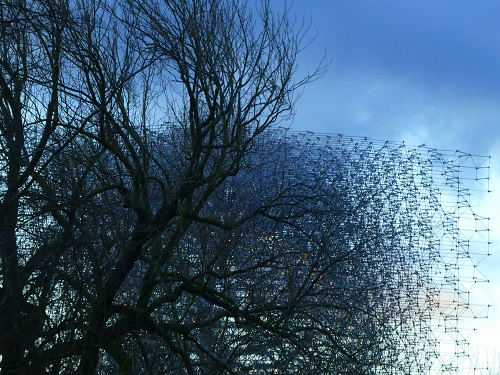
I now wait eight weeks for an MRI scan to see if this has done the trick, and if not...still the op. But at least I know I'll be fine; I'm one of the lucky ones. Below is one of the three identical Beasts, so named by my kind friend Maev, who also took the photo below. Very impressive; it circulates around you like the spaceships dancing to the Blue Danube Waltz in 2001: A Space Odyssey.

I've also been fortunate in having only a ten minute walk to Charing Cross Hospital each weekday morning., with various cafes to stop off at on the way back if I have the time. I asked for early appointments because I wanted to carry on my Monday and Thursday afternoon Zoom classes - on Der Rosenkavalier and Nielsen respectively - which have helped keep me buoyant. I've also kept on reviewing, and witnessed some wonderful chamber and orchestral concerts, plus operatic production of varying degrees of success, mich the most impressive being Richard Jones's wacky new ENO take on Wagner's The Rheingold.

The main payoff of this is Margravine Cemetery, an arboretum with 70 different kind of trees and attendant birds: my big delight here was to witness the return of the overwintering Redwing flock which I missed last year.


I also took it as a good omen that while walking along the home square to the first treatment, I heard, then saw, Goldfinches in the early morning light. They haven't been back to the Niger seed feeder in the back for about a year, but good to know they're still around.

This was Day One, 18 January - a frosty day, one of many, beautifying the graveyard.

On the way back, it was surely serendipity that I bumped into near-neighbours Suchi and Jonathan, whom I hadn't seen since semi-Lockdown walks around the cemetery. We'd been planning to meet up, but now they were insistent that I joined them for supper as many nights of the week as I liked. Didn't want to overdo it, but have enjoyed two evenings of superb southern Indian vegetarian food and excellent company, the second on the eve of my last treatment earlier this week. I'm so grateful to them and all friends far and wide who've been supportive in one way or another. Certainly not been short of invitations to lunch and coffee...
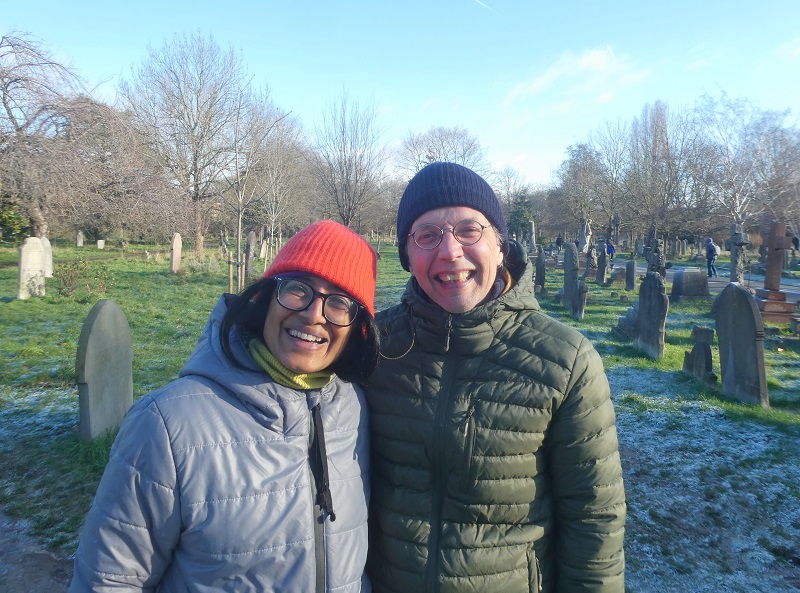
While a hint of spring was already evident that day,

I snapped the first crocus in Margravine territory on 20 January, 

which was when I first saw the Redwings this year.

Three days later, an even more spectacular frost hit. I don't remember one quite like it in London, but probably I'm not usually walking in semi-nature so early in the morning.


Attempts have been made to have plenty of 'art' on the walls of the Radiotherapy Centre, and the theme here was alphabet-themed, but I did have to wonder about the wisdom of this one, next to one of the rooms where I had regular bladder tests (machine below pic) before the meeting with The Beast.

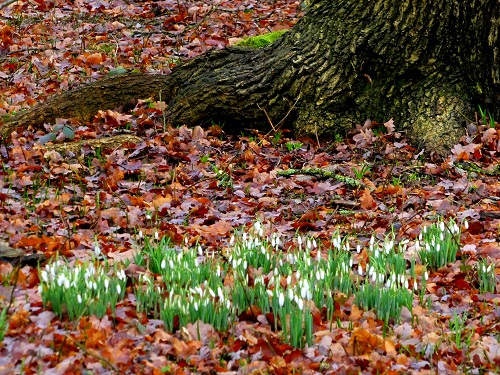
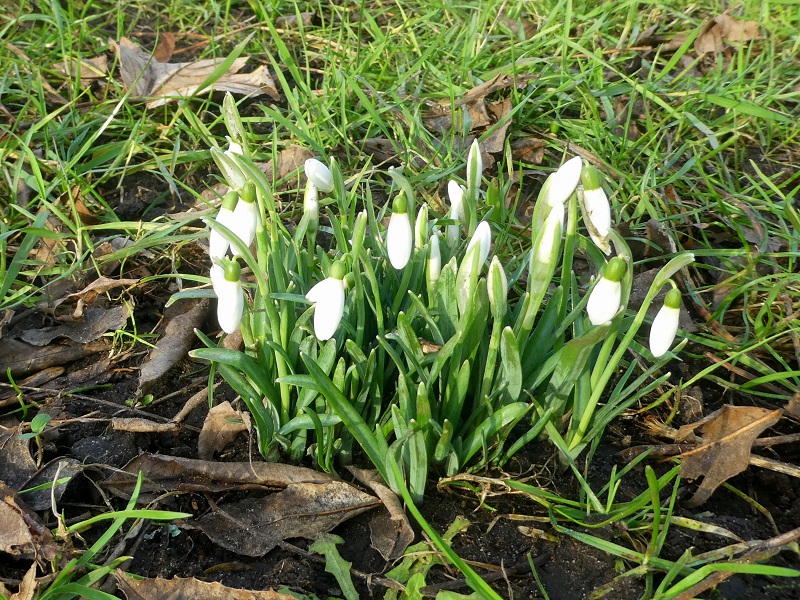
Moving swiftly on, here from 30 January is a clump of snowdrops from 30 January,
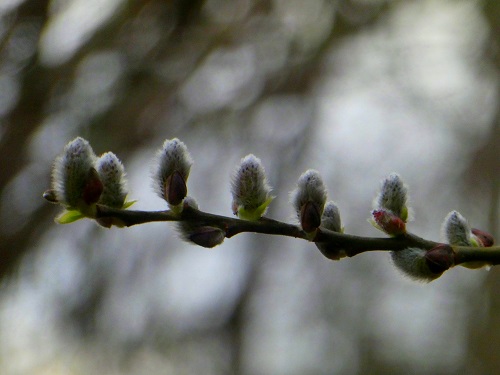
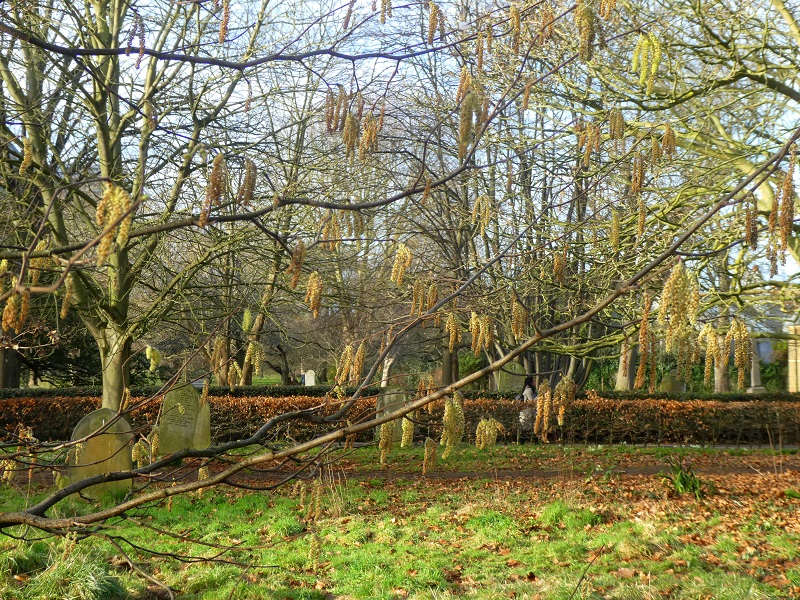
carkins

and crocuses waxing more abundant.

For about a week resurfacing of the cemetery paths meant I had skirt the edge, but that was all the better for catching the female Peregrine perched on the top of the hospital from different angles. Using my Leica Zoom to the full meant these aren't ideally sharp, but you get the gist.


Only a couple of weeks earlier, I'd joined the Peregrine watchers in the graveyard, was summoned to look through their telescope - 'be quick, before she flies off' - and then saw her swoop at immense speed over Margraviniana, circling back again (though without prey). Many of the hospital staff didn't know about their nesting guests who bring such glamour to the massive block, so it was good to be able to tell them and show them the pics. 

More common, but still a delight: on the morning of 6 February, there was a twitterfest going on just a couple of block further down the square, a convocation of Great Tits (here's one),

and the ubiquitous Ring-Necked Parakeets still add such colour, especially when they're eating the blossom on the cemetery's first flowering tree.

Snowdrops were now flourishing nearby,

and the magnolia next to the prunus will be flowering soon (though at the end of last week, there were no signs of that in Kew Gardens' magnolia grove.

Here's the first magnolia flower I saw, on Monday morning.

It's part of the beautifully landscaped garden in front of the Maggie's Centre in the grounds of Charing Cross Hospital. Read the story of the inspirational Maggie Keswick Jencks and her husband Charles here. I really regret not having gone there earlier - I hadn't even noticed it, though I knew of its existence from friend Cally, who found and still finds it a godsend during and after her extensive treatment last year - but I investigated on my penultimate day of treatment, and found it a very Utopia.

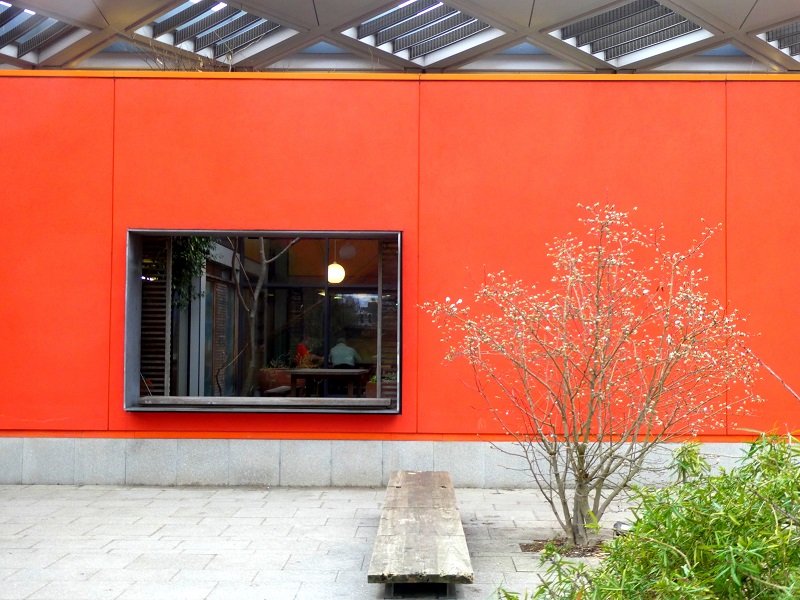
The building, like all Maggie's Centres, is an architectural treasure, designed by Rogers (as in Richard) Stirk Harbour + Partners, and won two RIBA awards in 2009; again, the website entry is excellent on this. This is the entrance as I first saw it

and one side of the building with the magnolia in front of it.
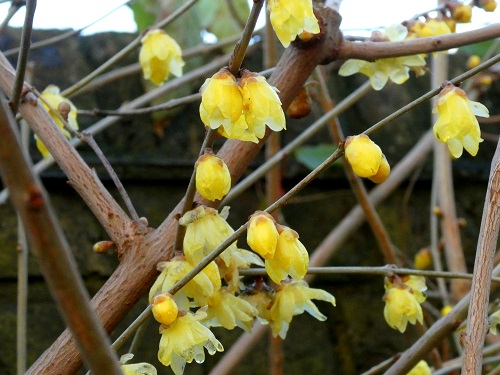
I look forward to the garden, designed by Dan Pearson, flourishing as the spring arrives - this is one of the first bloomers, a hamamelis or witch hazel - 


 and the three lovely people I met who worked there told me I was welcome to visit for as long as I wanted - one person in remission have been coming for nine years. Anyway, I earmarked it to host the four friends who wanted to come and hear me ring the bell on Tuesday. After my quickest ever treatment - 20 minutes; bladder and bowel fullness or not mean getting to be zapped can take up to an hour or more, and if you go later, there are inevitable delays - I had time to kill, so I wandered round the cemetery again and was very happy to hear the Redwing flock in full voice and see them in full flit and forage


before returning to radiotherapy reception at the time I'd told my pals to come along, 10.15. Wonderful Sharon, seen in the second photo below beckoning in the flowery blouse, summoned as many of the staff who could make it to witness my three rings.


My absolute faves weren't on duty at the time, but all the staff have been kind and courteous, without exception, and I was especially pleased to see my oncologist, Dr Basiak, who looked delighted: she's next to my flowers in the third pic, with friend Deborah behind. Then with a Gail's bag full of buns and cakes to Maggie's, where we sat at the central table and had excellent conversations with other visitors. None of them is in the below picture, because reasonably enough when I asked if I could take it, the request was to keep it to my friends - Carolyn, Tania, Henrik and Deborah. But you can see how lovely it is.

And soon, at last, I get to see my one and only in Dublin after a month apart; he was here for five weeks over Xmas and New Year, but the start of my treatment was put back, so he could only be around for my first four days. But how blessed I am in such good friends to provide support. Onwards!

Sunday, 27 February 2022

Green woodpecker in Kew Gardens - again


My green woodpecker shots from Kew last March - among the huge selection of pics I put up recently to mark six months of Friday cycles along the river and picnics in the Gardens - have better backdrops, but this portrait comes with a pleasing history. 

I thought it was time I might see these beautifully marked creatures again on Friday afternoon, so I headed to the huge tulip tree where Cally and I had seen two of them last year.  No sign, but then when I was walking through the woodland zone, I heard the familiar tapping from a dead tree. Waited patiently for 10 minutes; no show. I was just coming to the end of my Rundweg when most unexpectedly this beauty landed right in front of me, and stayed watchfully on the ground just long enough for me to get a snap.

I've been preparing a much more important post in response to the evil time we're now living through - witnessing immense courage as well as mindless destruction - but I thought I'd just drop this here with a few other shots from Kew. Jays, I know, are commoner, but this one also gave me a good glimpse. 

A close up to catch more of that amazing blue and black feather is worthwhile - like the green you find on the side of the now-ubiquitous Egyptian Goose.

It's nearly full magnolia-grove time. One or two flowers on most are now emergent

but only in turning round just before I walked away did I notice that one specimen was in blooming spate - Magnolia campbelii, the misleadingly-named Pink Tulip Tree.

So that deserved a retracing of steps.

Much else is incipient, but early riser Cornus mas, the Cornelian Cherry, is doing well around the lake

while earlier in the week, the plum tree in Fulham Palace's walled garden was heading towards peak blossom.

One last bird shot, more to ask for any ornithologist's advice: is this a Water Pipit I saw at the Wetlands Centre yesterday? UPDATE: my young orni friend Freddie tells me it's a male stonechat, 'still, a very exciting bird! When I was in Spain, I mentioned to the chap I was birding with that, in English, it gets its common name from the male’s call, which supposedly sounds like a stone mason chipping away at a block of stone. He casually replied that its Catalan name roughly translates as “sleeve-shitter,” after the excrement they leave on fence posts…'

Wednesday, 14 April 2021

Weekly cycles to Kew 1: January and February


It quickly became a weekly fixture, a ritual almost: I'd cycle to Chiswick, collect my friend Cally and then we'd pedal along the river to Kew Gardens. She'd pack two flasks of soup and some bread, I'd buy the cakes and eventually the coffees, we'd walk, find a bench - no matter how cold - for lunch, walk some more. pick up the coffees and sit opposite the palm house for afternoon tea, walk some more and cycle back before dark. It became, apart from Zoom classes, a highlight of the week, a much-anticipated day out at the end of each busy week (after the first cycle, we fixed on Fridays). One Friday we missed because I was feeling peaky and hoped it wasn't Covid-19 (it wasn't); on another, we had less time to spare so we resolved to meet at Barnes Pond and explore the Leg o' Mutton nature reserve (a former reservoir), sandwiched - unbeknownst to us until then - between the river and the road to Barnes. As the London Wetlands Centre has been closed for the whole of this year up to now, this was the next best thing.

The beauty, of course, was to see the steady return to life of plants and trees. to catch the Thames and the Gardens in so many changing lights and temperatures. We persist even now, but in order not to swamp you with photos, I've stuck to the first two months. The first jaunt took place on 6 January. This was the scene near the eyot at Chiswick

and this the tree-canopied stretch from Chiswick Bridge to the Gardens

What was flowering or budding then? Near Kew Palace, Syringa x hyacinthiflora, 'Lamartine';

a camellia near the Japanese Temple

and various Hamelidacaeae, the family to which the Witch Hazel belongs - this is Parrolia persica, the Persian ironwood, another finer speciment of which we'll come across in a later week.

Otherwise, only bracket fungus here and there.


Every week we'd keep a watch on the buds of the magnolia grove - the big oak behind always looks splendid, whatever the season -

and cross the main pond, larches now skeletally dominant

then head up to the view across the river to Syon House, where we had several lunches.

The woods were awaiting their snowdrops, and still in places looked autumnal

Fading light (mid-afternoon) around the Pagoda and its dragons,


the Temperate House

and the Palm House.

Closing time was officially 3pm, though I think we were out later, and catching sunset on the river back at the eyot at 4pm.

15 January expedition: first catkins


and some fine lichen on firs.


Coldish lunch by the Thames

and then into the woods to see the first snowdrops.

Ubiquitous ring-necked parakeet at the feeders with various tits.

First signs of tentative blossoms on the fruit trees near the Temperate House, now in full spate.


Then the usual routine - heading to the cafe to carry away coffees to the other side of the pond (the former archive building catches the sun, which has tended to shine on our visits)

and a pleasant wend towards Alpine territory, via the ever-fascinating Hive,

to catch what we could: a few exquisite narcissi

and heavenly-scented paperwhites just inside the open door of the Alpine House,

curiously drosera-like growths on the rockery

and spectacular sedums which a few weeks later would need to be under wraps in sub-zero temperatures

plus a detour beyond the wall to see if anything was growing in the vegetable beds - answer, Swiss chard - 

and to catch a glimpse of promises beyond: Sparrmania africana of the mallow family

and knobbly beginnings of Crambe cordifolia.

Grasses still flourishing which had been cut back on our most recent visit 

and a tentative Chinomanthus praecox 'Lutea', another version of which we'd find giving off fabulous scent a few weeks later.

So to the gate at sunset

and a very rewarding cycle back - the river front at Kew Green glowing;

what is now the Budweiser brewery seen once we'd crossed the bridge;

while at the eyot a surprise awaited, not an entirely unfamiliar one as the Thames does tend to come up over the road and pavement at high tide, and I'm always happy to wait and watch until it recedes a bit - but this was spectacular. Stranded cars parked on the slipway are an all too regular occurrence here.


Canada geese relishing the grass of one of the Chiswick Mall gardens a bit further along

and last sunset perspectives before the homeward stretch.


22 January: a brilliant start by the stone or umbrella pine, Pinus pinea, which Joseph Hooker moved to this spot in 1846 from Princess Augusta's original collection.

The mountain gum further along, Eucalyptus dalrympeana, is already of massive girth though only planted in 1971.

New to me were the trees in the rockery and glade around King William's Temple. Here, the Chilean Colletta spinosissima  

has gathered some fine lichen.

Beyond, in the grove dominated by date plum trees, Ehretia dicksonii is nicely mossy.

Another Persian ironwood, this time in the wooded zone, is rich in red berries 


Clouds were rolling in as we passed the Temperate House

and there was a curious desolation about the dead gunnera leaves by one of the smaller ponds in the woods.

Swan seeking self-shelter

but nearby, signs of new life in the first iris of the year, Iris lazica from the Caucasus,


 and in the tentative yellow flowering of the Cornelian cherry.

More new life on the other side of the lake


and as we headed back to the gate, the clouds began to lift and the late afternoon sun started to strike through.


Final grand illumination of the big trees near Kew Palace, Orangery and Nash Conservatory


Further light on Kew Green

and a bright moon by the time we reached the eyot (you can just see it high and left of centre in the first picture below).


29 January marked a departure from the routine. We both had limited time, so as I'd heard of Egyptian goslings newly hatched on Barnes Pond, I thought we could meet there and go on to explore the Leg o' Mutton reserve (I heard about both of these from my peregrine-watching new friends in Margravine Cemetery). Hadn't bargained for a very high tide and, having decided to ride through the high water, got soaked and decided to shelter by the Putney boathouses until it subsided. Again, a car was sinking fast (transport police eventually towed it away).

The walkway by the Thames had become a channel for swans and geese to glide along

After 30 lively minutes of waiting, the waters retreated enough for me to resume the journey.  I feared I'd be way too late, but as I cycled towards Barnes Pond, I saw Cally pedalling towatds me. She'd had exactly the same problem on the other side of the river, but had been able to go home and change. Anyway, we didn't see the goslings, only their parents on the island in the middle, but the pond was pleasant enough 


and I hadn't realised there was an arts centre (serving much-needed coffees to take away). Another five or so minutes, and we were at the Leg o' Mutton. The river side of the old reservoir on the circular walk is the most attractive, as you have water on both sides (and of course the Thames was still high).


Bird life was unexceptional but abundant and picturesque, especially with reeds as background,

and the late afternoon light lent an eerie charm to the place.

5 February: back to Kew. The first crocuses were coming through

as well as the shoots of the first peonies (cambesedsii in the Alpine Garden).

The witch hazel below the Temple of Aeolus had further blossomed


and Chimonanthus praecox 'grandiflora' was heady in its scent - at this point we could have been deluded into the thought that spring had arrived.


 A ubiquitous robin only to commemorate our lunch on a bench on the rise towards the William Temple - this was our constant companion.

Amazing natural (sap?) striations on a Spanish chestnut tree in the woods

and an abundance, now, of snowdrops.


Again, abrupt change of weather - dark clouds as we reached the river.

Firsr rhododendron in flower, campanulatum 'notturno'

and an oblique take on one of the Chinese red-barked birches (Betula albosinensis) in a grove I always seek out.

Dramatic light by the Hive

and redwings, which I'd been following almost daily in the Margravine Cemetery, here in abundance too.

Back to the gate

and moody river scenes on the cycle home.


Though we'd missed the first brief bout of snow at Kew, we returned on the 12th in the big freeze, and still patches of the latest fall.

The light was bright, and magnolia buds well advanced against the background of the mighty oak suggest it was more clement than it felt,

but you can see the partial freeze on the main lake.


Nothing daunted, we had our lunch on a bench near the river, faces turned to the sun and well wrapped up against the wind which blasted us from behind (the chill factor must have made it at least -3).

Didn't quite feel how the cold had got into our bones as we wandered the woods again

and appreciated the liveliness of various tits at the collection of feeders

but I'll never forget the intense sensation of cold at this seemingly benign point as we headed towards the Temperate House (closed, of course, and we were so looking forward to gleaning what warmth we could buying coffees and running hot water over our hands in the for once welcoming toilets).

The pond by the Palm House was also, of course, semi-frozen


but once again the Aeolus hillock and its foreground witch hazel look surprisingly benign.

Seek snow, though, and ye shall find little patches

even on the Alpine rockery agave.

Only cycling back warmed us up. Highish tide again


 and presumably the parents of the swan family at the eyot.


Looking back once more to Chiswick.

Real progress at last on 26 February (can't remember why we missed a week). The long-awaited magnolia flowers in that wonderful glade were beginning to open, and the crocus carpet beneath was a bonus.


Further beds of crocuses down by the river

which offered a welcome journey back, and an even more magical moon (full, this time) at the eyot.


In the next and final batch, which will complete the year of London nature in lockdown, you'll finally see a riot of blossom. And I'm looking forward to returning to the Wetlands tomorrow, open this week for the first time this year.