Showing posts with label Juliette. Show all posts

Sunday, 17 April 2022

Flann O'Brien: mortality, metaphysics and bicycles


It was our friend Paul Ryan who, when J said we were briefly renting a place in Dalkey by the sea, c.12km south of Dublin city centre, handed over his copy of Flann O’Brien’s The Dalkey Archive as essential reading. Thus began a strange journey which has so far taken me deeper into a singular kind of Wonderland, a dreamscape with nightmarish elements and so many parallels with the successful realisations of Neveux’s play and Martinů's opera Juliette, or The Key to Dreams, much on my waking and sleeping mind when we studied the musical masterpiece last year. And more than dreams, in all cases; for what can be more boring than when someone divulges the randomness of sleep images? 

Beyond the first chapter, where the Vico Road and the bathing spot beneath it figure significantly, neither Dalkey nor any of the other Dublin settings loom very large (though that opening page IS pertinent to our immediate vicinity).

The oddities are initially parcelled out between the opinionated and possibly dangerous/insane de Selby and two potential acolytes, brusque drinker Hackett and confused truth-seeker Mick, who turns out to be the main character. The girlfriend to whom he's none too committed, Mary, is the only sane person in the novel (and I’m assuming from his difficult character that the misogyny is Mick’s, not FO’B’s). The comic coup is saved for the arrival on the scene of the loquacious and fantastical Sergeant Fottrell. An underwater interview with St Augustine is counterbalanced by several more with James Joyce, who’s turned up alive and well working as a barman in another seaside resort, Skerries, this time north of Dublin.

The reading was addictive, and as I neared the end I was hungry for more O’Brien (real name Brian O’Nolan, born 1911, died on April Fools’ Day 1966); the Lord be praised that The Gutter Bookshop in Dalkey had a copy of The Third Policeman, Which is altogether more nightmarish, more hallucinatory and much more preoccupied with landscapes, and what man may or may not have injected of him (or her, but mostly him) self into them. The metaphysical aspect is even more pronounced, the sudden swathes of melancholia and self-doubt similarly lending gravity. Yet there’s a whole chunk I’d already read, the policeman’s disquisition on the interchange of human and velocipedal attributes due to the exchange of molecules.

Why? The answer is quite simple, but fascinating. O’Brien’s first novel, At Swim-Two-Birds, was published in 1939 at Graham Greene’s recommendation, and praised by both Joyce and Beckett. The Third Policeman was rejected on the grounds that ‘we realize the author’s ability but think that he should become less fantastic and in this new novel he is more so’. His third novel, The Poor Mouth, came out in Gaelic and then there were the daily columns of wit and fantasy in The Irish Times as ‘Myles na Gopaleen’ – as a secretarial civil servant O’Nolan could never use his own name in print – but no more novels until The Hard Life in 1962 and The Dalkey Archive in 1964. In true Mylesish fashion he spun various stories about the fate of The Third Policeman but it only came back to the surface after his death. 

I’m sure there have been scholarly articles on the complex relationship between The Third Policeman and The Dalkey Archive; but, that central velocipedal episode excepted, the witty exchange of non-appearing 'classic' (or prolific lunatic?) De Selbey with lower-case maverick de Selbey and the theft of a black box from a big house, the correspondences are more subtle. The later work is the one which will have wider appeal; the earlier is one I want to re-read almost immediately, because so much becomes clear at the very end. I’m glad he didn’t give it the alternative title he proposed to the Americans – I won’t mention it here – because that’s a real spoiler. But the book is bigger than that – just in Juliette, crucial questions of memory and what happens when we lose it, the proximity of dreams and death, the search for something that may not even exist, are vital. I’m hooked.

As for our Dalkey fastness, Dublin suburbia – some of it pretty – continues south until, essentially, Sorrento Point, from which we had a terrific early evening view of the island with its chapel and Martello Tower

and the lighthouse beyond,
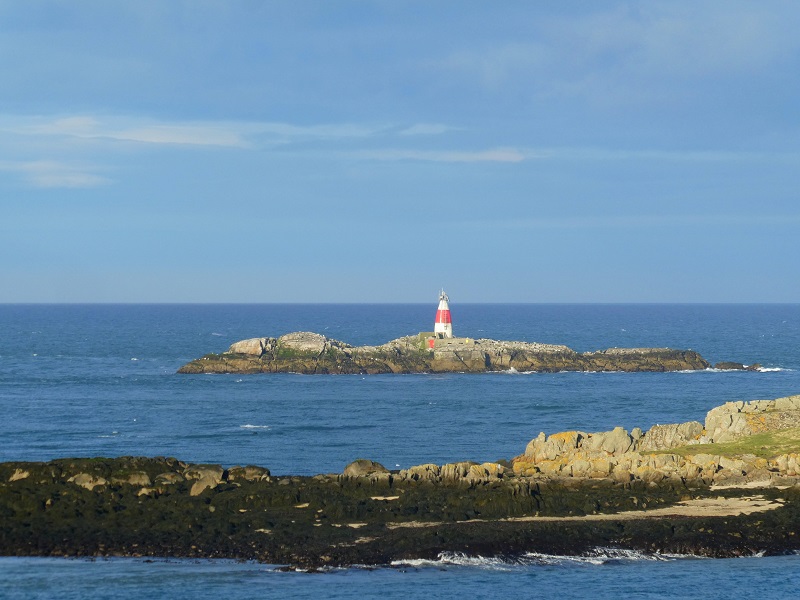
and – on our first full day, which offered a sunny afternoon, views from wonderful Dalkey Hill south along Killiney Bay to the Wicklow Mountains
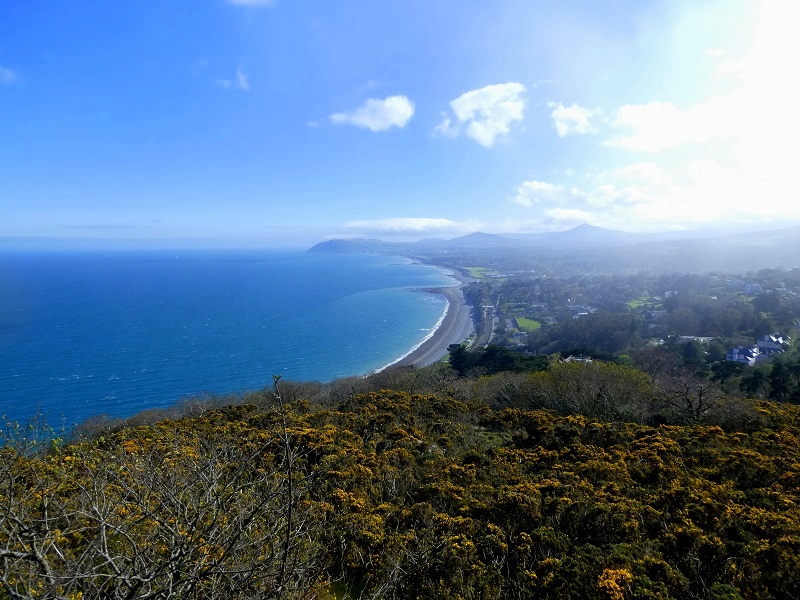
and back to Sorrento Point and the island. 


An easy walk north the next day took us to Sandycove and the Martello Tower where ‘Ulysses’ begins. But I’ll save the already overwhelming Joyceana for another entry.

Sunday, 5 August 2018

English wedding with international guests


Hardly surprising, the international component, since our beloved Juliette and Rory, as respectively aid project manager and one-time Guardian Middle East correspondent, lived together in places like Islamabad, Baghdad, Beirut and Jerusalem (guess which one we haven't visited). The wedding guests last Saturday came from various parts of the UK but also from Ireland, Belgium, France (I got an early flight from Bordeaux), Thailand, Sicily, Morocco, Cyprus, Jordan, Oman, Jerusalem, Istanbul, Kabul, Pakistan, Mali, Mogadishu, Washington, New York and Australia.

It all took place, after their first 17 glorious years together, in Julie's home village of Blewbury, Oxfordshire, where her wonderful mother still lives, and you don't get much more English than that. The above photo captures the spontaneous spirit of the day; mine below is simply there to show you more of the church between the showers.


Despite delicious kinks in the wedding service, the afternoon and evening travelled smoothly along expected lines, including a wedding banquet in a marquee on the home lawn and speeches from Rory, Julie (this, at least, is a recent departure - the lady does not remain silent) and Best Man. The dancing, too, was initiated by the bride and groom; we joined in the Arabic numbers. No-one there, I hope, would have been shocked to see two men dancing together the way we did, but I DID think that the table labels ('Lancelot and Guinevere', 'Tristan and Isolde', 'Layla and Majnun' - that's an Azeri couple) should at least have run to one like 'Hadrian and Antinous'. Well, we same-sex marrieds were in a small minority. Anyway, here's my conventional cake-cutting shot, and they are indeed a beautiful couple.


We wouldn't know our extraordinary friend Sophie, nor visited her mud hotel in Djenne, if we hadn't met Juliette first, nearly 25 years ago. Julie told us her 'goddaughter' (yes, really) needed cheering up in London and we took her to a lousy play about the Holocaust in the basement of our local pub. It was so bad we actually laughed a lot and bonded instantly.


We also wouldn't know Juliette if our passports hadn't been stolen while we spent a night in an airport hotel in Damascus before supposedly flying on to San'a (a city I guess we won't see now). After 10 hours in an airport holding-space, we were finally rescued by Peter Noon, British Consul, who took us to HQ where we saw a polaroid of then recently-released Terry Waite on the wall and got our temporary passports, after which they were duly stamped, and stamped again when we revised our travel plans and took a service taxi to Amman in Jordan and on to Petra before travelling back to Damascus (more visa shenanigans).


Before that, our extended stay in Syria, which I can't regret for any reason - we had intended to spend four days there on the way back - meant that we spent New Year's Eve and Day in Palmyra


and went to the crusader castle of Krac des Chevaliers on quite a different day than the one envisaged in our original plans. And there, in the pouring rain, I saw three figures emerge on another tower and serendipitously snapped them before a word had been exchanged.


These were Juliette (centre), Nick her travelling companion (right) - Rory was some years in the future for her then - and their guide (left). She shouted 'Are you English?' and 'Why are you carrying that music case?' (I was also wearing tweed, as we did on our travels in those days). Meeting them at the main gate, J thought she was 'a bit braying', but we bumped into each other again in Damascus, had supper together and the rest is history (even weirder is the fact that our dear friend Cally had told Nick, who was her landlord at the time, that he would probably meet us at Crac). Along with our Viennese friends Tommi and Martha, whom we met during a six-hour delay to our flight from Cairo to Asmara and with whom we subsequently travelled a bit around Eritrea, Juliette and hence Rory are the real abiding friends we've made from our travels. Very loving and loyal ones, too. Here's to their next decades together.
