I'm paraphrasing Piper/Britten's Quint and Miss Jessel there, managing to squeeze in the first proper mention - which is to say an aspect of the last three-day portion - of our magical Scanditour alongside the second instalment of the 'Britten in Norfolk' strand. I've now left the ghosts behind in the last entry on the subject, which means on to our second evening, at South Creake to see the end results of the Yorke Trust's course work on A Midsummer Night's Dream. That's the church behind the hollyhocks in the central picture; sea holly aka eryngia in situ on the dunes above Holm beach up top; and sunset on the Särna lake, Sweden, after our only day of rain in the third picture.

This Dream was a classy show, no doubt about that, overlooked by the resident angels (several pictured above) and full of perceptive detail from director Jennifer Hamilton, whose calm and insightful character I warmed to so much in our round-table discussion after my Wells talk on the two operas earlier that Saturday. The showman vicar of Saint Mary South Creake had been happy to let the workforce under set and lighting designer Ian Sommerville loose inside the building for a week, and how they transformed it.
Central was a round pond on which the barque eventually supporting Tytania and Bottom 'floated', with an old green sofa above it and holly over the pulpit, from which Puck and sundry fairies often peeped. I guess the shot-silk effect was due to the costume, make up and hair designer, no less than the best Boris Godunov I've ever seen, South African bass Gidon Saks (a friend of Hamilton). Production photos supplied by the Yorke Trust.

Conductor Darren Hargan seemed to be in overdrive from the start - why not let those eerie woodnotes glissando at more leisure? - but had a superb orchestra with which to conjure the right luminous nocturnes. My first note of inquiry to Rodney Slatford when we started our communication was whether he had a first-rate trumpeter at his disposal to do Puck's acrobatics. I well remembered how Cambridge students in Rosslyn Chapel a couple of years ago were nearly scuppered by a disastrous one. Fear not, replied he, and sure enough they'd had to buy in the best, RNCM graduate Mark Harrison, destined for a great career. The strings were deliciously sensuous; the woodwind gurgled and melted in 'Bottom's dream'.

Singers were more variable, but the Tytania we saw - out of several double-castings - would be welcome on any stage anywhere: Daire Helpin also took part in J's Europe Day concert but made more of an impact on me here. Her Oberon, Michael Taylor, seemed good enough to me though others were more critical. The lovers benefitted especially from Hamilton's lively staging, though the Lysander simply bellowed; the two Belgian girls, Helene Bracke and Annalies van Hijfte, did exceptionally well. Bottom, as so often, overegged the pudding but we laughed a lot at the antics of David Lynn's Flute-as-Thisbe. He'd also sung well in the first afternoon concert over at the chapel - my first live hearing of Britten's Six Songs from the Chinese with guitarist Dario van Gammaran.
One of the boys drafted in for the fairies had an exceptionally brilliant voice, fit competitor for Choirboy of the Year, I'd have thought. I didn't quite get the angle of Dan Robinson's laid-back, dreadlocked Puck. One day we really shall see a breaking-voiced boy acrobat in the role.

Otherwise, full marks all round. Involvement wise, I felt less close to the Glyndebourne Billy Budd at the Proms last night, but that may have had a lot to do with my distant coign of vantage in the Albert Hall. And the Creake pleasure wasn't quite over with the Dream since we returned the following morning to South Creake Chapel to hear world-class cellist Jamie Walton, a keen supporter of the Yorke Trust, in the Britten Cello Sonata with outstanding pianist Adam Johnson. The slow movement's blackness raised the hairs on the back of my neck: what a work. As they had two pianos for the rehearsals, they used them for Britten's unusual rep in that combination. Only in this centenary year, following on from the Tong/Hasegawa duo at Cheltenham, could I possibly have heard the Introduction and Rondo alla Burlesca twice in little over a month.
So we took our leave of matters musical - but not of the coast. I was still angling for the dip I'd failed to have on the previous day when the tide had retreated too far. So off we went to Holm beach, parking the car at the nearby bird sanctuary and setting off across the same saltmarsh we'd last negotiated in the sunset last September.

The eryngia was just flowering its purple-blue

and taller bracts - of aloe? I'm not sure - stood out against the cloud-studded sky.
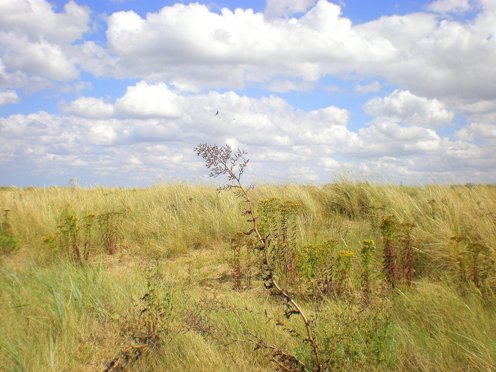
And so across the sands near Brancaster


to swim in the warm shallows of the North Sea. This is as far as I'm going for documentation that I did it

though there is better ocular proof of daily swims in the lake at Särna, 20 kilometres from the border between Norway and Sweden.

This area once belonged, in fact, to Norway; it was gained without a struggle for Queen Christina by chaplain Daniel Buscovius in 1644. Hardly surprising that no-one contested the claim: at that time there were 20 farms on 4500 square kilometres with a population of around 100. I found all this out at the lovely wooden church a hundred metres from our log cabin which was superseded by a bigger one in 1881. More on that in a Dalarna churches survey; in the meantime, following Susannah's blog-entry which I linked to last time, here's our, erm, cosy cabin, No. 8.

And the Finches' campovan outside which we consumed our daily breakfasts.

First night was, as I've written above, one of wild skies with the rains only just abating (and still falling a little on the surface of the lake) - hence the most spectacular of sunsets -


while the second followed a radiant day in Fulufjället National Park, due a chronicle eventually. Fellow campers silhouetted walking their dog

and, to the north-east, a moon rising above other farm buildings.

On the second morning I rose to impenetrable mist which in 20 minutes was burning off

so that by 8.30 it was warm enough outside to swim. And yes, pace Susannah's blog, J gladly joined me and Susannah rushed in for a 10 second immersion, followed by half a minute - long enough for Jamie, firmly shore-bound, to photograph her 'swimming'. 13 degrees? No problem, which I can't say for 8, the temperature we experienced one alarming morning further south-east in Lake Siljan. But more of that, too, anon.
3/9 The full Stavanger International Chamber Music Festival chronicle is now up on The Arts Desk. I'll have more to say here about Norwegian ecclesiastica.


 Posts
Posts