Prepare for fleshcreep if you've joined, or want to join, the spring term of my Opera in Depth Zoom course. Inspired afresh by the remarkable achievement of Isabella Bywater's remarkable production of Britten's The Turn of the Screw for English National Opera, with a groundbreaking central performance by Ailish Tynan (pictured above as the Governess with Jerry Louth's Miles by Bill Knight), I thought it was time to turn back to this masterpiece, the composer's most rigorous, which I first experienced as a Hesse student scene-changer at the Aldeburgh Festival in 1983.
As I've never covered Owen Wingrave in class, and found it more fascinating than I'd previously thought in Neil Bartlett's Aldeburgh production, superbly cast from experienced and young singers and conducted by the great Mark Wigglesworth, I thought I'd do a Britten/Henry James double. That rather reduced the time I was intending to spend on Handel's Giulio Cesare, due a top line-up with Harry Bicket and the English Concert later in the year. But Handel can always be excerpted (heresy! But I do come to love his operas ever more).
Places still available - you can join from anywhere in the world and get the videos if you can't make the classes. The course starts tomorrow (Monday) at 2.30pm UK time. Full details here; click to enlarge.
Aldeburgh's Brudenell Hotel is an odd mixture. Some of its rooms are right next to the noisiest lift imaginable, like drilling through the wall (never again after the first experience), another is beloved of a seagull so you mustn't open the window too wide (I did, briefly, last year, and in it came and shat everywhere), and the lounge only offers the Torongraph, Times and Daily Heil (not even an Observer on Sundays). On the plus side, there's comfort, the restaurant is good and has the best views of the beach, sea and sky, and it's only a few yards to go and dip in the sea. Being there at so many times of day affords the kind of contrasts Britten captures in the interludes of Peter Grimes, so here's my visual representations from the weekend, not entirely corresponding, but, I think, equally various.
Dark clouds on the horizon at Saturday lunchtime:
Sunbathers catching the last of the sun early that evening, with the hotel's shadow creeping up on them:
10.30pm, back from megaconcert having squeezed a crab sandwich out of the staff despite not even a snack being on offer at 9.45:
And glitter of waves on Sunday morning:
This weekend wasn't such a good one for me on the walking and bathing front, but I did have a bit of time to mosey around the marshes at the back of Snape Maltings,
catching Iken Church tower in the sun (you'll need to click to enlarge to see that).
and registering a plethora of birds near here
with the now-indispensible Merlin app courtesy of Cornell University: reed bunting (plentiful, loud and often visible), house martin, barn swallow, treecreeper, oystercatcher, spotted flycatcher (a rarity!), chiffchaff, wren, blackbird, skylark, goldfinch, woodpigeon.
As well as being a weekend of stupendous music-making (I have yet to write up the review but shall post a link when I've done so), it was also a chance to see an old friend I haven't spent any quality time with for years. Even managed to squeeze in light Sunday lunch chez Bella near Orford, with her mother Vanessa (left) and friends Lysander (foreground right) and his partner Daniel. They came to the LPO concert the previous evening and the astounding recital by the beautiful, charismatic baritone AndrèSchuen and great pianist Julius Drake (unsurpassable Schumann, stunning new Larcher cycle on epigrammatic poems by W. G. Sebald).
Can't leave out the adorable Quinc(e?)y.
Bella has had done up two outbuildings to the maximum of character and comfort - I can't recommend the one being air-B&B-d too highly. The main cottage is in good nick these days too.
So all told it was a very happy weekend: my love-hate relationship with Aldeburgh inclined more to the former this time. Whereas with Dublin and Ireland it's all love so far: I have some catching up to do on the wonders of the previous week, though the musical side is recounted here (Blackwater Valley Opera Festival) and here (Dublin International Chamber Music Festival), Taking two much-need event-free days now.
The others seem more surprised at me than I myself, on Saturday six plus weeks after my big op: in heat that peaked at 32 degrees, we covered the churches of Norwich central north on Saturday, and collected 24 including the Cathedral. Which I know well, but never more intimately than on Friday afternoon, when our lovely hosts Kate and Fairless (pictured above in the cloisters) accompanied us to a 'festal' Evensong. Before I go further, because you might just flick down the pictures, let me tell you here that for a change, I'm raising money for Maggie's this time, because of the support they've given me over the past year. 2022, Loddon to Surlingham, was for the Norfolk Churches Trust as usual, but I'm taking a little holiday from asking friends for the same old cause, excellent though it is. You can give as little or as much as you like to Maggie's - UPDATE: Gift Aid gets them far more if you go to 'donate' on the main website here - via bank transfer using these details
Maggie's Centres
Bank: Bank of Scotland
Branch: 38 St Andrews Square, Edinburgh, EH2 2YR
Account: 06049705
Sort Code: 80-11-00
And add XLDN so that it goes to the West London centre I love so much. Drop me an email so I can keep track of totalling.
Norwich Cathedral, of course, I know well. The glorious edifice's added spire is visible from the garden of K and F, but more of the building is clearer a little further along the road. Friday was hazy; we were luckier with the blue skies on the day of the walk.
Then - and this is one of the two most atmospheric approaches, the other being through the Water Gate at Pull's Ferry a bit further along the Wensum, a much better way of getting in to town from the station than the rather dreary road that leads directly upwards and bends round - we crossed the medieval Bishop Bridge into Bishopsgate . We passed the Great Hospital, where the religious part of St Helen's would be our starting-point next morning, and round the East End, past the grave of Edith Cavell,
and into the cloisters, where I wanted to be reacquainted with the handsomest of Green Men.
The cloisters were begun in 1297 with the wing featured up top and including this particular Green Man, and finished c. 1430 with the north wing. pictured below; the Black Death interrupted the stonemasons' work.
The special beauty of the interior proper is its unbroken beauty from east to west, even if that has two different periods matched throughout: the massive Norman outline, inaugurated by Herbert de Losinga in 1096, at the lower levels, with several patterned pillars the equal of those in the nave of Durham Cathedral, while the vaults of nave and chancel date from the late 15th and early 16th centuries, after the wooden roof burned. These are very much its glory, though the bosses here need a good zoom lens or binoculars to see in detail.
We made straight for the back row of choir stalls shortly before 5.30 evensong began, and the sets are among the finest in England (as I hadn't previously realised). Obviously I didn't snap during the service, but went back to capture something of the carved bench ends on both south and north sides. One day I'll have time to tip up the seats to see all the misericords, but one of the most inventive was showing, so that will have to do for now.
The choir had just begun the new year, and there were quite a few unsurpliced novices among the trebles, looking a bit dazed, as well they might be in their first week. The music was ambitious: Sumsion's Responses; James MacMillan's Short Service, simple with a bit of signature token Celtic twiddle thrown in for the trebles at 'He hath filled the hungry with good things', and an extended 'Amen' in the second Gloria; Britten's vivid treatment of the Hymn to the Virgin, composed while he was a pupil at not-so-far-away Gresham's School. This being The Day of the BVM (as well, incidentally, as the anniversary of the Queen's death and de facto Charles's accession, plus our friend Fr Andrew Hammond's 60th birthday - we celebrated it last night at the Garrick Club), we all processed to the Bauchon Chapel for a blessing and some fine Tudor polyphony in the form of Parsons' Ave Maria.
Afterwards we were allowed to linger (sometimes the officials usher you out straight away). A cat seemed perfectly at home in the chancel
and this was a good way to see the Norman-Tudor achievement throughout. As Peter Sager writes in his magnificent East Anglia, 'nowhere else in England has the Norman outline been so perfectly maintained, and rarely is there such an harmonious link with the Gothic. On the Norman crossing tower
is a Gothic spire;
above the Norman nave is a Gothic vault - different architectural styles inspired by the same spirit.
'The Late Gothic fans of the vault spread out like palm leaves from the Norman columns. Here too timber was replaced by stone [the timber spire was destroyed by a hurrican in 1362]; the vaults of the nave in the middle of the 15th century, the choir c.1480
the transepts afer 1509'. The building was virtually empty, but awaiting the arrival of Norwich School pupils and their parents for a prizegiving ceremony.
There was pleasant evening time to kill before we went to celebrate Fairless's 70th birthday at Bishop's Dining Room - simple fare, but every aspect of the experience good - so we walked down to the Adam and Eve, 'probably Norwich's oldest pub', which would be perfect and rural if it weren't for the city car park opposite.
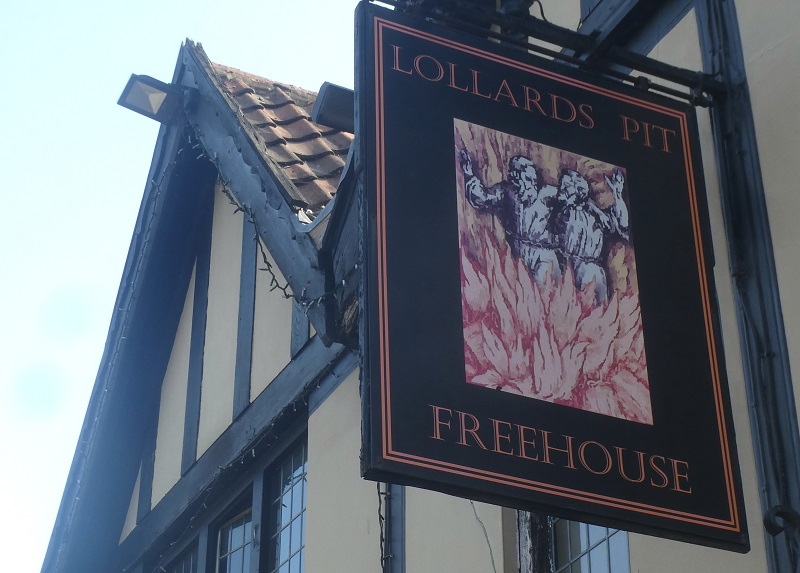
And it has to be better in every way than the disastrously named Lollards [sic] Pit over Bishop Bridge (1342, nearly demolished in the 1920s, can you believe), which seems to glory in the burning of heretics. In the 16th and 17th centuries the unfortunates were incinerated in a chalk pit on this side of the Wensum.
We figuratively roasted on our walk the next day, but amen to the cool of each and every church which welcomed us. I'll write it all up when I have more time.
"S'ist mein Leiblied' - 'it's my favourite song' - declares Baron Ochs in Der Rosenkavalier of his signature waltz-tune. By the same token, Rosenkavalier is probably my Leiboper - certainly the one I know best, the intricacies of which, in both Hofmannsthal's libretto and Strauss's music, seem inexhaustible. This coming term's Zoom course, starting tomorrow (9 January) will be my third visit in the opera classes, but since the last time there have been new recordings and new productions on video (including Bruno Ravella's for Garsington, the exquisite and Grace-Kelly-stylish Miah Persson's Marschallin and Hanna Hipp's fine Octavian pictured in it above by Johan Persson; Irish National Opera takes on this staging in March with a fine cast led by Celine Byrne, the fabulous Paula Murrihy and Claudia Boyle). There's always more to discover. And as always when I repeat a classic, I don't look back on old notes.
Last term ended rather more positively than I was expecting. I'd been reluctant to revisit Britten's The Rape of Lucretia, so whittled it down to three rather than five classes (Rosenkavalier will have seven, Korngold's Die tote Stadt also three). Ronald Duncan's often excruciating libretto troubled me even more in Oliver Mears' production when I saw it at Aldeburgh.
I'd always wondered about André Obey's play Le viol de Lucrèce - about which all the contributors to the Rape of Lucretia symposium book I picked up are so cagey that an addendum slip had to be printed giving it proper credit. Then I found that Thornton Wilder had translated it in 1933. Surely Eric Crozier, at least, knew this? It's so much better, in every respect, than the drama Duncan fashioned. For a start there's no Christian overlay. There ARE two narrators, a man who follows Tarquin's progress, a woman who reflects Lucrèce, but they don't appear until Obey's second act (the first has two soldiers relay, chorus-like, what's going on in Collatine's tent). The aftermath is much more acceptable today: Lucrèce as powerful tragic heroine, knowing that her divulging of the rape will trigger Collatine's vengeance and a Roman uprising, not some self-disgusted victim.
At the beginning of the last and third class I continued the comparison between opera and play. But joining us were Jean Rigby, the most moving Lucretia I've ever seen on stage, and her husband Jamie Hayes, who'd directed the work for British Youth Opera. Jean had already instigated a kind of cast reunion of the original Glyndebourne Albert Herring - since I don't seem to have written about it here, I must boast about the other visitors: John Graham Hall, Alan Opie, Felicity Palmer, Alexander Oliver and Felicity Lott (who sang Lady Billows in a revival) - and I knew what a fun and generous person she is.
Everything Jean had to say about the circumstances around that remarkable Graham Vick Lucretia at ENO back in 1987 informed what we were about to watch - namely Act Two from the moment Tarquinius awakens Lucretia to the end of the opera. And the film itself was testament to how, when every singer has worked on phrasing and meaning so intensively - not just Jean, but everyone else in an extraordinary cast - reservations about the infelicties of the text vanish in the face of such consummate music-making, such singing-acting. The whole film is available on YouTube but in a fuzzy picture, so I recommend you get the DVD.
We were blessed with our guests this last term. I'm so happy that John Savournin, our most innovative living Savoyard as singer and director, was able to join us for the two classes on The Yeomen of the Guard (I still didn't manage to persuade two students that G&S is worthy of keeping company with the best). John's brilliant re-imagining of Patience for nine singers at Wilton's Music Hall was the big surprise in my operatic 'Best of 2022' for The Arts Desk. When we spoke he was preparing for the last performance of Golijov's Ainadamar at Scottish Opera, a production I long to see; hence, I think, the moustache.
And right at the end of the five classes on Verdi's Aida, I suddenly remembered that Tamara Wilson, one of the most generous of guests way back when I was still giving live classes at the Frontline Club and she was performing Leonora in The Force of Destiny at ENO, had sung the title role all round the world (but not, sadly, in the UK, and after a bad experience in Verona which I think may have had to do with a refusal to sing it in blackface, as the vile Netrebko recently did, she has retired the role from her rep).
When we met online, Tammy was preparing to revisit the role of Turandot, this time for Barrie Kosky in Amsterdam (I was so hoping we could go and stay with our friends there, and see it, before Christmas, but too many hospital appointments got in the way). I remembered how revelatory she had been on the previous visit about how she marks up the score, and includes intentions, and so requested she did the same here. The 'intention' behind 'straniero, ascolta!', for instance, reads 'feel pleasure that I'm going to kill him'.
So yes, what fun we had. And I'm hoping we'll be able to welcome at least one Marschallin, Octavian, Sophie and Ochs to the Rosenkavalier sessions; watch this space. Still not too late to join if you can - from anywhere in the world, time depending. And if you can't make the class, you get the video. Full details below; click to enlarge.
There was Pears, of course - it was a surprise to me to find how fine an actor he was, as well as a singer, in the 1969 film of Peter Grimes conducted by Britten. But in my opera-going experience no-one can possibly be greater than the late Philip Langridge.
I saw him three times, twice in Tim Albery's very fine English National Opera production, and once in a Barbican concert performance conducted by Richard Hickox, where his pacing around at the foot of the stage before the final scene seemed horribly real. In fact his madness came across as not acted at all, which is why when we watched the scene in Grimes's hut in the fourth of my Opera in Depth Zoom classes on the work a few weeks ago, the students expressed concern for the (surely too young) boy he roughs up.
That of course wasn't a problem in Deborah Warner's production, now running at the Royal Opera, where the character of Grimes is softened to the point of sentimentality and he never manhandles his apprentice; the boy can touch him tenderly but it doesn't work (as far as I remember) the other way around. Cruz Fitz and Allan Clayton pictured below by Yasuko Kageyama.
Surely we're all in agreement that Allan Clayton manages every vocal aspect of the role superbly, but for me this fisherman wasn't a credible character. Note to director: you don't have to love the protagonist to feel pity for him.
The libretto does present difficulties, of course - how to tie up the visionary with the rough, abusive outsider? But not to have him strike Ellen in Act 2 Scene One - he knocks her to the ground in a scuffle as he makes off with the boy - is a step too far. I didn't like the keening over the corpse to the 'relief' of the Moonlight Interlude, either. This isn't the first time there's been a shying-away from the uncomfortable: I was astonished to discover that Jon Vickers changed two of the lines in the hut scene to avoid the physical assault on the boy (thus avoiding the con violenza written into the score)
Anyone coming to Grimes for the first time, or even after a long time of not seeing it in action, is bound to think 'this is the greatest' - that's partly because of the nature of Britten's inspiration, which as Mark Wigglesworth, recording a Zoom chat with me for one of the other classes after we'd listened to his Glyndebourne/LPO performance of the Passacaglia - the most electrifying I know - is 'bulletproof'.
Our first guest was the ever-generous and articulate Sue Bullock, who spoke with shocking frankness about playing Ellen Orford in the first run of the Albery ENO production - she alternated with Josephine Bartstow - to Langridge's Grimes. They both felt that the tension of the scene outside the church had built to such a pitch that to fake the slap diffused it. So SB gave PL the licence to hit her (that's me being astonished as she tells me below). And she remembers standing in the wings crying while Langridge himself wept real tears in the 'mad scene', then going home - still in tears - fretting that she hadn't done enough to save him.
Talk about the role taking over (but I also remember Simon Keenlyside telling me how he paced the streets of London in the small hours after singing the finest Prince Andrey I think I'll witness in Prokofiev's War and Peace).
I was saving the equal generosity of Richard Jones, another regular visitor, for Samson et Dalila next term, which he convinced me was worth spending four or five Monday afternoons on (as did Nicky Spence, but alas, he's had to withdraw because of the steady convalescence needed to restore his two broken legs to full health). But we were so stunned by RJ's Milan production, which I ended up using the most when it came to playing full scenes on DVD, that I asked if he'd be willing to talk about it.
Richard always declares that these things were too long ago to remember much, but then he goes and delivers fascinating and unexpected takes with great vividness. He was especially good (and funny) on the disjunct between music and text: 'part of my affection for it is this very extraordinary, eerie and incredibly memorable music combined with this Listen-With-Mother, Ealing vowel text, and I like that disparity very much'.
Responding to Mark's comment about Grimes being 'bulletproof', he declared that 'there are certain pieces where you can have your day in the sun as a director - one is Jenůfa, another is Grimes'.
So far he's only directed it once, but would be up for another shot (which, given his capacity for re-imagining, would probably be very different). I just don't think there could a more intense and upsetting experience than what he and his choreography Sarah Fahie get out of the Teatro alla Scala forces and the principals: all the more remarkable given the chorus's threat to walk out at one stage (or perhaps because of it: needless to say Jones enjoyed facing an angry mob).
The two leading performances are devastating. John Graham Hall may not have the tonal beauty of a Pears or a Clayton, but like Langridge's, his is a Grimes on the edge from the start.
It's the only time I've seen the Apprentice played by a teenager (Francesco Malvuccio, who spoke no English, but as Richard says, that may have been an advantage). So there's a boy who can stand up for himself a bit, but is still physically dominated by the abuser.
The biggest rethink is the role of Ellen Orford. Jones believes there are no good people at all in Grimes, and she's horribly deluded, an ex-cultist who never notices what's really going on. That doesn't stop us feeling pity for her as she falls apart.
Susan Gritton sings and acts better than any other Ellen I've seen. Wigglesworth conducted her too, and advised me to get her along. By which time, alas, it was too late in the course and she was taken up with performances on the weekend we might have spoken. But we had a splendid email exchange.
I was also hoping for another appearance from the supremely eloquent Robin Ticciati, who conducts the La Scala production magnificently, and who was looking forward to telling some memorable stories. But he was taken into hospital to be operated on for a kidney stone, so that was not to be ditto Felicity Palmer, who gives an interesting Auntie, but declared it wasn't a role she felt close to. No matter; we watched so much of the film, and I urge you to do so if you think a Grimes can't be more intense than the Royal Opera one. For me this is the greatest Grimes, while Langridge is the greatest Grimes. Get hold of the Arthaus Musik DVD of Albery's ENO production too, if you can.
These, for me, are benchmarks, and yet there was so much new and perceptive in the latest comer. I just didn't come away from it wrung out. To me it seemed that Clayton was a truly great singer who acted well, not a born singer-actor. But then RJ, who hadn't seen the production at the time of our conversation, reminded me of his astonishing delivery in the Royal Opera 4/4 staging of H K Gruber's Frankenstein!!!, and yes, that did make me think it was the director's job to bring out the best in him. I think the RO should bring back the film complete now that a star is truly born, but this minute is good enough to show you the audacity, weirdness and agility.
All observations, questions and challenges are welcome: resistant to tweeting and Facebook (though long converted to LinkedIn), I still like to exchange ideas. You don't have to be signed up, and you can be anonymous, but comments are moderated.
Copyright
If you wish to use any of my own photographs featured in the blog, or any of the text, just let me know in the comments. Acknowledgment and a link are all it takes.




 Posts
Posts



