Showing posts with label Gothic. Show all posts

Tuesday, 12 September 2023

Norfolk Churches Walk 2023: Norwich preludial

The others seem more surprised at me than I myself, on Saturday six plus weeks after my big op: in heat that peaked at 32 degrees, we covered the churches of Norwich central north on Saturday, and collected 24 including the Cathedral. Which I know well, but never more intimately than on Friday afternoon, when our lovely hosts Kate and Fairless (pictured above in the cloisters) accompanied us to a 'festal' Evensong. Before I go further, because you might just flick down the pictures, let me tell you here that for a change, I'm raising money for Maggie's this time, because of the support they've given me over the past year. 2022, Loddon to Surlingham, was for the Norfolk Churches Trust as usual, but I'm taking a little holiday from asking friends for the same old cause, excellent though it is. You can give as little or as much as you like to Maggie's - UPDATE: Gift Aid gets them far more if you go to 'donate' on the main website here -  via bank transfer using these details

Maggie's Centres

Bank: Bank of Scotland

Branch: 38 St Andrews Square, Edinburgh, EH2 2YR

Account: 06049705

Sort Code: 80-11-00

And add XLDN so that it goes to the West London centre I love so much. Drop me an email so I can keep track of totalling.

Norwich Cathedral, of course, I know well. The glorious edifice's added spire is visible from the garden of K and F, but more of the building is clearer a little further along the road. Friday was hazy; we were luckier with the blue skies on the day of the walk.

Then - and this is one of the two most atmospheric approaches, the other being through the Water Gate at Pull's Ferry a bit further along the Wensum, a much better way of getting in to town from the station than the rather dreary road that leads directly upwards and bends round - we crossed the medieval Bishop Bridge into Bishopsgate . We passed the Great Hospital, where the religious part of St Helen's would be our starting-point next morning, and round the East End, past the grave of Edith Cavell, 

and into the cloisters, where I wanted to be reacquainted with the handsomest of Green Men.

The cloisters were begun in 1297 with the wing featured up top and including this particular Green Man, and finished c. 1430 with the north wing. pictured below; the Black Death interrupted the stonemasons' work.

The special beauty of the interior proper is its unbroken beauty from east to west, even if that has two different periods matched throughout: the massive Norman outline, inaugurated by Herbert de Losinga in 1096, at the lower levels, with several patterned pillars the equal of those in the nave of Durham Cathedral, while the vaults of nave and chancel date from the late 15th and early 16th centuries, after the wooden roof burned. These are very much its glory, though the bosses here need a good zoom lens or binoculars to see in detail.

We made straight for the back row of choir stalls shortly before 5.30 evensong began, and the sets are among the finest in England (as I hadn't previously realised). Obviously I didn't snap during the service, but went back to capture something of the carved bench ends on both south and north sides. One day I'll have time to tip up the seats to see all the misericords, but one of the most inventive was showing, so that will have to do for now.


The choir had just begun the new year, and there were quite a few unsurpliced novices among the trebles, looking a bit dazed, as well they might be in their first week. The music was ambitious: Sumsion's Responses; James MacMillan's Short Service, simple with a bit of signature token Celtic twiddle thrown in for the trebles at 'He hath filled the hungry with good things', and an extended 'Amen' in the second Gloria; Britten's vivid treatment of the Hymn to the Virgin, composed while he was a pupil at not-so-far-away Gresham's School. This being The Day of the BVM (as well, incidentally, as the anniversary of the Queen's death and de facto Charles's accession, plus our friend Fr Andrew Hammond's 60th birthday - we celebrated it last night at the Garrick Club), we all processed to the Bauchon Chapel for a blessing and some fine Tudor polyphony in the form of Parsons' Ave Maria. 

Afterwards we were allowed to linger (sometimes the officials usher you out straight away). A cat seemed perfectly at home in the chancel

and this was a good way to see the Norman-Tudor achievement throughout. As Peter Sager writes in his magnificent East Anglia, 'nowhere else in England has the Norman outline been so perfectly maintained, and rarely is there such an harmonious link with the Gothic. On the Norman crossing tower

is a Gothic spire;

above the Norman nave is a Gothic vault - different architectural styles inspired by the same spirit.

'The Late Gothic fans of the vault spread out like palm leaves from the Norman columns. Here too timber was replaced by stone [the timber spire was destroyed by a hurrican in 1362]; the vaults of the nave in the middle of the 15th century, the choir c.1480


the transepts afer 1509'. The building was virtually empty, but awaiting the arrival of Norwich School pupils and their parents for a prizegiving ceremony.

There was pleasant evening time to kill before we went to celebrate Fairless's 70th birthday at Bishop's Dining Room - simple fare, but every aspect of the experience good - so we walked down to the Adam and Eve, 'probably Norwich's oldest pub', which would be perfect and rural if it weren't for the city car park opposite.

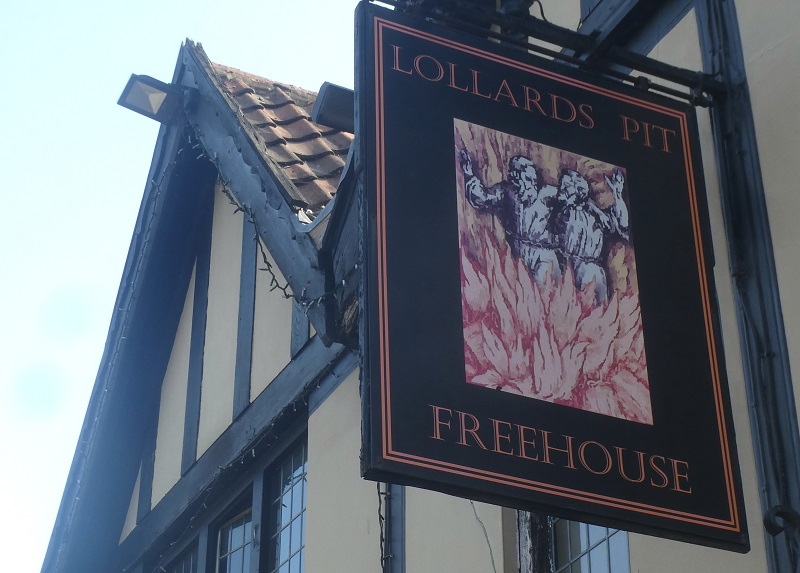
And it has to be better in every way than the disastrously named Lollards [sic] Pit over Bishop Bridge (1342, nearly demolished in the 1920s, can you believe), which seems to glory in the burning of heretics. In the 16th and 17th centuries the unfortunates were incinerated in a chalk pit on this side of the Wensum.

We figuratively roasted on our walk the next day, but amen to the cool of each and every church which welcomed us. I'll write it all up when I have more time.

Tuesday, 14 April 2020

Virtual timetravel: the glory of Palma


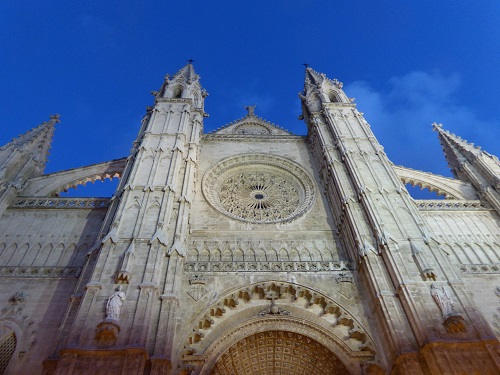
It was just before the last big religious/seasonal festival that I first encountered one of the wonders of the architectural world, and at a time when one could still go inside one (remember?) This is Palma Cathedral, according to legend-gilded history the offering of Jaume I, caught with his fleet in a gale off Mallorca in 1229 before victory over the Moors. Salvation resulted in a very grand project, known by its Catalan name of La Seu. Built on the site of the citadel's Great Mosque - little remains of the Moorish years in Palma's Old Town apart from two sets of Arab baths - it took 500 years to complete. Yet the Gothic essence of what we see, begun in 1300 by Jaume II seems very much of a piece, thanks also to an early 20th century restoration overseen between 1904 and 1914 by the great Catalan architect Antoni Gaudí, and its buttressed sandstone walls glow at sunset.


The above wasn't how I saw it until near the end of our 10-day idyll, returning from Deià in time to catch the honey-coloured vision. We approached it on our first early evening excursion into Palma's old town via the west-end Portal Major (Great Door), described in my Rough Guide as 'a neo-Gothic disaster', but its rose window (one of seven) and the bits of old statuary applied to it don't seem that bad to me. The necessary effect of grandeur is certainly still achieved.


Later in the week, on one of the few days when the weather threatened to be less than clement (and turned out to be nothing of the sort), we dedicated a full morning to the interior, essential even if you begrudge paying 8 euros (I certainly didn't). You enter via the Vermells Sacristy, one of the 21 side chapels, and that's a grand enough first impression of the nave with this Renaissance arch (detail online has not been of much help here).


The slender beauty of the 14 pillars, rising to 21 metres, came as a surprise.


The palm-like effect at the top is trumped by the perfection of the 15th century former exchange, the Sa Llotja, which I must attempt to do some justice in a future post, but there's no harm in putting in a photo for comparison now.


To take it all, you must do the usual thing in cathedrals and stand at the west end looking towards the high altar.


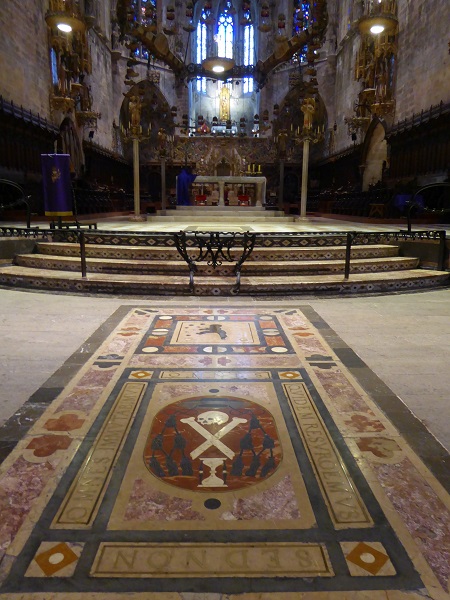
Before the steps into the chancel a fine pavement prepares the way (I also lack more detail here).


The baldachin is quite a pretty thing with its twinkling lights, a sparkly crown of thorns begun by Gaudí but not quite executed as he would have wished.


Gaudí also moved the stone pulpit of 1531, 'supported' by telamons (male caryatids) to the left of the entrance to the sanctuary.


Maybe it was a Christmastime seduction by all things gaudy, but the blend of new(ish) with old seemed succesful, a lightening of potential Gothic gloom. Oddest is the plasterand ceramic decoration by Miquel Barceló (b. 1957) of the Chapel of the Blessed Sacrament to the right of the high altar. The fishes go with the loaves as signs of Christ and of multiplying abundance.


The 16th century Chapel of Corpus Christi on the other side is more what you might expect from a grand east end, with a three-layered altarpiece.


The Last Supper at the bottom is remarkable, while above it are the Presentation in the Temple and the Temptation of St Anthony.


My inadequate guide is sniffy about the other chapels - 'dull affairs for the most part' - but most had something of interest. The Chapel of St Jerome has another fine altarpiece


with an especially fine statue of the saint and his lion at the centre


and I love these life-sized angels in the Chapel of Our Lady of the Crown.


The route out takes you into the Gothic chapter house, a gallery-room with works by the Mallorcan primitives, including here on the left the life of Catalan St Eulalia by the Master of the Privileges


and another fine doorway


leads into the Baroque chapter house, with more treasures; but the eye is drawn upwards.


The surroundings of the cathedral are especially attractive given the amount of money spent on the city in recent years. The park around the water basin is airy and spacious - this from a day when a storm was bowling in -


and of course the best views are from the other side, taking in the Almudaina Palace.


In the next post on this wonderful city, I need to do justice to the rest of the old town within the walls. There was infinitely more to see and explore than I could ever have imagined, and this is a lived-in place, full of character - though I guess we were lucky to see it with a dearth of tourists around.

Tuesday, 13 November 2018

Along the Thames to Walpole's castle


From Richmond


to Strawberry Hill House to see Horace Walpole's collection reunited in neo-Gothic surroundings


was the first of our excursions on what turned out to be a four-day staycation (had been planning to visit friends on the Greek island of Spetses, but prices for flights to Athens had gone through the roof). Having read my Arts Desk colleague Sarah Kent on the new exhibition, and with happy memories of what happened when Houghton Hall's dispersed collection - much of it sold by Horace's unbalanced nephew to Catherine the Great - came home, I thought it would make a jolly day out.


The weather helped - the most serene, sharp and perfect of Autumn days; we ate our lunch on a bench by the river at Richmond, and this was the view above our heads. Then we crossed the noble bridge and walked parallel to Ham House on the other side. It's hidden by trees, but that only makes the perspective with not a building in sight the more naturally beautiful.


Various trees framed the river at low tide


with sundry old boats and barges glinting through the leaves.


Architecturally, it's a string of pearls. While the river near home has grand houses along Chiswick Mall, none is as fine as Marble Hill House, the Palladian villa commissioned by Henrietta Howard, mistress of the then-future George II, and completed in 1729.


Until you reach the church at Twickenham,


the fine houses and grounds accumulate.


This is more like the Chiswick legacy, a home for an admiral.


No time, alas, to pause for homage to Pope at the church, but onwards to our exhibition slot at Strawberry Hill. Unfortunately the Thames Path goes inwards, along a busy road, but once at Walpole's retreat, the rusticity is resumed, with only the planes roaring overhead on their way to or from Heathrow to break the illusion.


In 1750, having rented a 'little play-thing-house' known as Strawberry Hill Shot, Horace Walpole (1717-97) wrote to his distant cousin and long-term correspondent Sir Horace Mann, 'I am going to build a little Gothic castle...If you can pick me up any fragments of old painted glass, arms or anything, I shall be excessively obliged to you' (I'm working my way through the somewhat disordered and patchy Everyman collection of his letters). The project grew, like Topsy, with additions made up to 1772, a combination - as now it still seems - of gallery and cosy home, full of 'gloomth' (Walpole's own portmanteau word): 'I did not mean to make my house so Gothic as to exclude convenience, and modern refinements in luxury'. With 'battlements for a roof', as he found authorised in Deuteronomy, Walpole made sure that the south facade would be 'the only side...at all regular'.


I had to photograph its upper half only, because in the first of many annoyances about the exhibition, and the general management of a house admittedly well restored, a tea-room marquee currently blots out an unobstructed view of the south front. From this point on, with no photography permitted within the house, I look elsewhere, including Strawberry Hill House's current management, for images. I trust 'fair use' applies for the diverse sources.

Walpole thought the hall and staircase 'the most particular and chief beauty of the castle'. But that was before John Chute designed the Library with details copied from Gothic tombs in Canterbury Cathedral and Westminster Abbey, illustrated here in 1781 by Edward Edwards


and then the Gallery, with its fan vaulting modelled on Henry VII's chapel, also in Westminster Abbey. 'Gilders, carvers, upholsterers and picture-cleaners are labouring at their several forges, and I do not love to trust a hammer or a brush without my own supervisal,' Walpole wrote in July 1763, a month before the gallery was completed.


The collection comes nowhere near the masterpieces of Houghton Hall (many now in St Petersburg's Hermitage), but the ensemble is fine. Printing, including 3D for a Gibbons frame, has been useful to fill in some of the gaps.


One gets the sense that Walpole was more interested in human idiosyncrasy as represented by the portrait than by great paintings (or maybe he couldn't afford those, though he did buy a superb Van Dyck double portrait for a remarkably low price). There are wonderful miniatures, though the bad exhibition lighting, poor throughout the house, prevents one from seeing them properly. Walpole didn't rate Hilliard as highly as the Olivers, but nonetheless this, of Sir Francis Drake, is a gem of the cabinet.


Noted is a penchant for beautiful young men, not least this boy as shepherd by Peter Lely


and Walpole's features were delicate. I love the portraits Rosalba Carriera painted of him and his cousin Francis Seymour Conway, Earl of Hertford, whom he met on his Grand Tour.


His Strawberry Hill parties were a byword in extravagance, though he seems to have been torn between his curiosity about people and the need for a quiet, solitary life. The festino for a party including many French visitors in May 1769 is briefly described in a celebrated letter: 'At the gates of the castle I received them, dressed in the cravat of Gibbons's carving,


and a pair of gloves embroidered to the elbows that had belonged to James I.'


In addition, celebratory verses were printed on the Strawberry Hill press, their distribution inaugurated by 'French horns and clarionets'. 'In the evening we walked, had tea, coffee, and lemonade in the Gallery, which was illuminated with a thousand, or thirty candles, I forget which, and played at whisk and loo till midnight. Then there was a cold supper, and at one the company returned to town, saluted by fifty nightingales, who, as tenants of the manor, came to do honour to their lord...'

On the feminine side there is exquisite beauty in the collection's signature painting of the Ladies Waldegrave by Reynolds


and on the other hand - an odd purchase - Hogarth's portrait of the triple murderer Sarah Malcolm in her cell before execution. Hogarth made a fortune out of prints of this subject.


After that, some air. I can't say I entirely enjoyed the experience: the volunteer guides in every room just would not let you alone with your catalogue. I like to talk to them, but only if I have something to ask; these ones would collar you and insist you look at this or that. Way too intrusive. I only got away with private viewing in the bigger rooms where they were already having rather banal-sounding conversations with other members of the public.


And so, into the garden, which is no longer what Walpole wanted, something 'riant, and the gaiety of nature' in opposition to 'the gloomth of abbeys and cathedrals' imprinted on the house; a garden, he insisted, could not be Gothic. The lawns run into the territory of the adjoining St Mary's College, once part of the University of London, now St Mary's University. Its buildings look more like a hospital with a bit of grass in front, though the shell bench in what Walpole called his 'perfect Paphos' remains (or is it a copy? Anyway, the paint is peeling).


We wandered round the college demesne, the cries of the sporty reminding us that this is the demesne of rugger buggers. The chapel, though, is interesting, in extreme contrast to the house. Built in 1962-3 above the university library, its brick model is Albi Cathedral. The Sutherlandesque reredos is in fact by Constance Stubbs


and  I like the glass by by the studios of  Gabriel Loire, master glazier of Chartres Cathedral. This is the west window.


After a brief glimpse at Walpole's Chapel in the Woods, with poor Victorian muralling by way of overlay, we made our way back. Kew was a familiar destination for the next bright autumn afternoon, and what remains most vividly with me is the autumnal smells rising from the ground in the bosky groves. Out in the sunlight it was once again warm, and the delights began with the temple ensemble just inside the Victoria Gate.


I'd already admired the renovated Temperate House and the new dragons on the Pagoda on an October visit, and J was suitably impressed. We took a spin around the upper walkway, where the harmony between glass and iron above


and greenery from Australasia below


was most apparent. If the great height of many of the plants in the pre-renovated building has now been much reduced, the sense of light and space is overwhelmingly impressive.


Then to the pagoda


and its guardians.


The lower denizens are carved in cedar, like these three above and below; those higher up were achieved by more 3D printing.


On to the Japanese landscape around the Chokushi-Mon (Japanese Gateway), with live denizens this time. The purple berries behind them belong to Callicarpa japonica.


The ailing but content other half then made his way back to the cafe while I took a semi-ritual route, down to the great red oak by the river opposite Syon House, tantalisingly labelled Quercus X benderi Q. coccinea x Q. rubra,


enjoyed the deciduous firs by the lake


and the beech grove


before discovering rather two many mechanics being set up for the annual, moneymaking festival of light and heading back to the Victoria Gate via the Palm House, always vividly lit at sunset - no artificial lighting can surpass this -


and the view across to what's now called 'Museum No. 1'. Such resources on the doorstep.