Showing posts with label Regent's Park. Show all posts

Tuesday, 25 August 2020

Return to the Walled Garden of Eden

Fulham Palace's splendid grounds, encased by Bishop's Park, themselves enfold a treasure of reconstruction, the walled garden dating from the mid-18th century and incorporating a Tudor wall with gateway. The whole enclosure was shut down not long after Kew Gardens during quarantine, and reopened a while after Kew.  I went there at the first opportunity, on 3 July. First sight once past the main gate - hollyhocks near the Tudor facade of the palace,

and then the gingko just to the right of the Tudor gateway, with the tower of All Saints' Fulham visible beyond the south wall. 

I've already written extensively on rediscovering this paradise years after it had fallen into rack and ruin, with photos to match, but no harm in an update. It's always been free of charge, but now volunteers sit near the gateway collecting £2 donations. I joined the Friends on the spot, since the place has given me so much delight already (and I did volunteer to garden an afternoon a week, but they already have more folk than they need). The project, splendidly overseen by head gardener Lucy Hart, is evolving; last week I saw for the first time her work on bringing back some of the plants from the Americas which Bishop Compton had introduced, before his successor dug them up in favour of produce (as she shows, it's now possible to have both). Lovely as the fringe of dahlias following the wall certainly was, the turning of the north-east wall, or at least half of it, into a proper herbaceous border is very welcome, 

and who doesn't love a  giant echium?

The bees from the nearby hives

certainly do, and quite a few peacock butterflies were landing on Verbena bonariensis

or settling on the wall (at this small size, you can just make one out to the right of the hollyhock).

The time of the 100-year-old-plus wisteria's main blossoming was past, but it was still putting out a few flowers.

We're now heading to a time of mellow fruitfulness, and pears were already promising.

Still, on that first visit the keenly-anticipated cart with produce from the vegetable gardens was not on display. It has been more recently, and I'll end with the second of four visits. Meanwhile, other favourite haunts of the lockdown time occasionally yielded what Fulham Palace did not. Delphiniums, for example, in Regent's Park, where we met our friend Isabel in the Rose Garden for afternoon tea two days later.

The grand formality of the walks on the eastern side of the parks was at ite best, too.

I walked my bike this way in search of a repair shop on or just off Great Portland Street. The options I'd hoped for were closed, but - oh, wonder - an Evans store provided the solution, very unexpectedly at 4.30pm on a Sunday afternoon. All very well ordered, too, a sign of reassurance that if our government couldn't organise anything, individual stores could, and have. 

Order was eventually restored in a strange spectacle below the beautiful bridge of Chiswick House Gardens. In a previous post, I charted the moorhen's motherhood saga. Looking down on the nest, I was perplexed to see a mallard with her two chicks on the next. So what was that behind her?

Turned out to be a growing moorhen child. Five minutes later, there was a divebombing, almighty birdshrieks, and the duck was off with her fledglings to the safety of the bank. So the usurpation was very short-lived.

Bird life in the back yard was at this time centred on the weeping mulberry and its abundant fruits. The blackbird family had disappeared for a while, and of course has now gone off to moult somewhere, but I was alerted by some very peculiar squawking, and saw Junior in the transitional phase from speckled brown to black (tailfeathers first). He's larger than dad. I just missed the moment where dad popped a mulberry into his big boy's maw.

Hadn't had sight nor sound of the dunnock for some time either, until I saw a group of four. This is presumably alpha male aloft the blackberry.

Ring-necked parakeets are now everywhere along the Thames - as well as in neighbouring squares but not our own central gardens - but I've not seen them doing the lovebirds act until I cycled back to Battersea Park on 28 July.

I had three ports of call, including the Children's Zoo, where you can see ring-tailed lemur activity from outside the gate,

and the garden run by Thrive, the therapeutic charity, excellent for tips on bee-friendly plants. Eryngia are perfect, offsetting with their startling blue the yellow both of other flowers in the general colour-scheme

and of the insects which love them. Can anyone identify this one?

There's another good eryngia display in Holland Park, in those endlessly well-tended and changed beds around the pond where a heron loves to preen on the central fountain.

Here's one (heron) in flight near Hammersmith Bridge.

The third resource within Battersea Park has only just reopened - the English Garden with its perfect waterlilies

and artichoke flowers, another delight for bees.

A clump is the remaining glory of the rose garden in front of Chiswick House's camellia conservatory.

And so back on 30 July, via Fulham Palace, looking good after work on its brick facade, 

to the Walled Garden, where on a blazing sunny day fruit and vegetable sales were in full swing. Such swift changes even in a couple of weeks.

The herbaceous border was flourishing still more


and gladioli were in full swing around the borders of the vegetable beds.


Dame Edna's favourites make a fine addition to the bunches of flowers on sale, or did for the short time of their flourishing. Here's a display with other trophies - a range of tomatoes from the glass houses, each variety with its own distinct flavour, beans and beetroots.

Monday, 13 July 2020

In search of peonies, ending back at Kew Gardens


Near the end of my '50 days of London spring' post, an early peony, of the yellow tree variety, made an appearance. Finding peak peony season in my favourite haunts wasn't so easy. The patches I knew from previous years, in Kew Gardens and Chelsea Physic Garden, were inaccessible (and in any case I'd failed to renew my CPG membership in high dudgeon at the forced exile of the wonderful Tangerine Dream Cafe - now rehoused in the French Institute and along the Kings Road, but it's not the same).

Where to find these elusive and short-life beauties? I pedalled up to Regents Park again on 15 May: if it excellend in roses, it would surely yield peonies? Sadly not, though I still had a wonderful time. An elusive wren was skipping around between the rose bushes in Queen Mary's Garden, and there were already a few choice blooms, though the best was still to come,


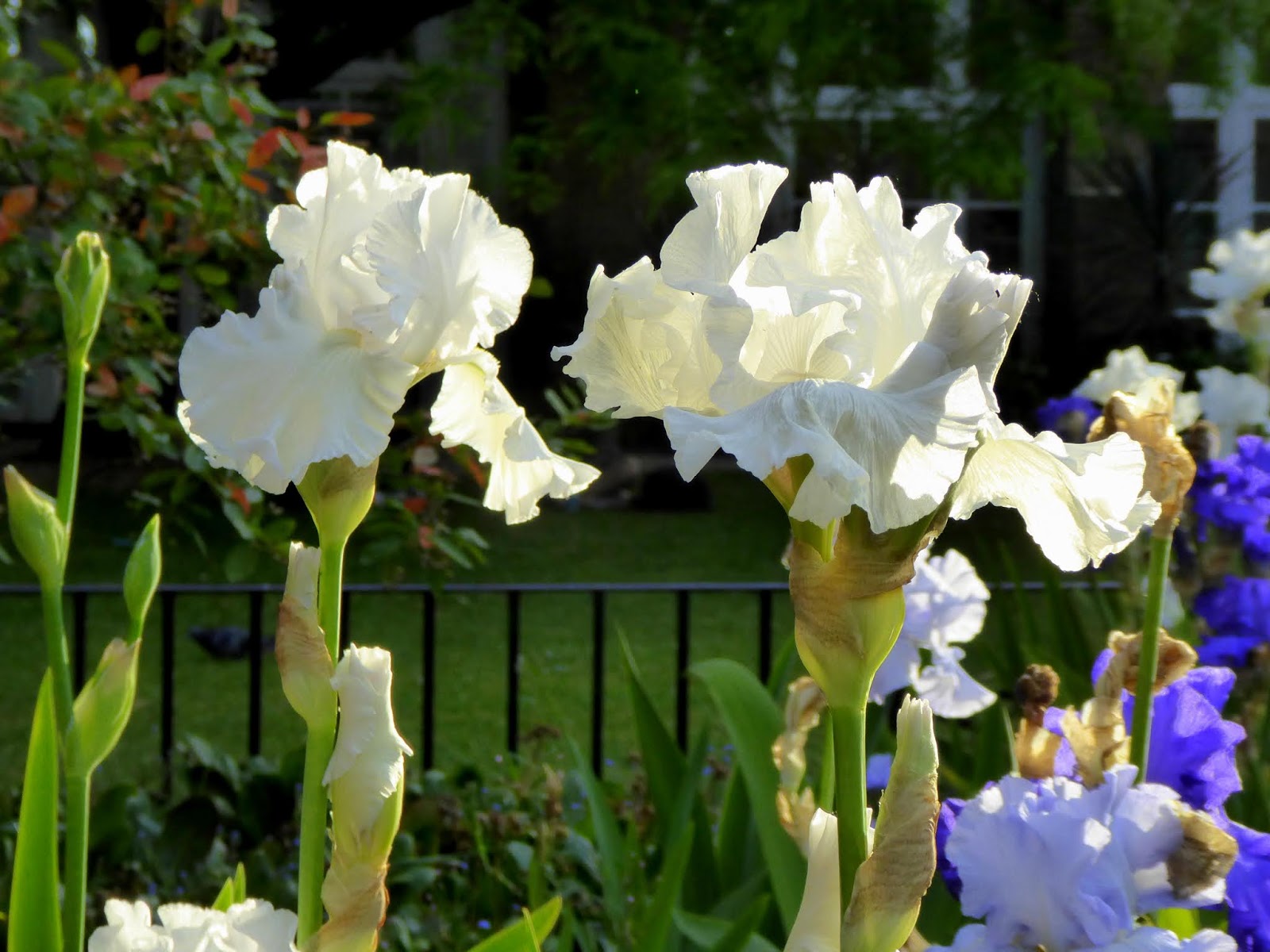
and some very exotic irises were to be found in the planting of one of the eastern walks


as well as plenty of bee activity on alliums purple and white.


I cycled north and then walked along the southern perimeter of the zoo, Now that the elephants and bears have gone, there's less than ever to see, but if you head down to the fence midway you can watch a Colobus monkey whooping and swinging about.


Probably the farthest point I've reached in my bike rides since the Richmond Park excursion was the canal where it bifurcates the zoo - the Snowdon Aviary is such a fine piece of work.


But I digress. I first sighted peonies where I least expected, on 17 May, by the south gate of Old Brompton Cemetery. Some imaginative planting has been going on, yet to properly bed in, and these specimens were part of it. Probably I could checklist them for you from a lovely volume I was once given as a birthday present, Peonies: The Imperial Flower by Jane Fearnley-Whittingstall, but what's in a name?


Next stop, Holland Park on 19 May, though I had no idea where peonies might be found there. Exciting, then, to find a plant in the formal gardens with buds that suggested they might burst in less than a week.


In fact that one took longer, though there was always plenty of bee action on the Kniphofia or red-hot pokers behind,


and meanwhile I discovered more in a kind of meadow in front of the ruined house. Normally this whole area would be under canvas for the Opera Holland Park season, but it marks instead a strange no-man's land between the formal gardens and the big green that slopes down to the former Commonwealth Institute.


Though Holland Park was the place I visited most during this time - after classes, I could pedal up there for a quick peony-check before supper - Chiswick House Gardens hit the highest watermark of late spring/early summer evening lushness.No peonies that I could find on 20 May - I did less than a week later, as you will see - but the alliums in the avenue leading down from the camellia greenhouse were buzzing with bees


and the moorhen who had lost some of her first batch now still had one chick making its way


but also turned out to be sitting on six eggs - I hope she had better luck this time. On the last occasion when I was there, after heavy rain, the nest had been dispersed.


Quite a few peonies were, however, to be found on the way there and back in a patch on the corner of Chiswick Mall and the street where it later turned out our friend Cally had just bought a cottage.


Meanwhile, back in Holland Park on the 24th, the buds had started to open, but weren't as far advanced as I had thought


but in the neighbouring bed, spectacular things were happening. The pic up top is part of that, as are these.


Further south, in the beds around the pond where a heron had perched (see earlier post), irises of all colours were flourishing,


and one of the peacocks (ditto) decided to complete a pretty picture.


Back at Chiswick House Gardens on the 28th, I found peony patches further up the walk that leads to the glasshouses; I'd always turned off into the Italian gaden before I got this far.


The roses between the mossy urns were at their peak, and enhanced by foxgloves.


That was one heavenly evening, and a high Thames tide at one end of Chiswick Mall - subsequently my favourite spot of the entire river - completed the perfection.


On the 29th I cycled southwards, to explore more of the interior of Battersea Park. No peonies that I found, but bottlebrush was thriving in the wonderful Paultons Square,


another heron was wading in a secluded spot no the park lake


and I discovered for the first time the bee-friendly planting of the garden centre on the ring road (bicycles, joggers and pedestrians only).


In the back yard, poppies flourished singly (Papaver orientalis, not doing much this year)


and in pairs - here today, gone tomorrow, but storing up seeds thereafter for more random manifestations -


Finally, Kew Gardens reopened just in time to catch the very end of peony season. We were there on the second day of timed visits, Tuesday 2 June, arriving at 4pm and staying until closing time. I knew where to head for the peonies, but first was a first, the tulip trees (the lyrically named Tulipifera liriodendron) on the north side of the Palm House lake in flower


Waterlilies were in bloom in front of the Princess of Wales Conservatory (shut, of course, like the other glass houses), and plenty of orange poppies as well as big agaves


 though those were capped by the one in flower to the left of the Alpine House. Couldn't this be Arizona?


So missing orchid hunts in the country - Deborah van der Beek tells me there's been a big flourishing near them in Lacock - but pleased to see this cluster reintroduced at Kew.


Of the peony colony, the reds were almost all finished flowering, but the whites continued to flourish


I've never seen this zone of the gardens so lush. That, the unusual loudness of the birdsong and the very few people around made this seem like the most exotic of trips, as if we'd gone on a major holiday abroad. Lupins in the backyard didn't put on much of a show this year, but here's a bunch foregrounding the Temple of Aeolus rather nicely (better in reality than they've emerged here).


I can't name the tall creatures here


but bees love them.


The rocky beds leading to the Alpine House were still rich in late-spring specimens like this exquisite iris


We took a breather in the warm sunshine (the last for some days, as it turned out, and the end of the settled weather which made this, ironically under pandemic circumstances, the most beautiful spring in England I can remember) just inside the gate of the walled garden around the house. More bees, this time on the miracel-stemmed Eryngia which I've never succeeded in maintaining out back.


Here, too, were white/pink peonies aplenty in the lush bed on the other side of the lawn.


Left J to walk off down the Spanish chestnut avenue to the Kew Green gate and further excurted to Kew Palace, lush with lavender behind.


Then it was back along the splendid herbaceous walk, rich in alliums


and around the Palm House lake to see how the gunnera had come on


to collect my bike at the main entrance. We'd be back in less predictable weather for my birthday picnic - four of us socially distanced at a bench in a sylvan glade - in mid-June. The displays are past their prime now, and my daily routine less regular, but blissful summer weather is back.