Showing posts with label Willa Cather. Show all posts

Sunday, 14 February 2021

Cather's midlife crisis novels

Hermione Lee is unequivocal in her admiration for Willa Cather's novels of the early to mid 1920s, which form a kind of triptych - two side-panel novellas, suggestive character studies of ambivalent women slightly outside the pale of convention in A Lost Lady and My Mortal Enemy, and a central masterpiece of structural and emotional richness. The Professor's House. In her study of Cather, which is much more literary criticism than biography, Lee declares that she admires 'that dark phase of Cather's writing above all the rest' and is less compelled by the more distanced narrative of Death Comes for the Archbishop. I'd be hard-pressed to choose between Professor, Archbishop and the lost young man who is One of Ours. (Below, Cather photographed by Carl van Vechten in 1934).

As I mentioned in my last post including a second look at Catheriana, perhaps these three novels strike a special note with me because of their intense depiction of male relationships which, in the cases of One of Ours and The Professor's House, could be seen either as intense romantic attachments or something with a more homoerotic element under the surface. It's fascinating to find Cather, a lesbian writer whether practising or not, exploring the possibilities of repressed sexual love between men. What she does is to build up a picture of masculine beauty - Claude Wheeler and the Professor's beloved Tom Outland - and then leave it to us to elaborate on what kind of love develops in Claude's late discovery of the sensitive violinist at the Front, his perfect other half, and Tom's intense friendships with Rodney Blake and Godfrey St Peter.

The form of The Professor's House, pitting discontent with bourgeois domesticity against (eventually) the wide open spaces of America's south-west, is surely the most daring in all Cather's novels - indeed, in novels across the board. St Peter is reluctant to give up the solitude of his attic study in an old house though he has moved with his family to a brand new one. There's a typical ambiguity at work which hovers between contemplation and the 'double life' of a supposedly 'happy family'. The link with Godfrey's adored Tom, who's died, like Claude, at the Front, is the tawdry legacy of an invention which brings no happiness to the relations between St Peter, his daughters and their husbands. Left alone when the rest of the group goes off to Paris with the summer, the Professor meditates on his young friend's journal about a discovery of a different sort from a time before they'd even met - that of a native American settlement of considerable sophistication, the so-called Cliff City on the Blue Mesa.

Cather has been to a landscape like this before, with Thea Kronborg on  avacation that changes her life in The Song of the Lark, and there are equally beautiful descriptions of monumental scenery in Death Comes for the Archbishop. 'Tom Outland's Story', introduced at the novel's two-thirds mark, transforms us, and it has a radical effect on the Professor's life in the short final section of the book, which draws all the strands together with masterly skill. Having had my reading spoilt by spoilers in Lee's study of Cather - I had to keep putting it on hold while I caught up with the books she'd reached - I don't want to say more.

Besides, A Lost Lady and My Mortal Enemy are too brief and in some ways too delicate to dissect. Their heroines are a mixture of beguiling and conventional (Mrs Forrester, who becomes 'lost' in the course of the novel and over a passage of time), shrewd and spiteful (Mrs Henshawe, her own worst enemy). A Lost Lady focuses on a Red Cloud acquaintance of Cather's, and stays in Nebraska to chart the changes the author deplored. And there is shocking violence early on here, perpetrated on nature by a bully boy who will return to take charge in Part Two (Cather must have witnessed, or heard about, the action - too gross to be made up). My Mortal Enemy is split between a visit to New York and a bleak second part set in a west coast city. The observers are younger people who see only the angles of the whole, preserving an element of enigma about the protagonists. The control of narrative is masterly. And so on to the last two major novels in which Lee senses a decline - though she makes them seem fascinating enough to merit a last foray.

Wednesday, 20 January 2021

2020 reading

Out of the new books last year, I got to review Hilary Mantel's The Mirror & the Light and Elena Ferrante's The Lying Life of Adults for The Arts Desk, and found, as usual, that neither novelist disappoints; the standards of both are too high for them ever to lower the bar (so far, and I can't see that changing). Since this retrospective also admits discoveries of other masterpieces that have been around for longer, I can plunge in with the most inspiring book I read in 2020: Isabella Tree's Wilding.

I long for the time when we can get down to Sussex and see what Tree and her husband. Charlie Burrell, have achieved on the Knepp estate, partly by process of trial and error and with a great deal of input from eco-experts (which of course these two have now become; but they were also able to benefit from DEFRA when it had funding from the EU for arable reversion, and from EU reform of the Common Agricultural Policy). First stage was restoration of the Repton landscape, and then the realisation that primeval Britain was far from all woodland - that much of it was grazed meadows and scrub, or 'wood pasture' - hazel, birch and above all oak need much direct light to thrive and cannot regenerate under a closed canopy.

I love Tree's descriptions of unforeseen consequences - the way one part of nature helps another in ways unanticipated, like the consequences of taking on Tamworth pigs: 

ants began to use the clods of earth turned over by the pigs to kickstart anthills that have grown, in some places, over a foot in eight years - their colonies thriving in micro-climates of sun-warmed, aerated soil, The anthills, in turn, attract mistle thrushes and wheatearers, and especially green woodpeckers, whose diet, particularly in the winter, can consist of as much as 80 per cent grassland ants....The pigs were having an impact on vegetation, too. They have a penchant for plants that other grazers cannot find or stomach, like the stubborn, subterranean roots of docks and spear thistles. Unlike other ungulates they can also eat bracken and its rhizomes, neutralizing the toxins and carcinogens in their gut.

Not using fungicides and pesticides had a knock-on effect on rare bats, new species of moths, even new bugs in cowpats and horse-dung. Purple Emperor butterflies (one was seen in Richmond Park and photographed by Sherry Pentek - photo above on the Friends of Richmond Park website) thrived on unpopular sallows. Nightingales increased and turtle doves returned.

Bird points out the failure of British conservation in focusing too much on the preservation of a single species, which may well return of its own accord to a more diverse ecosystem. 'Rewilding the Soil' is a specially fascinating chapter, with a wonderful epigraph from a Sanskrit scripture of c. 1200 BC: 'Upon this handful of soil our survival depends. Husband it and it will grow our food, our fuel and our shelter, and surround us with beauty. Abuse it, and the soil will collapse and die, taking humanity with it'. Bird adds later in the chapter 'The great concerns of our time - climate change, natural resources, food production, water control and conservation, and human health - all boild down to the condition of the soil'.


Bird's is a mostly optimistic book. Naomi Klein's On Fire is more horror than hope, but culminates in potential optimism, as its subtitle intimates: 'The Burning Case for a Green New Deal'. The new 2020 foreword even covers the relationship of Covid-19 to all this. The book takes a journey through earth-shattering as well as hopeful events over decades, many of which I didn't know about. The chapter titled 'A Radical Vatican?' shows how Pope Francis's attempted shift in thinking from the 'other life is better, don't worry about this one' anthropocentrism which starts with the flaws in Genesis (that God created the world for man to dominate) to treating the earth as 'sister, mother' inculcated by his namesake; Klein calls his move 'an evangelism of ecology'. 

Her own diary of how the 'summer of smoke' affected her family rams things powerfully home in the dark flipside again. The ultimate message reinforces Gandhi's assertion that 'there is enough in the world for everybody's need, but not for everybody's greed' - though fleshed out in chapter and verse of how saving the planet might be achieved. I'm indebted above all to Klein for pointing me in the direction of this wonderful seven-minute film by the artist Molly Crabapple projecting the aims of the Green New Deal into the future. It's co-written by the already great Alexandria Ocasio-Cortez (whose cartoon double appears in it) and Klein's husband Avi Lewis. A little masterpiece, Please watch all of it - I find it especially apt today (though unfortunately Biden shows no signs as yet of following the GND).

Prescient aspects of ecology appear in the four novels of Willa Cather I referred to in my necessarily brief and slanted survey of my discovery (thanks to Alex Ross in his flawed but fascinating Wagnerism, like it or not a book of the year, for devoting so many pages to this great writer). The journey continues, and I was hoping to have finished Hermione Lee's so-called biography of Cather (A Life Saved Up) by now. Lee is a wonderfully informed and enthusiastic writer, but the volume offers more detailed literary criticism of each work than biographical detail (the two are inextricably linked in all the Cather novels I've read). That also involves plot spoilers, so I've come to a temporary halt as she deals with The Professor's House and the shorter books (novellas?) either side of it, A Lost Lady and My Mortal Enemy), having already paused to finish One of Ours.

Each of Cather's novels inhabits a different world, and the contradictions in her extraordinary personality find their way into most of the main characters. One of Ours is no exception. The protagonist isn't even especially likeable, and Cather seems to have had some contempt for the lost farmboy on whom she partly bases Claude Wheeler. It's depressing that as a woman she came in for so much stick from so many male novelists and critics: when they imply - quite wrongly - that she glorifies war (a classic case of confusing the author with her creation), they suggest it's really man's stuff and/or that she can have no idea what the trenches were like. 

Well, she did her research, and as I wasn't there, I can't say. But it all comes across evocatively in description, as does every territory she captures. And Lee doesn't seem to pick up on the romantic aspect of homoeroticism implied in the first meaningful relationship Claude strikes up, with a young violinist at the front (this character, too, had a real-life model). I'm getting aspects of that in The Professor's House, too: fascinating that a lesbian writer, so guarded about that aspect of her personality, sees male bonding in a similar, if still coded light.

The world of Victor Serge's Memoirs of a Revolutionary is mostly male, and mostly impersonal in the sense that his private life, and his relationship with his first and second wives, play very little part in the autobiography. What a figure of uncompromising honesty, though, and what a perspective. Born Viktor Lvovich Kibachich to Russian political exiles in Belgium, he was first involved with Anarchist movements in France and Spain before heading for Russia in 1919 (pictured below with Rirette Maitrejean, his first wife, in 1913, at the time of the trial of the 'anarchist bandits' which led to his first spell in prison).

He saw at first hand, and with unflinching clarity, how even as early as 1920-1 with the complexities around the Kronstadt uprising, 'emergent totalitarianism had gone halfway to crushing us.' Fiercely against the death penalty, he saw with horror as a representative of various Internationals how the former revolutionaries turned on each other and how the executions flowed, how truth lost out to orthodoxy, how 'relief and salvation must come from the West,' in its support of the Russians.

That took him back to western Europe in what he calls the 'dark crossroads' of 1922-6. Then he headed back to what he always felt as the motherland, only to find young Communists committing suicide in droves and increasing persecution of the Mensheviks. Literature became official, royalties only possible if you toed the line. 1928-33 he marks out as the 

years of resistance waged by a solitary man - surrounded by his family, that is to say by weak creatures - against the relentless, overwhelming pressure of a totalitarian system. For his daily bread, his ration card, his lodging, his fuel in the harsh Russian winter, the individual is dependent on the Party-State, against which he is totally defenceless. And he who, in the name of freedom of opinion, stands out against the Party-State, bears the brand of 'suspect' wherever he goes. The small amount of liberty that he has left, and even his own courage (which seems quite mad), stand for him as a source of astonishment, mingled with anxiety.

Still he persisted, writing the only literature he regarded as of any value, 'free and disinterested, which is to say devoid of any market preoccupations [at that point in that place, the latter type would be called 'proletarian literature']). He was lucky: he had a name in France, and was able to smuggle out manuscripts which would never have stood a chance of being published in the Soviet Union. 

In February 1933 he was the first to define the Soviet state as a totalitarian state'. He did so in a document where he declared he would remain a dissident on three essential points which he defines in detail: 'defence of man', 'defence of the truth' and 'defence of thought' The letter reached Paris, and he was immediately arrested. Not for the first time in his life, he found himself in prison, but this time as one of the disappeared; only his French connections got him out in the nick of time, in 1936. 

His subsequent life in Europe and finally in South America (pictured above with Wolfgang Paalen in the artist's studio in Mexico in 1942) was one of disillusionment; he died impecunious in Mexico City in November 1947. What a legacy he left behind, though: not only this unflinching autobiography but many novels which I have it on good authority are first-rate; I shall find out for myself when I get round to reading what is supposed to be THE novel about Stalin's Purges, The Case of Comrade Tulayev. No doubt about it: Serge is a major writer, his reputation obscured by his misfortune of being seen as an outsider both in the west and in the Soviet Union.

Sunday, 29 November 2020

Willa Cather's songs of the earth

These are landscapes with people: what landscapes, what people - Swedes and Bohemians in the prairielands of Nebraska, Norwegians and Mexicans in Colorado, French Missionaries among the tribes and races of New Mexico. I actually came to Willa Cather (1873-1947) through Alex Ross who, in his Wagnerism (which I referenced here, as well as in a much too short review for the BBC Music Magazine) devotes a perhaps inordinate amount of space to her perceptions on singing and artistry. Hence I came to The Song of the Lark, central novel of her so-called Great Plains Trilogy. The title is taken from Jules Breton's painting of the same name in Chicago's Art Institute.


The protagonist, Thea Kronborg, has been left money to study in Chicago as a musician (first as a pianist, then as a singer). Cather is careful, as always, to let her break slowly out of her solipsism to learn and observe - and in this case, what Thea observes, on a rare excursion in the city, links the painting to the landscape of her childhood, however different: 'The flat country, the early morning light, the look in the girl's heavy face - well, they were all hers, anyhow, whatever was there. She told herself that that picture was "right". Just what she meant by this, it would take a clever person to explain. But to her the word covered the almost boundless satisfaction she felt when she looked at the picture.'

Ross's fascination with the novel lies in Cather's complex take on the artist's calling, which is perhaps better defined in terms of a Wagnerian singer than in any other work of fiction I've read. But equally important is her often ambivalent attitude to her roots, and the essence is of how to bring that into harmony with her new life. Experience is the catalyst, and in Part IV, 'The Ancient People', Thea goes to stay in the San Francisco Mountains of Northern Arizona. Cather is on the verge of preachiness in describing how her heroine finds herself in mystical touch with the indigenous people whose deserted rock homes populate Panther Canyon. Ansel Adams' 'Canyon de Chelly' is a helpful point of reference here, as are so many of his photographs. A detail of it is actually reproduced on the cover of the Penguin Modern Classics edition of The Song of the Lark.

Cather stops short of stating the obvious - that the time-machine effect helps Thea forward in her impersonations of Wagner's mythic heroines - but that's clearly implied. 

Thea Kronborg is a compelling creation, a fusion of the opera singer Olive Fremstad and of Cather herself, though the author's upbringing was not in Colorado but in the green landscapes of Virginia (until the age of 9), and then the prairie of Nebraska, the preferred pays d'adoption of her fiction. She must have felt at first just as she describes it in O Pioneers!: 

of all the bewildering things about a new country, the absence of human landmarks is one of the most depressing and disheartening...The record of the plow was insignificant, like the feeble scratches on stone left by prehistoric races, so indeterminate that they may, after all, be only the markings of glaciers, and not a record of human strivings. 


Nebraska is where the shorter and in some ways less complex outer panels of the Great Plains trilogy are located. Two more strong women are at their core. Cather describes the mind of Alexandra Bergson in O Pioneers! as 'slow, truthful, steadfast', but she loves the difficult, seemingly unyielding land: 

For the first time, perhaps, since that land emerged from the waters of the geologic ages, a human face was set toward it with love and yearning. Her eyes drank in the breadth of it, until her tears blinded her. Then the Genius of the Divide, the great free spirit which breathes across it, must have bent lower that it ever bent to a human will before. The history of every country begins in the heart of a man or a woman.

She makes a success of the poor farm bequeathed to her. 16 years pass, and her first (and only) love asks how she and her neighbours did it with the land she saved and borrowed to buy.

'We hadn't any of us much to do with it, Carl. The land did it. It had its little joke. It pretended to be poor because nobody knew how to work it right; and then, all it once, it worked itself. It woke up out of its sleep and stretched itself, and it was so big, so rich, that we suddenly found that we were rich, just from sitting still.'


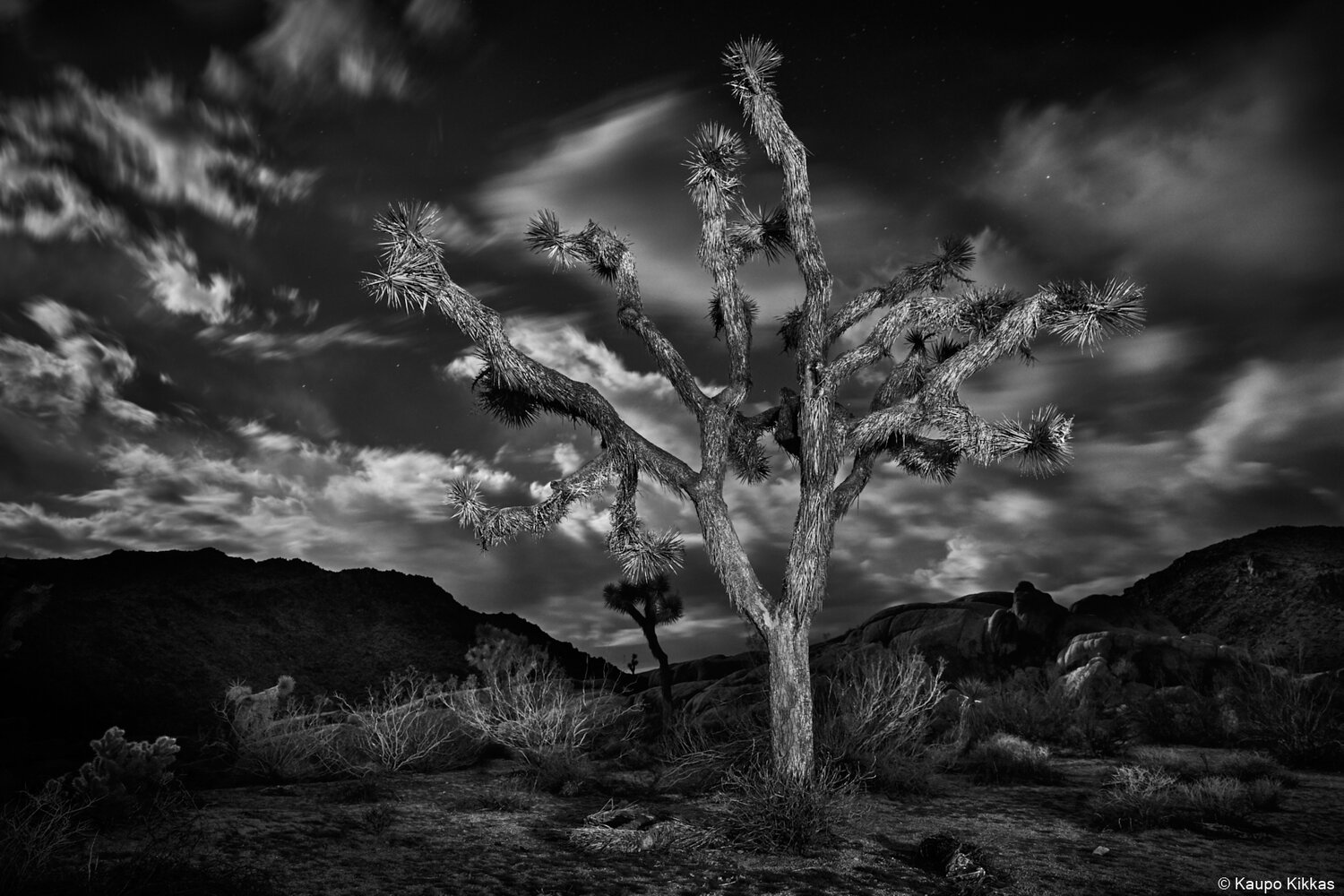
Others move away to seek a new life; tragedies unfold, not least in a parallel plot featuring a brutal husband accorded remarkable understanding by Cather. But Alexandra endures, and there is a quiet, optimistic ending in which she concludes: 'The land belongs to the future...We come and we go, but the land is always here. And the people who love it and understand it are the people who own it for a little while'. The same is expressed by my good friend Kaupo Kikkas in his website section on the photographs of 'Ansel', which I had the good luck to see last summer in Pärnu, with music by Arvo Pärt and Peteris Vasks to complement them: 'My “Ansel” is the 500 million-year-old landscape. It was here before the arrival of man. It will remain after the last of us is gone.' Just an excuse to introduce one of his stunning images. I wish I'd found the time to write about them on the blog after what had to be an all-too-brief mention in my Arts Desk article on the 2019 Pärnu Music Festival.


Cather is not blind to the exploitation and misuse of nature, and she seems nostalgic for the unfarmed and parcelled out prairie (in its old self, as one character puts it, 'the grass was the country, as the water was the sea. The red of the grass made all the great prairie the color of wine-stains, or of certain seaweeds, when they are first washed up. And there was so much motion in it; the whole country seemed, somehow, to be running'). But harmony with nature in the farming pioneers is central. My Ántonia is the portrait of a vivacious Bohemian girl as seen through the eyes of the boy she shares her childhood with. Jim Burden, the narrator, is quite a sentimentalist, but there are harsh incidents which course through the softness, as in a devastating chapter about a suicide, and you believe in the final idyll of Antonia's life as fecund mother and farmer. It may seem a rose-tinted picture, but the notion of self-sufficiency where everyone works together is an attainable ideal.


More rock-like is the prose of what has been argued as Cather's greatest masterpiece, Death Comes for the Archbishop, set in the varied scenes of the vast territory called New Mexico, where in some places 'the country was still waiting to be made into a landscape'. Its essence is picaresque, with shades of Don Quixote and Sancho Panza, though these are no rogues or madmen but two missionaries of contrasting temperaments and outlooks. Father Ferrand and Bishop Latour do what good they can on their own very different terms in a tough land where they could be killed at any moment. The latter, reaching a simple community shortly after being lost, realises that his 'dear Joseph...must always have the miracle very direct and spectacular, not with Nature, but against it'. Later, he tells Ferrand:

 'The Miracles of the Church seem to me to rest not so much upon faces or voices or healing power coming suddenly near to us from afar off, but upon our perceptions being made finer, so that for a moment our eyes can see and our ears can hear what there is about us always.'


Though Ferrand is much loved by the different people he visits, Cather's sympathies are clearly with Latour, his understanding of people of different faiths and races. His Indian assistant Jacinto, behind whom Latour perceives 'a long tradition, a story of experience, which no language could translate to him',

liked the Bishop's way of meeting people; thought he had the right tone with Padre Gallegos, the right tone with Padre Jesusm and that he had good manners with the Indians In his experience, white people, when they addressed Indians, always put on a false face. There were many kinds of false faces: Father Vaillant's, for example, was kind but too vehement. The Bishop put on none at all. He stood straight and turned to the Governor of Laguna, and his face underwent no change. Jacinto thought this remarkable.

The compliment is returned:

Father Latour judged that, just as it was the white man's way to assert himself in any landscape, to change it, make it over a little (at least to leave some mark of memorial of his sojourn), it was the Indian's way to pass through a country without disturbing anything; to pass and leave no trace, like fish through the water, or bids through the air.


So the perspective in Death Comes for the Archbishop is bigger, more sweeping, than in the earlier novels, though always bounded by perfect prose. The two men meet alarming local autocrats, dark elements of other religions which must simply be accepted, a noble Navajo with whom the Bishop has a moving friendship, changes to the territory ('as Father Vaillant remarked, at Rome they did not seem to realize that it was no easy task for two missionaries on horseback to keep up with the march of history'). The Bishop lives long enough 'to see two great wrongs righted; I have seen the end of black slavery, and I have lived to see the Navajos restored to their own country'. He has seen how 'too many traders and manufacturers made a rich profit out of that [Indian] warfare; a political machine and immense capital were employed to keep it going'. Plus ca change. But the Bishop dies in the knowledge that God will preserve the Indian.

There are almost too many quotable passages in these four books, but I'll finish with one that comes towards the end of Death Comes for the Archbishop, sure that I'll find many more in Willa Cather's other novels, her letters and her biography, still on the reading list. I've inserted one more of Kaupo's images before plunging into the last chunk of prose.

But the Spanish Fathers who came up to Zuni, then went north to the Navajos, west to the Hopis, east to all the pueblos scattered between Albuquerque and Taos, they came into a hostile country, carrying little provisionment but their breviary and crucifix. When their mules were stolen by Indians, as often happened, they proceeded on foot, without a change of raiment, without food or water. A European could scarcely imagine such hardships. The old countries were worn to the shape of human life, made into an investiturem a sort of second body, for man. There the wild herbs and the wild fruit and the forest fungi were edible. The streams were sweet water, the trees afforded shade and shelter. But in the alkali deserts, the water holes were poisonous, and the vegetation offered nothing to a starving man. Everything was dry, prickly, sharp; Spanish bayonet, juniper, greasewood, cactus; the lizard, the rattlesnake - and man made cruel by a cruel life. Those early missionaries threw themselves nakes upon the hard heart of a country that was calculated to try the endurance of giants. They thirsted in its deserts, starved among its rocks, climbed up and down its terrible canyons on stone-bruised feet, broke long fasts by unclean and repugnant food. Surely these endured Hunger, Thirst, Cold, Nakedness, of a kind beyond any conception St Paul and his brethren could have had. Whatever the early Christians suffered, it all happened in that safe little Mediterranean world, amidst the old manners, the old landmarks. If they endured martyrdom, they died among their brethren, their relics were piously preserved, their names lived in the mouths of holy men.

Despite the toughness of this writing, I should only add that for all the harsh events featured in the pages of the four novels I've read, Cather has been such a luminous and positive companion through these dark days - the ideal lockdown reading.