Showing posts with label Sean Shibe. Show all posts

Saturday, 29 May 2021

The week of opening up

 This (the destination for my second jab last Wednesday)

has, in essence, made possible this,
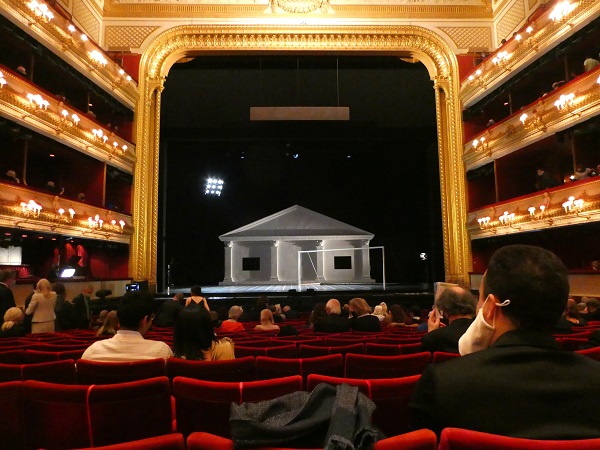
namely my first sight of an auditorium since December, and my first time within the main Royal Opera House since March 2020. Does the classical curia give a clue? It's Richard Jones's production of Mozart's La clemenza di Tito, all of a piece with the superlative conducting of Mark Wigglesworth and a vibrant cast, half of whom I'd never heard of, but all of whom were classy indeed (just heard that Emily D'Angelo, the Canadian-Italian mezzo who sang Sesto, has a contract with Deutsche Grammophon. Seems that RJ wants the Vitellia, Nicole Chevallier, for Weill's Lady in the Dark, as she loves musicals and is a real stage animal). The Arts Desk review of first night is here. Later in a week of wonders, I filmed a Zoom interview with Richard for the fifth of my Zoom Opera in Depth classes on Clemenza this Monday. 

Mark W and Ian Page of the Mozartists, a generous presence throughout the classes, joined us live and we watched the first 22 minutes of the interview; I ran the rest in an extra half hour. Living with this incredible music, Mozart often as minimalist, has been like treading air while dealing with heavier stuff on the Russian Music course.

There was nothing heavy about Tuesday's London Symphony Orchestra concert back at the Barbican (queueing for a very well-organised entry pictured above). Simon Rattle actually prompted the tears that hadn't flowed in the excitement of the previous night in his opening speech (a one-off, he said). The music to excite 'that noise you make with your hands' was celebratory with a dash of wistfulness: Britten's Young Person's Guide to the Orchestra, three numbers from Faure's incidental music to Pelleas et Melisande, Dvorak's first set of Slavonic Dances. Review here and photo below by Mark Allan.

After this, the first of the two LSO concerts, I had time before the 'finissage' of partner J's first exhibition for a year at the 12 Star Gallery, so I paused for a blissful coffee and caramel brownie outside Konditor in Waterloo. Then on to the show, where the select few (or rather more than a few) had temperatures taken before admission. Simone Bergmann's photos of the 1970 Isle of Wight Festival - or rather of the happily naked attendees rather than the performers have created quite a stir, The exhibition finished on Friday, but this little film is still worth watching,

Our lovely friend Katharina von Ruckteschell-Katte, head of the London Goethe Institute, who features in the film, also made a speech on Tuesday evening alongside head of the European Parliament representation in London Susanne Oberhauser. Would you believe it, this photo by the resident expert Jamie Smith was banned from Facebook because of the bottom in between them. And some attendees were irritated that other private parts weren't properly shown (though there are some distant willies). Anyway, this prudishness or prurience are both irrelevant - it's a joyous celebration, a symbol of what we're missing. And they're fab photos.

Susanne used some good lines, but didn't adopt J's 'Arsch for Art's Sake'. And that is probably Best Bottom, but what I particularly like is that the cool dude has round his neck what look like gun cartridges but turn out to be harmonicas.

We were allowed to take our masks off once seated at tables with a good distance between us. So good to be able to meet and talk to friends. I look a touch ernst here talking to Lucy Hannah (on the right) and her surgeon godson.

General shot, good as always from Jamie.

Probably the first time in ages I've been a bit hungover (from several glasses of wine). and there was no lingering on Wednesday morning as it was second jab time. J had booked his for 10.50, mine was at 10.30 so we overlapped and I was able to stroll around the Science Museum for a bit.

It was especially exciting to look a bit closer at the spare section, as I've just finished reading the two Cosmos books by Carl Sagan and his wife/widow Ann Druyan, scientific humanists both: more on those in a future post.

My vaccinator turned out to be opera singer Annabel(le?). We started chatting because she commended my EU mask, and I just happened to have one in my bag to gift her. She seemed very spirited but obviously disappointed because Savonlinna, where she was due to be covering Rosina, had just cancelled its operas for the year, The following week she was auditioning for English National Opera; I hope it went well for her. As I left I heard her calling after me: I'd left my precious vaccination card on the table. That at least meant I could take a shot of her in the main area.

There was a lively protest/bit of street theatre outside against the Science Museum's acceptance of Shell as a sponsor for an exhibition about the environment.

Then we went on to have coffee in the sun outside the South Ken Comptoir Libanais, and I cycled off through the parks to Wigmore Street, where it has another branch, to hear Sean Shibe's lunchtime recital at the Hall: haven't been parted from live concerts there for quite so long. The system for admittance is as admirably rigorous as ever.

The programme was a mesmerising winner; review here. And as, unusually, it wasn't livestreamed/broadcast on BBC Radio 3. I had to take a curtain-call shot of Sean in his ruff. 

Hmm. He can just about carry it off, as he did the reddy-pink boiler suit for his electric guitar shocker the last time I heard him at the Wigmore. Glad that most of the programme, plus magical Rosewood pieces by Irish composer David Fennessy (which he played in the quieter half of the previous Wigmore spectacular), has been captured in his recital for the delightful and enterprising Fiachra Garvey's West Wicklow Festival, also from London but sans ruff.

Here you get some enlightening chat (at 15m6s) before the recital at 28m50s. Love it that one of his earliest memories is his dad (potter Paul Tebble of a great Edinburgh institution, the Meadows Pottery, with Sean's mum Junko Shibe) singing him and his sister to sleep with 'anti-Thatcherite coalminer anthems'. Then there are some deliciously off-piste observations, which briefly fox even Fiachra.

Being in the vicinity of Regents Park, I cycled up there - haven't been for months - and was pleased to find St John's Garden open again. Still some wisteria at the gate,


irises flourishing against an early rose of sorts


 and a beautiful, post-rains light for general views across to the villa which once owned this garden.

Then on, eventually, to divobass Freund Peter Rose around the corner, where his usual mirthfulness was doubled with the presence of director Paul Curran. Photos I have of them aren't very good, unfortunately.

More garden scenes, but also rain again, for the opening of the Glyndebourne season: kudos to the Christies for agreeing to four productions, three new, a concert staging and quite a few concerts too. The decision was taken a year ago - very bold. As was Damiano Michieletto's production of Janáček's Káťa Kabanová, which is not to say I liked it or thought it served high musical values well. Here's why I didn't. If only the angels had stayed in shadowplay; this, among many images by Richard Hubert Smith, makes the production look better than it ultimately was, though focus was retained throughout.

Only wish I'd thought of David Thompson's thoughts when the Act 3 curtain for the storm rose, very predictably, on more gyrations: 'it's raining men'. 

It was raining cats and dogs when my friend Deborah and I emerged to take up our place on a bench at the head of the lake, so we moved our picnic stuff to the wonderful new covered area they've put up on the croquet lane. Gone are the exterior excrescences; this looks good (pictured later, when the rain had cleared away).

We did manage a good stroll before the performance, everything uncut looking lush after so much rain.

Deborah, who has been on a campaign near her home in Lacock to stop the National Trust cutting down bee orchids for a car park, was thrilled to see numerous specimens of the least exciting looking variety by the lake, the Common Twayblade (Neottia ovata; like the Dunnock, it may look ordinary but has a fascinating sex life, as Darwin pointed out). Couldn't decide which shot to choose, so take your pick.

Copper beech beyond the fence at the far end of the lake (quite a few of them in the vicinity) looking handsome

and even once the rains set in, there was a poetry (apart from these people, we had the lake to ourselves).

Windows of the Organ Room through budding mulberry (soon it will be too thick to see them).

Can't resist reproducing Deborah's cartoon in the card that arrived yesterday:


Just joyful to be there - especially as I have finally liberated myself from DJ conformity with my advance birthday present from J, a Nehru jacket - and clearly the staff felt the same; there was a wonderful energy about the peripheral circumstances, and great care too, though people WOULD keep taking off their masks once they were seated.

Friday, Saturday and Sunday evenings were devoted to the white-heat-as-usual Ragged Music Festival of pianists and partners Pavel Kolesnikov and Samson Tsoy. I've written myself out on the subject for The Arts Desk here, but again the peripherals are fun. Hadn't taken the canal path behind the row of buildings before. Usual suspects among birds, Canada Geese and coots, but their offspring were amusing, and Saturday afternoon was the first time I've ever been to the Ragged School Museum when it wasn't raining (it was on Friday and Sunday).


Irises had been planted in front of the graffiti-ed walls

and this was a novel approach (for me) to the building

After the renovation, it will have changed beyond recognition, and I wonder if the atmosphere Pavel and Samson love will have gone. Probably best, though, because there must be health hazards. There's beauty in peeling paint and general decay, though.

One last glimpse of the journey there on Sunday afternoon: geese contrasting with Canary Wharf skyline

and obstructing the towpath. You don't mess with protective parents. I and the cyclist heading for them had an amused chat about it while we waited for them to move.

This week has seen a necessary break from concerts and opera, and a return to more consistent nature here :the London Wetlands Centre, where the hides are now open again, and Chiswick House, where we saw the massive walled garden for the first time. But that's for another time.

Saturday, 11 May 2019

CDs of 2018: public gongs, private pleasures


Last month's BBC Music Magazine Awards helped me to get to grips with what the panel - on which I served for the 2017 selection, not this year's - thought essential listening from the glut of five-star CD reviews. Out of the two I'd reviewed, the one sure winner - Adams's Doctor Atomic - didn't get the Opera award and the other which I wouldn't, when it came down to three choices - Ádám Fischer's Mahler One in his Düsseldorf cycle - took the palm  in the Orchestral category. And Sean Shibe was superseded for the second year running, this time when an even more inventive and ground-breaking mix of ancient and modern, the softLOUD programme, was the option.


Predictions were that in this public vote, social-media-savvy Vikingur Ólafsson would triumph among the three instrumentalists on the final list. Not only that, but he took the Disc of the Year award for his fascinating Bach sequence (up top, he's third from left with Sara Mohr-Pietsch, his shorter double Gareth Malone and BBCMM Editor Olly Condy).


I like and respect Ólafsson. He speaks persuasively and with dignity, and writes well too. I enjoyed meeting him in Reykjavik at his impressive summer festival in 2016. On 1 May he played a 45 minute sequence of works from the 77-minute CD without interruption to an audience of mostly young people in the Royal Albert Hall. Yes, the sound was amplified - much better, as the Proms constantly prove, to hear a solo piano without sonic assistance in that vast space, drawing the listener in - and what followed after the interval seemed to me pretty dire, movements from Bach's Cello Suites muzaked by cellist Peter Gregson, appearing with a group of fellow cellists and a double-bass player, perfectly good in themselves.


Ólafsson, though, has integrity. His palette is varied, his fast runs astoundingly even. But even while I admired both the sequence and especially his own arrangement from Cantata BWV 54, 'Widerstehe doch der Sunde'. It's on YouTube but doesn't seem embeddable here, so here's a link. But to find the missing spiritual inscape you only had to turn to İdil Biret's selection of Bach transcriptions by her great mentor Wilhelm Kempff. Here are the elusive space and the fuller sonority  that I, at any rate, want from this music. Just one example will have to do here, though you can find others.

I heard that interiority again at the start of young Martin James Bartlett's debut disc 'Love and Death', with Busoni's transcription of 'Ich ruf zu dir, Herr Jesu Christ', BWV 177. But I jump ahead of myself into 2019; that CD deserves proper consideration in its entirety. As far as the awards ceremony was concerned, I wanted to hear viola-player Antoine Tamestit, one of my favourite live performers of 2018 for his walkabout interpretation of Berlioz's Harold en Italie at the Proms with John Eliot Gardiner and the Orchestre Révolutionnaire et Romantique, in Jörg Widmann's Viola Concerto and again in late Debussy chamber works shared with other very impressive musicians. Tamestit is among the other award winners, trophy on piano, in the below photo taken from above in Kings Place's Hall One.


Cellist Laura van der Heijden, winner of the Newcomer Award (and pictured on the right behind Tamsin Little), has produced a thoughtful disc of works by Russian composers from 1948 with Petr Limonosov; introducing this former BBC Young Musician of the Year winner, Julian Lloyd Webber reminded us tartly of the gulf between the first competition, shown on BBC One, and now, when it's ghettoised (though thankfully other events have come along to give the phenomenal Sheku Kanneh-Mason the wider acclaim he deserves),

Last year I heard some imaginative programming on CD which either didn't make it to the above shortlist or, in one case, was released a few years back (but I make no apologies, since the experience dates from the time of discovery).


Another musician who thinks very carefully about his concert and CD programmes is Israeli pianist and composer Matan Porat. Lux engages 12 pieces to take us from dawn to night. Gregorian chant is followed by Schumann, or framed between Bartók and Beethoven; Adès' Darkness Visible makes a startling sequel to Liszt's Harmonies du soir, superbly done.


I was so pleased last year to make the acquaintance of Estonian pianist Kärt Ruubel, twin sister of violinist Triin; their joint lunchtime recital in Berlin's Konzerthaus was an unanticipated highlight of my time at a Baltic festival there. Triin is especially keen that the works of Johann Jakob Froberger, subject of a musicological paper she wrote to complete her piano studies at HMT Rostock, should be heard alongside Handel and Bach, and so they are in her debut disc. The Lamentation in F minor has become a firm favourite; there's an extraordinarily modern progression or two, the play of major and minor is beguiling, and the freedom of Ruubel's playing adds to the freshness.


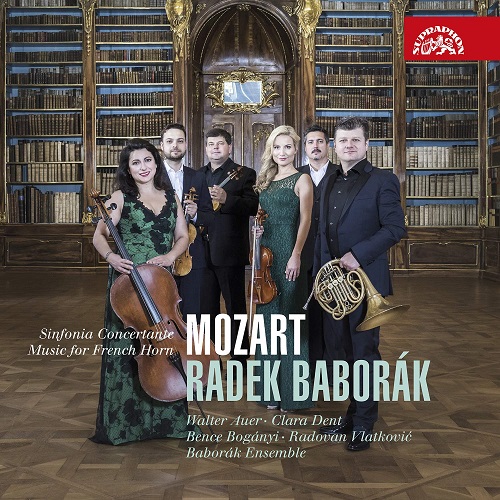
There are several candidates for 'world's greatest horn player', and Radek Baborák is certainly up there. Creative in so many spheres. he has followed up the expected Mozart Horn Concertos with a perfectly programmed two-CD set of other Mozart horn music. Movements make up other possible 'concertos', the second disc ends with the Sinfonia Concertante for wind and orchestra which I've long had a soft spot for, and the 12 Duos for two French horns are split across the discs and shared with no less a master than Radovan Vlatković. The set also includes some of the most exquisite high-register playing I've heard, and some wacky cadenzas.


The set of longer standing was a gift from our dear Latvian friend Kristaps Ozoliņš, understandably a fan of the astounding native youth choir Kamēr. Latvia's abundance of folk songs about the sun led to the commissioning of 17 'World Sun Songs' from international composers, among them Leonard Desyatnikov, Dobrinka Tabakova, Giya Kancheli, Peteris Vasks and John Luther Adams (the stunning Sky with Four Suns that launches the second CD). 

There is no stronger choral tradition than Latvia's in the world; I experienced it writ very large indeed last summer and I've just heard the superlative Latvian Radio Choir give one of the best programmes of contemporary works in the stunning surroundings of Tartu's St John's Church as part of the Estonian (this year World) Music Days festival. But that's another story. 

Wednesday, 19 September 2018

Shibe stunner


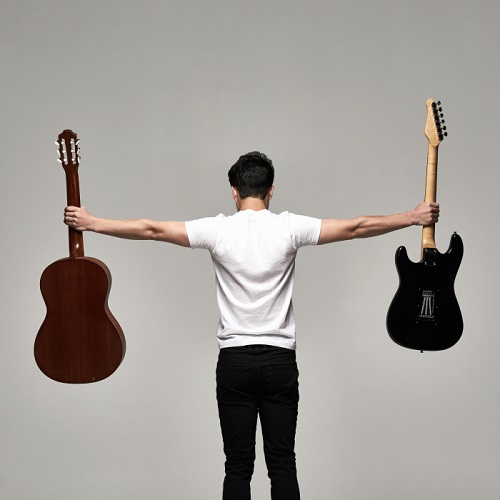
Having experienced both the soft acoustic and loud electric of genius 26-year-old guitarist Sean Shibe's latest Delphian CD live in Anstruther, I wondered when I saw the back cover whether bunching the two different styles respectively together would make for as good a programme (he shared the concert, too, with clarinettist Julian Bliss).

Then I listened, and was convinced. The exquisite miniatures of the Scottish lute pieces fold outwards into MacMillan's From Galloway, ingeniously transcribed from the clarinet original,  and Motet 1 from Since it was the day of Preparation - first track to play anyone you want to convince about the rainbow hues of Shibe's acoustic-guitar mastery.


Reich's Electric Counterpoint glides us into the louder stuff. The composer's commendation on the back of the disc says it all more eloquently than I can. Then comes the stunner which virtually lifted me out of my seat in the East Neuk - on the cusp of bearability, though the earplugs we were given turned out not to be necessary - in the shape of Julia Wolfe's LAD. I've already written on how only an artist of Shibe's unique imagination could have thought to ask if he could adapt the original - for nine bagpipes, performed in the World Trade Centre - for himself live and recorded eight times. David Lang's Killer just about finishes us off.

So we move in - please note, not 'to', which writers are still declaring virtually daily - a crescendo, from introspection to exhilarating, violent exuberance. If only all solo CDs had anything like this thoughtfulness. It's a winner by any standards. Great photo-artwork, too, by the inimitable Kaupo Kikkas.


I spoke to our hero at the Frontline Club some time back; the interview is now up on The Arts Desk to follow Graham Rickson's very enthusiastic review. The accolades are just pouring in.

Sunday, 21 January 2018

Best CDs of 2017 - BBC Music Mag Awards and me


To discover the one of these six favourite discs I reviewed or rated in 2017 which not quite enough of my fellow jurors were persuaded to shortlist, you'll have to head over to the voting page of the BBC Music Magazine Awards 2018. I'm finally free to divulge a little more about the December day at Editor Olly Condy's home in Bristol when seven of us, plied with cake and home-made membrillo plus plentiful cups of strong coffee, thrashed out our choices - and a very amiable conference it was (the others on the panel were Olly, Reviews Editor Rebecca Franks, Nicholas Anderson, Erica Jeal,  Andrew McGregor and Kate Wakeling).

Suffice it to say that of the above, Sean Shibe's first complete solo disc, of British guitar music, Bychkov's recording of Schmidt's Second Symphony and the revelatory Martinů Cantatas on Supraphon won the greatest degree of unanimity among us (my reviews of the latter two should be on the BBCMM website, but the reviews index is patchy and they aren't, yet). I'm also pleased that Alec-Frank Gemmill's enterprise in going flat-out for a CD that wasn't just the usual recital disc - featuring four different period horns, and Alasdair Beatson playing four different period pianos - made the grade.


You are of course free to vote any way you wish, or not at all; these are only my opinions, but I hope a bit more background is helpful. Biggest surprise for me was the electrifying approach of Jean Rondeau - anything but a cool dude in the performances - and Dynastie Bach family harpsichord concertos; since that got its nomination, I can't be too sad that Rachel Podger and Brecon Baroque didn't make it too, though I liked her quasi-improvisatory playing just as much.


Instrumental and Chamber were the hardest categories to choose from, overwhelming us with riches; though content with the three nominations in each category, I would have been equally happy with Beatrice Rana's startling Bach Goldberg Variations, up there with Denk and Gould;


another surprise favourite, Shai Wosner's brilliant programming of 'Impromptus', one way forward in recital planning which he shares with fellow pianist Ari Porat;


violinist Daniel Rowland and pianist Natacha Kudritskaya rising to the near-impossible challenges of Enescu's supernatural Third Violin Sonata;


and several quartet discs. I got to know Grieg Quartets played with magical pianissimos where required by a group with whom I was also unfamiliar, the Meccore String Quartet, and another of those imaginatively planned programmes which seem the prerogative of the younger generation comes from the Schumann Quartet(t), linking 'Landscapes' of Haydn, Takemitsu, Bartók and Pärt .


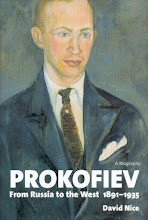
There was an endgame battle for Instrumental because two of us hadn't received Krystian Zimerman's Schubert Sonatas by the day of judgement. Our front-runners pending that included my absolute favourite, Alexander Melnikov's first disc of Prokofiev sonatas (Melnikov was also a top contender with Andreas Staier in very live-wire Schubert piano duets).


Because it's perhaps the finest performance I've ever heard of the Sixth Sonata, and equal first with Richter in the Eighth, I'd put this above Zimerman's Schubert, since he stands alongside quite a few other greats. But still, when I finally heard it, I had to include Zimerman in my final three over Fenella Humphrys' 'Bach to the Future 2' - great playing, but for me there were a couple of duds among the new works. That probably gave Zimerman the edge in the joint final choice. Anyway, Melnikov will be back with Volume Two of his Prokofiev soon, which should give the 2018 panel something to get hold of...

Since this is also about discs which may not be new, but which I discovered in 2017, I have to give an awed salute to pianist Peter Jablonski, whose playing I haven't heard for years and whose fiancee, the vivacious Anastasia Belina, became a new friend last year when we appeared together in a pre-Proms talk.


It would have been my prerogative to simply pass over the discs she sent in silence if there had been nothing special, but they're first rate - I even think I prefer Jablonski's Grieg over Andsnes' (whose Sibelius disc, by the way, nearly reached the Instrumental category, but that was so saturated with good performances this year). Liszt, well, the repertoire isn't so much to my taste, but I can't deny the magisterial diversity of the approach. Wonderful sound from the Japan-based issues, too.

In another hangover from a previous year, having been mesmerised by young Pavel Kolesnikov's selection of Chopin Mazurkas at a lunchtime Prom, I caught up with this disc, which goes right to the top of my Chopin list (or equal first with several, at any rate).


But back to the Awards. Quite a few might-have-beens bit the dust in Orchestral - Paavo Järvi's lithe and clear-lined Strauss Ein Heldenleben and Don Juan just missed the final three by one vote, and Vaughan Williams gave rise to three front-runners - though the fresh kick applied by Andrew Davis to the more Satanic moments of the ballet Job as well as the eerie solos in the Ninth Symphony clinched the chosen one for me. Terje Tønnesen's string-orchestra versions of the Janáček String Quartets may have missed out by being rather hard to categorise, not least because of the excellent adaptation of Tolstoy's The Kreutzer Sonata (inspiration for the First Quartet) so well read - in English AND Norwegian - by Teodor Janson.


Sadly my personal favourite Opera/Vocal disc, Daniel Behle's Schubert Arias, wasn't to a couple of reviewers' taste repertoire-wise, and the period-instrument orchestra is not so highly rated


but I'm delighted Ann Hallenberg's delicious programme of Venetian carnival arias made the list. I'm also glad to have made the acquaintance of Louis Andriessen's Theatre of the World. Those who saw the world premiere production say this audio recording leaves more to the imagination, though I'd love to see a director like Richard Jones tackle its black-comedy apocalypse.


I also fought hard for both Louise Alder's and Nicky Spence's Strauss songs (the last a real surprise, conclusion to the excellent Hyperion series) in the Vocal category, but mezzo Jamie Barton's debut disc was a unanimous choice. There's a vocal personality that just leaps out at you; and that's a necessary virtue when you have over 200 discs to listen to and you can't sit there riveted with a score for every one. The special ones always make you stop what you're doing and listen properly.


Very happy with the Choral choices - as well as the Martinů, they included the best Estonian choir of all, Vox Clamantis, whose acquaintance I made at Tallinn's 2017 Estonian Music Days, in a peerless Pärt programme.


Champion oddity of the year for me, one that actually works, was the Japanese percussionist Kuniko giving a whole new, lugubrious and hypnotic meaning to Bach on the marimba. Don't think that even got reviewed in the BBC Music Mag last year, but if it did, it wasn't on the list. 


Is Bach the only composer who can be transferred to just about any instrument? It seems so: another Awards nomination I was sorry not to see reach the final three was the unusual trio of cellist Yo-Yo Ma, mandolinist Chris Thile and bass player Edgar Meyer in trio sonatas and other transcriptions; there's some magically deft playing in the more virtuosic passages there.

Needless to say my most serendipitous discovery of 2017, which I've already chronicled here and here, was the wonder of Helmuth Rilling's Bach cantatas.


It was an easy step from charity-shop purchases to the complete set, which will be keeping me company every Sunday and holy day in 2018.

Today's Cantata for the Third Sunday after Epiphany was BWV 111, 'Was mein Gott will, das g'scheh Allzeit', another gem from January 1725. The adoring, adorning pair of winds this two are oboes, dialoguing with violins in thirds around lively choral counterpoint and a terrific busy bass. This opening chorus may be in the minor, but it's all spritely. The cantus firmus hymn is one from 1547 by Albrecht von Brandenburg, who brought Lutherism to his state. Either his was a lopsided face or Cranach the Elder hasn't quite got it right here.


The cantata bursts with a muscular Christianity in the bass aria and a pounding duet for alto and tenor driven by dotted rhythms  - not quite charming, and it might be one of the few places in the Rilling set where the voices (Helen Watts and Lutz-Michael Herder) aren't perfectly matched, but the impression remains one of forceful vivacity to fit the 'confident steps' ('behertzten Schritten'). The surprise for me was the twist in the short but expressive soprano recitative before the final chorale, reminding us unexpectedly of that final struggle where death tears the spirit from the body, the deathbed a 'battleground' ('Kampftplatz'). The oboes are back at hand to guide the soloist through this final dark night. Lesson for the day: never take the essence of any cantata for granted until it's all over.

Now, on with that voting.