Showing posts with label Shostakovich. Show all posts

Wednesday, 2 March 2022

The bombing of Babyn/Babi Yar

The name has horrific connotations for all of us. Yesterday Russian forces hit not only Kyiv's TV tower but also the memorial which hadn't been constructed at the time Yevtushenko wrote his famous poem, marking the Nazi massacre at the ravine outside the Ukrainian capital. Four people visiting it were killed. I found on YouTube film of a performance of Shostakovich's Thirteenth Symphony, setting this and other Yevtushenko poems I didn't know had taken place - conducted by Thomas Sanderling, Russian-born son of Kurt, on the very site last October, to mark the 80th anniversary of the atrocity. As there are no subtitles, here's a translation of the poem by Benjamin Okopnik. Here's a link to the website where I found his translation. Certain horrible ironies resonate there now.

No monument stands over Babi Yar.
A steep cliff only, like the rudest headstone.
I am afraid.
Today, I am as old
As the entire Jewish race itself.

I see myself an ancient Israelite.
I wander o’er the roads of ancient Egypt
And here, upon the cross, I perish, tortured
And even now, I bear the marks of nails.

It seems to me that Dreyfus is myself.
The Philistines betrayed me – and now judge.
I’m in a cage. Surrounded and trapped,
I’m persecuted, spat on, slandered, and
The dainty dollies in their Brussels frills
Squeal, as they stab umbrellas at my face.

I see myself a boy in Belostok
Blood spills, and runs upon the floors,
The chiefs of bar and pub rage unimpeded
And reek of vodka and of onion, half and half.

I’m thrown back by a boot, I have no strength left,
In vain I beg the rabble of pogrom,
To jeers of “Kill the Jews, and save our Russia!”
My mother’s being beaten by a clerk.

O, Russia of my heart, I know that you
Are international, by inner nature.
But often those whose hands are steeped in filth
Abused your purest name, in name of hatred.

I know the kindness of my native land.
How vile, that without the slightest quiver
The antisemites have proclaimed themselves
The “Union of the Russian People!”

It seems to me that I am Anna Frank,
Transparent, as the thinnest branch in April,
And I’m in love, and have no need of phrases,
But only that we gaze into each other’s eyes.
How little one can see, or even sense!
Leaves are forbidden, so is sky,
But much is still allowed – very gently
In darkened rooms each other to embrace.

-“They come!”

-“No, fear not – those are sounds
Of spring itself. She’s coming soon.
Quickly, your lips!”

-“They break the door!”

-“No, river ice is breaking…”

Wild grasses rustle over Babi Yar,
The trees look sternly, as if passing judgement.
Here, silently, all screams, and, hat in hand,
I feel my hair changing shade to gray.

And I myself, like one long soundless scream
Above the thousands of thousands interred,
I’m every old man executed here,
As I am every child murdered here.

No fiber of my body will forget this.
May “Internationale” thunder and ring
When, for all time, is buried and forgotten
The last of antisemites on this earth.

There is no Jewish blood that’s blood of mine,
But, hated with a passion that’s corrosive
Am I by antisemites like a Jew.
And that is why I call myself a Russian!

And here's heroic President Zelenskyy's reaction yesterday:

Thursday, 15 April 2021

Zooming Albert, Tito, and Russians from 1948

It seems appropriate to kick off the summer term of my Opera in Depth Zoom course with Britten's Albert Herring*, that Maupassant-adapted classic operatic comedy - one of the few truly great ones of the 20th century - since we're heading towards the merriest of months, and Eric Crozier's libretto is about a virginal May King crowned in the absence of any suitable village maidens (pictured above by Robert Workman: Richard Pinkstone as Albert with Adrian Thompson as the Mayor, Clarissa Meek as Florence Pike and Orla Boylan as Lady Billows in the wonderful Grange Festival production, which I reviewed on The Arts Desk). 

Helping that great mezzo Jean Rigby and her husband director Jamie Hayes with some of the fiddly bits about Zoom sound and vision for a talk they were giving to the Northampton Opera Group, and instantly warming to them both, I thought I might be able to call upon Jean to talk about the Glyndebourne production originally directed by Peter Hall (and still ready for revival, I think). She's delighted to be able to help, and I'm hoping we might reassemble other members of that original cast, including John Graham Hall, Felicity Palmer and Alan Opie. Fingers crossed.


We kick off next Monday afternoon (19 April), 2.30-4.30pm, and the next three or four Mondays (Bank Holidays obviously excepted) will be devoted to Albert. Then we move on to Mozart's La clemenza di Tito for the following five Mondays (pages of Metastasio's libretto, much used by the time Mozart came to set/adapt it, pictured above), due a new production to mark the Royal Opera's emergence from lockdown. Director Richard Jones and conductor Mark Wigglesworth, both regular visitors to my Opera in Depth courses, have promised to come along. 

The last of four terms on Russian music begins next Thursday, 22 April. You don't need to have attended the other three to follow this one. I've made a provisional draft for each class thus:

1: The Zhdanov trials and after  22 April

After the ‘chaos instead of music’ Pravda article attacking Shostakovich’s Lady Macbeth of Mtsensk in 1936, a second massive blow fell on Soviet composers in February 1948, when Stalin’s right-hand man Andrey Zhdanov initiated a conference attacking so-called ‘Formalism in Music’. Shostakovich and Prokofiev were the main victims. The attacks on film came earlier: clips from the main culprit, Lukov's A Great Life (Bolshaya Zhizn) - a mining sequence entirely set to music - and Part Two of Eisenstein's Ivan the Terrible, with Prokofiev's finest film score are followed by the final scene of a party-line monster, Chiaureli's The Fall of Berlin (1949), where Stalinalike Mikhail Gelovani arrives in the destroyed German city to a perfunctory choral epilogue by Shostakovich, and see how Prokofiev adapted with a further simplified, but still characteristic, style. We hope that Steven Isserlis will be our guest to discuss the cello works of that period.

2: The effect of the trials on symphonic music  29 April

We look at Shostakovich’s ‘bottom-drawer’ parody of the event and its 1957 sequel, Rayok or The Musical Peepshow, before hearing excerpts from symphonic music composed in the shadows, with short clips from Myaskovsky's 26th and 27th Symphonies, much more on Prokofiev's Symphony-Concerto and his swansong, the Seventh Symphony, with a backwards glance at his major revision of the 1930 Fourth Symphony in 1947. Andrew Litton returns to the class. 

3: Shostakovich before and after the death of Stalin  6 May

Shostakovich had begun his Tenth Symphony before the death of Stalin on 5 March 1953 (the same day as that of Prokofiev; no surprise to see see how the Italian communist paper l'Unità covered the 'main' event, pictured above) but did not compose the bulk of it until after that watershed, allowing himself an uncharacteristically jubilant if wild finale. Andrew Litton returns to give a masterclass on a symphony he has conducted 66 times. With a brief look at how the 24 Preludes and Fugues were received by a hostile committee in 1951.

4: Chamber and instrumental: Shotakovich and the younger generation in the 1950s 13 May

Shostakovich's position as the supreme chronicler of Russian life and soul was now unchallenged, but new names start to emerge: the considerable figure of Mieczyslaw Weinberg, aka Moisey Vainberg, born in Poland in 1919 but Moscow based from 1943, at Shostakovich’s urging; and Galina Ustvolskaya, Shostakovich’s pupil from 1939 to 1941 and then from 1947 to 1948. Her output is small but original – ‘there is no link whatsoever between my music and that of any other composer, living or dead’, she declared, with a certain hyperbole – and Shostakovich quotes her 1949 Trio for clarinet, violin and piano in his Fifth String Quartet, premiered in 1953.


5: Quotations: Shostakovich's Eleventh Symphony and Eighth String Quartet  27 May

Why did Shostakovich revert to revolutionary songs as the material for his Eleventh Symphony, 'The Year 1905'? We look at some of them with the help of the singing of the National Youth Orchestra players. And what was the real significance of the deeply personal Eighth Quartet? With an interlude in the shape of light music by Kabalevsky and Shostakovich in his operetta Moscow Cheryomushki.

6: Americans in the USSR: Van Cliburn, Bernstein, Stravinsky and Balanchine 3 June

The third great 20th century Russian composer came in triumph to Moscow, celebrating his 80th birthday (pictured above with Rostropovich). We take the opportunity to look at the very different paths he had taken in America, and what came next.

7:  End of the Thaw and musical life after Khrushchev: 1962-8  10 June

Khrushchev's sudden rages against jazz and abstract art signalled a closing-down of hard-won freedoms. Shostakovich's Thirteenth Symphony, setting a range of poems by the young iconoclast Yevgeny Yevtushenko, was a surprise casualty. Meanwhile, dodecaphony was having its impact on a younger generation of composers, but not for long: we see how Alfred Schnittke and the Estonian Arvo
Pärt. With a special visit from pianist Sophia Rahman.

8: The inspirers: great Russian performers of the later Soviet years, Shostakovich and Britten  17 June

Time to consider those towering artists who offered such lifelines to composers in trouble, with special focus once more on Rostropovich, and this time investigating the special connections forged by his wife, soprano Galina Vishnevskaya (pictured above at Amsterdam's Schiphol Airport in 1963). Britten quickly became friends with the pair, and later with Shostakovich: we examine further links between the British and Russian composers.

9: Shostakovich: Endgames   24 June

In his later years, an ailing Shostakovich was much preoccupied by death, and approached each work as if it could be his last. The Fourteenth Symphony is his answer to Musorgsky’s Songs and Dances of Death, which he orchestrated: a cycle setting poems by Lorca, Apollinaire, Küchelbecker and Rilke for soprano, bass, strings and percussion. The Fifteenth Symphony of 1971 is an autobiographical orchestral summing up, but by no means his last work. Each of the last three string quartets offers a different angle on death: terrified in the Thirteenth, ultimately radiant in the Fourteenth and skeletally enigmatic in the Fifteenth. Parallel are the last song cycles, with explicit reflections in the texts especially of the Michelangelo Suite, and the swansong of the Viola Sonata

10: The end of history – the mid-1970s onwards  1 July

Two towering figures in Russian music emerged after Shostakovich – Alfred Schnittke, who like the master constantly surprised with his eclecticism up to his death in 1998, and Sofia Gubaidulina (born in 1931), who has continued to compose music of a visionary intensity.

If you're interested in signing up - each two-hour class is a tenner, making it £100 for each term - leave me a message here with your e-mail. I won't publish it, but I promise to get back in touch.

*UPDATE - since Mark Wigglesworth offered 24 May for his date to talk about the Royal Opera La clemenza di Tito, I thought we'd actually start with the Mozart instead. 

Monday, 1 March 2021

The Terror novel


None could be more authentic than Victor Serge's The Case of Comrade Tulayev; he lived through the earlier waves of eliminations and was imprisoned/exiled himself before French connections got him released in 1936, of all years. But a great chronicler of his times - chiefly in Memoirs of a Revolutionary, through which I introduced my first acquaintance with this literary giant and attempted to provide a potted biography - might not be guaranteed to be a great imaginative novelist. Serge undoubedly is, and in her introduction to this New York Review of Books edition (thanks to the imprint for so many discoveries), Susan Sontag explains why, in a series of questions followed by eloquently argued sentences, Serge has missed the 'master' status he deserves. Born in Belgium of Russian anti-Tsarists in exile, 'no country can fully claim him', and no 'national literature' either; he was hyperproductive, and people are suspicious of that; 'most of what he wrote does not belong to literature', and what does has been 'politicised' as a 'moral achievement'; his life was full of dualities; an embattled revolutionary to the last, he 'refused to take on the expected cargo of melancholy'.

Indeed - necessarily dark, even black as hell, as The Case of Comrade Tulayev undoubtedly is, it's constantly lit up by a cosmic perspective. The very first chapter echoes War and Peace with the title 'comets are born at night'; three members of the old guard meet in a snowy wood outside Moscow, knowing that they won't see each other again and so alive to the strange beauty around them; and in the most amazing chapter, for me, of all, 'the brink of nothing', the only one of the fall-guys to meet a triumphant fate of sorts (it is not survival) is seen at one with his overseer among a small population of Ostiaks and Old Believers at what is constantly depicted as the end of the world. He transcends fear and sees that one of his persecutors will become one of the next victims. This is prose of the highest, most poetic order, in Willard R Trask's translation from the French.

The structure of the novel is an original polyphony of voices. It both is and isn't about the fallout from the random assassination of Kirov in 1934; the height of the Terror, which fell three years later, is past and we start in 1939, end on the brink of the German invasion. Scapegoats from the not-yet-wiped-out first and second wave of revolutionaries must be wiped out. their individual fates are taken in turn. Stalin appears throught as 'the Chief'.

All the major figures are political ones, so the sweep of the Terror isn't the subject of the book. I thought it coincided well enough, though, with the near-misses that Shostakovich and Prokofiev had in the second half of the 1930s, so I urged the students on the third of my Russian music Zoom terms to read both the autobiography and the novel. We were so privileged that Elizabeth Wilson, author of the best book on Shostakovich, joined us for the class dealing with the formation of the Association of Soviet Musicians in 1932 and the Pravda attack on Lady Macbeth of Mtsensk in 1936, with the opera and the Fourth Symphony as the main musical focuses. I like to think that Liza and I are good friends now, so the exchanges were relaxed, but she is rigorous with the facts and shed some new light on the interrogation of Shostakovich which is the main subject of Julian Barnes's The Music of Time, on which she advised. That's Liza top far right in the screenshot below. I've lopped off the bottom of the screen because it had the time bar over the five folk there, and there are more on two other screens who only feature when they pop up to ask a question or make an observation.

Term is coming to an end with the music of the war years this coming Thursday, and the bleak time between 1948 and 1953 in the last class. For the Opera in Depth classes, we've gone from the heights of Fidelio/Leonore - and a marvellous finale which featured Linda Esther Gray, Mark Wigglesworth and Ian Page - to the depraved depths of Prokofiev's The Fiery Angel (three more classes left). Then I want to offer a double one-off, as it were, with two classes on Prokofiev's War and Peace on Thursdays 18 and 25 March, 2.30pm-4.30pm UK time: anyone interested, just leave a message here with your email and I won't publish it, but I'll reply.

Saturday, 6 February 2021

Two Soviet chamber masterpieces of 1927


The teenage Shostakovich entered the third term of my Russian music Zoom course three Thursdays ago with the audacious gambit of his First Symphony, which I managed to link to more Myaskovsky (the Sixth, his biggest and darkest symphony, took up the first third of the class, though the link to Shostakovich 1 was a passage in the finale of the Fourth). I've always had a problem hearing Shostakovich's first symphonic flourish placed at the end of a concert: the first two movements are brilliant and immediately characteristic, the third sludgy and the finale flailing - as I always found even before I knew he had real trouble ending the work.

Though shorter, the first Shostakovich outright masterpiece, I'd say, is the Prelude and Scherzo for string octet. It's up there with Mendelssohn's and Enescu's achievements in the same genre as teenagers, though very different in mood. I played the students just the end of the opening piece and the whole of the scherzo in a hell-for-leather, biting performance by the Borodin and Prokofiev Quartets, and the response was wildly enthusiastic. That's on YouTube, but oddly not downloadable. I searched others, and the most rewarding - visually as well as aurally - is this distinguished line-up from the Utrecht Festival. The Scherzo starts at 6m03 if you want to cut straight to the frenzy. 

The same was true of how they reacted to the slow movement of Gavriil Popov's Chamber Symphony (Septet), composed in the same year as the Shostakovich work was premiered. In the next class I focused on the year 1927, the high watermark of Soviet musical experimentalism, when the influence was still international (I'm quite pleased to have found a Malevich from that year, reproduced up top, which chimes well with the two finds). Shostakovich's octet pieces were merely premiered that year, but so much else can be shoehorned from a variety of styles - the 'mecanique' imported from France, post-Honegger Pacific 231, in the shape of Mossolov's Zavod with its anvil and metal sheet (I also followed up on Prokofiev's Second Symphony and Le Pas d'acier first), the percussion-only scherzo from Alexander Tcherepnin's First Symphony (actually premiered in Paris), Roslavets' near-atonal Third Piano Trio and the various pieces that Prokofiev heard the younger generation play on his first visit to the Soviet Union early in the year. 

His first acquaintance with Shostakovich was to witness the young firebrand play his First Piano Sonata. and he found it a relief in duller company; he thought Deshevov too insistent with his repertoire, though admired its humour (cue the short piano piece Rails); and got a sense of Popov's incredible talent. The outer movements of the Chamber Symphony have something in common with Prokofiev's own Quintet, composed for Boris Romanov's ballet Trapeze back in 1925, and owe a lot to French chamber music of the time. But the slow movement is unique, I think, especially in the rocking, bluesy passage which appears twice, perhaps the first hint of jazz in Soviet music. You may want to hear the whole thing, and another Dutch-based performance here, this time conducted by Valery Gergiev in Rotterdam, is good to watch; the slow movement begins at13m14s.

That cued the jazz which briefly flourished, partly due to the Leningrad premiere of Krenek's Jonny Spielt Auf (Jonny Strikes Up). So we ended with Shostakovich's arrangement of Youmans' 'Tea for Two' from No, No, Nanette, popular in Russia as 'Tahiti Trot', and one of the companion pieces with which it shared a concert, an equally wacky Scarlatti sonata arrangement. Since then we've moved on to The Nose, The Golden Age and The Bolt; the blow is about to fall next Thursday.

Sunday, 3 January 2021

Fidelio/Leonore and more Russians: Zoom 2021

Zoom has been my salvation in 2020, and not just in terms of keeping financially afloat. To realise how much it's meant not just to an ever-expanding group of students but also to the great performers who so generously found the time to make special guest appearances has been (and I don't use the term lightly) humbling. We've had wonderful appearances from Sue Bullock, Anne Evans, Richard Jones and John Tomlinson (captured below, looking more Gurnemanz than Wotan - he was in fact talking Hagen - at the class by a student) over the 10 Mondays on Wagner's Götterdämmerung, completing our Ring survey over three and a half years. In the latest Russian music term covering 1910 to 1917 there's been enlightenment on Stravinsky's Petrushka from Gergely Madaras, on his Rite of Spring from Andrew Litton and Catherine Larsen-Maguire (extended to two whole classes), and on Scriabin from Alexander Melnikov and Peter Jablonski.

For all of us involved on a regular basis, it's given a shape to the week, and for many, an alternative to live performances (for which, of course, there's no real substitute, but needs and circumstances must). Take the two one-offs on the Tchaikovsky ballets - The Sleeping Beauty on 30 December and The Nutcracker on the 21st. They came about because one student lamented that she would no longer be able to go to any of the planned, socially distanced Nutcrackers given the third, and severest, lockdown of the year. We could at least share our pleasure in the beauties of these amazing masterpieces. I can't resist featuring again the late, much missed Maria Björnson's most ravishing design for the Royal Ballet Sleeping Beauty that came in for so much stick (I hymned the whole achievement on the blog here). Watched the entire DVD again yesterday and for me it's still the most magical Beauty. This is the Panorama from the second act, turned into a winter's tale.

These were also interludes between terms on Russian music - the first two have taken us from Glinka to Prokofiev's observations on the end of 1917, while the next covers 1917 to 1953, mainly but not exclusively Soviet (we have to follow the adventures of Prokofiev and Stravinsky in the west, too). I planned the Opera in Depth term to begin on 11 January with Beethoven's Fidelio (image up top, of the excellent Garsington Opera concert staging, by Johan Persson) and its original version, Leonore - on the special urging of Mark Wigglesworth, who's just conducted Fidelio for Opera North and wants most of all to 'do' Leonore at English National Opera - before moving on for the following five Mondays to Prokofiev's The Fiery Angel; as far as I can remember - and my records are still stored on the previous computer which went bust - I haven't covered it in over 30 years of Opera in Focus/Depth and it would tie in with what we're doing in the other course. It's also unclear what the main companies will be staging, so why not take advantage of an opera that's not appearing in any repertoires for the foreseeable future? By summer it should be clearer what the two last operas of the season should be.

Here's my planned itinerary for Russian music 1918-1953, subject to change depending on circumstances and special visits. Pictured below: Nikolay Myaskovsky and Sergey Prokofiev, friends born 10 years apart, in 1927, detail of a photo taken from the first volume of my Prokofiev biography (sorry to link to Amazon, but my online seller of choice, hive.co.uk, reports it out of stock).


1: Adventures abroad, dark times at home  7 January

Prokofiev travels to America while Myaskovsky stays at home and remains true to his characteristic moods of gloom and pessimism. Myaskovsky's Fourth and Fifth Symphonies contrasted with Prokofiev's shorter works of 1918-19 and the exuberance of The Love for Three Oranges.

2: Stravinsky in Switzerland; the Ballets Russes transformed   14 January

Stravinsky's Russian trilogy begins with the small-scale experiments of Renard (Baika) and L'Histoire du soldat. Ever the seeker after novelty, Diaghilev engages a fresh range of artists to work with composers old and new. With special emphasis on Prokofiev's Chout (Larionov design pictured below) followed by Stravinsky's Pulcinella and Les noces (Svadebka).

3: Enter Shostakovich  21 January

With a prefatory look at Myaskovsky's biggest and darkest symphony, the Sixth, followed by the First Symphony with which the precocious teenage Shostakovich, Petrograd/Leningrad Conservatoire student, burst upon the scene. His first total masterpiece, the Prelude and Scherzo for string octet, is followed by a singular marking of the 10th anniversary of the October Revolution in what became known as his Second Symphony of 1927

4: 1927  28 January

The apogee of Soviet modernism, still strongly connected to developments in the west. We look at machine-age music by Prokofiev, Mossolov and Deshevov, and through Prokofiev's detailed diary entries for his first visit to the Soviet Union in 1927 look at the young musicians whose music he heard while he was there, chief among them Gavriil Popov with his remarkable Chamber Symphony.

5: A Gogol opera and two ballets  4 February

The young Shostakovich's reputation continued to grow with his wildly expressionistic opera The Nose and his two full-length ballets, The Golden Age and The Bolt - though proletarian musicians' organisations were now on the attack.

6: Two edicts, two masterpieces, 1932-6  11 February

The move to bring the querulous proletarian musicians' groups under one banner, the Association of Soviet Music, in 1932, looked like a good thing at the time, though it spelled trouble ahead. Shostakovich's Lady Macbeth of Mtsensk, completed at the end of that year, ran successfully in Moscow and Leningrad for two years before the blow fell with the Pravda attack on it in January 1936. Still he pressed ahead with his outlandish Fourth Symphony, but it was withdrawn before the scheduled public premiere at the end of the year. With special guest Elizabeth Wilson.

7: Soviet film scores, 1929-1938 - from New Babylon to Alexander Nevsky  18 February

Shostakovich worte his first film score for Kozintsev and Trauberg's New Babylon in 1929; Prokofiev worked on Feinzimmer's Lieutenant Kije four years later before becoming a true Soviet artist in 1938 with his music for Eisenstein's Alexander Nevsky. With clips from those films as well as Alone, Counterplan and Volga-Volga.

8: The 'Soviet' Symphony, 1935-1945  25 February

Picking up on the first Russian symphony to cause real controversy, Popov's First, performed in 1935, we see how Shostakovich followed a superficially safer trajectory in his Fifth before ringing the changes in the Sixth. We end with Prokofiev's own special circumventing of socialist-realist formulas in his Fifth, premiered at the beginning of 1945 and seen (wrongly) as a victory symphony. Pictured below; Prokofiev, Shostakovich and Khachaturian in 1940.

9: Chamber and instrumental 1938-45 4 March

Shostakovich's new journey in chamber music began with a kind of neoclassical purity, but Russia's dramatic entry into the Second World War opened up freedom in music again: the Second String Quartet and Second Piano Trio mark a dramatic change in course. Alongside them we also look at Prokofiev's so-called 'War' piano sonatas (6-8).With special guests Steven Osborne and Boris Giltburg.

10: The dangerous path to 1948   11 March

Two more towering symphonies, Shostakovich's Eighth and Prokofiev's Sixth, dare a naked sense of despair. After the war, it was time for the authorities to turn the screw again, which they did with Zhdanov's notorious trials of 'formalism in music', banishing the possibilities of dissonance and anguish expressed in music. Pictured below: Shostakovich in Leipzig, 1950.

I can see from this that I haven't managed to fit everything in: there will be two extra classes on Prokofiev's War and Peace. If anyone wants to join who isn't already on my list of students, just leave a message here with your email address. I won't publish it, but I shall certainly reply.

Wednesday, 6 May 2020

Zooming the symphony, from Haydn to Adams


A colleague once said he used his blog as a kind of shop window for his work. Although it's absolutely not my aim here - there are no barriers, I write about what I want to and see it more as a kind of public diary - this is one of those shop-window posts. Certainly not born out of need to try and hook more punters to a course which already has so many signed up - the response from my regular list of students was very surprising, since it's usually easier to 'sell' opera than orchestral music - but out of a genuine sense of excitement about where the 11 classes might take us.

Mastering Zoom is easy - even my senior students, up to the age of 95, can manage it - but there was quite a bit of stress before I settled in the second of my Opera in Depth classes the Monday before last. First, not being able to find the camera on my computer, which took five hours of collaborative searching here at home - even my techno-wizz spouse was foxed - before it appeared after a re-start. Then the awful quality of the sound clips, which could have been solved if my two tech-savviest students had joined the test class. They showed me what to do et voilà - state-of-the-art sound for all, best using headphones.


So two out of the three (out of five) OiD classes on Strauss's Elektra so far have gone like a dream - beyond my wildest expectations in one sense, since Susan Bullock - a top Elektra all round the world, and now singing the other most challenging role, Klytemnestra - was there for most of the second class and the whole of the third, bringing extraordinary insights to every scene (for the above photo, I return to Frontline Club days, when she and Anne Evans - on the left - came to talk Isolde). The students thought our double act went very well. She'll be back, and for Madama Butterfly in the second batch of five classes. I've also just heard that Ermonela Jaho, the heartbreaker of the Royal Opera production who should have been reprising the role this summer (pictured below by Bill Cooper), will also be joining us.


Having established the special guests there, I thought I could also call upon conductors I know and respect. So delighted to say that Mark Wigglesworth, who's just conducted a Beethoven cycle in Adelaide, chose to make his appearance in the 'Eroica' class. Again I return to Frontline days and a visit which was photographed by professional (and, briefly, student) Frances Marshall.


Three other stars are expected, but not confirmed yet, so I won't pre-empt. STOP PRESS: Ian Page, who's recording a Sturm und Drang series with his Mozartists orchestra, will be with us tomorrow. ADDITIONAL STOP PRESS: so is Jonathan Bloxham, inspirational founder of the Northern Chords Festival and its superb young professional orchestra who conducted our last three Europe Day Concerts (read all about the 2019 one here).

Below are the plans for all 11 classes, just so that I have them in something I can link to rather than just on an attachment. Message me if you'd like to join for all or some: it's a bargain (I halved the usual fees because I don't have room hire expenses and Zoom is, after all, not live with great equipment to hand, so it's £10 a class, ie £5 an hour. We meet on Thursdays as from tomorrow, 3.30-5.50pm. and if anyone misses a class or has connection/sound issues their end, I can send on a recording of the whole thing. Send me a message with your email and I won't publish it, but I'll be sure to get back to you.

This list has now been updated in the light of how we progressed, and who came to visit.

1: Sonata form and instrumental novelty   7 May
Selected movements/snippets from Haydn symphonies - 22,  31, 45, 70, 83 and 101; Mozart 41, 'Jupiter' (1788) Special guests: Jonathan Bloxham and Ian Page.

2: A new and noble scale  14 May
Beethoven's Third Symphony, 'Eroica' (1803-4). Special guests: Mark Wigglesworth and Jonathan Bloxham.


3: Follow that! Scaling up and down after Beethoven  21 May
Berlioz's Symphonie fantastique (1829-30) and Schumann's Second (1845-6). Special guest: Nicholas Collon.

4: Songs for Clara  28 May UPDATED
Schumann's Second (continued) and Brahms's First Symphony (1875-6). Special guest: Catherine Larsen-Maguire.

5: New/old approaches to the finale  4 June UPDATED
Brahms's Fourth (1885) andTchaikovsky's Sixth Symphony, 'Pathétique' (1893). Special guest: Vladimir Jurowski.

6: The world in a symphony   11 June
Mahler's Third Symphony (1895-6). Special guest: Paavo Järvi.

7: Imagining cataclysms   18 June
Mahler's Ninth Symphony (1909-10) and Elgar's Second (1911). Special guest: Vasily Petrenko.


8: Mosaic tiles from heaven   25 June
Sibelius's Fifth Symphony in its original (1914-15) and final (1919) versions. Special guests: Kristiina Poska and Andres Kaljuste.

9: The finale question: 1920s, 1940s  2 July
Nielsen's Fifth Symphony (1921-2); Martinů's Third Symphony (1944-5), Vaughan Williams's Sixth (1944-7) and Prokofiev's Sixth (1947). Special guest: Sir Mark Elder.

10: Endgame   9 July
Shostakovich's Fifteenth Symphony (1971). Special guests: Elizabeth Wilson and Peter Manning.

11 Symphonies in all but name   16 July
John Adams's Harmonielehre (1985) and Naive and Sentimental Music (1999). Special guest: Catherine Larsen-Maguire.

Sunday, 2 December 2018

Around the Shostakovich quartets


The Dante Quartet (violinists Krysia Osostowicz and Oscar Perks, viola-player Yuko Inoue and cellist Richard Jenkinson) plus Jim Page (left) and Jenny McGregor-Smith (second from right), the two inspiring organisers of the Bromsgrove weekend devoted to all 15 quartets in chronological order - a first for me - salute DDS at the end of the adventure. I was called in at a late stage to replace my good friend Stephen Johnson - now returned to reasonable health - in talks before each of the concerts. Toasting him with a 'present absence', including a two-stringed instrument set up by Yuko to save damage to her own instrument in the Thirteenth Quartet, where Shostakovich requires each of the players to 'play on the belly with the stick of the bow' during the boogie-woogie centrepiece.


As it turned out Elizabeth Wilson, doyenne of the best single book on the composer, Shostakovich Remembered, was also coming for two events and was quite happy to share my burden, so I kicked off with the introductory talk and then we alternated. Jim's and Jenny's magnificent series of events also included David Rudkin talking on the screenplay of Tony Palmer's Testimony film, Alan George of the Fitzwilliam Quartet on meeting Shostakovich. Robin Ireland - another Fitzwilliamite - giving a masterclass with the Dunev Quartet of the Royal Birmingham Conservatoire (the part I heard dealt with the second movement of the Eighth Quartet, and he really got them to bite into it)


and David Fanning and Michelle Assay linking the quartets with the two Kozintsev Shakespeare films which Shostakovich scored so hauntingly. Later that Sunday afternoon I chaired a forum with those of us talkers left by then, and it was such fun. Here we are at the end of the marathon.


Two more here: one of Liza with Yuko, who know each other well as players,


the other of David and Michelle with Richard.


Liza I liked tremendously when I met her at Bard College's Shostakovich symposium 14 years ago, and though I'd not seen her since, we had a lively e-correspondence. Now, I hope, we're proper friends. It was such a bonus that she was giving a lecture at Pushkin House the following Tuesday on the extraordinary pianist Maria Yudina, whose biography she's preparing, and that turned me on to a great artist of whom I'd previously heard too little. Just listen to this performance of Bach's Chromatic Fantasia and Fugue.


Yudina led a fascinating life, a human being of total integrity who somehow escaped prison, though not punishment, under Stalin; a holy person always short of funds because she gave all her money away; an interpreter who, though superlative in Bach, had the curiosity to seek out the contemporary, not least Hindemith and Stravinsky (her Serenade and Sonata are also among the best performances I've heard). Can't wait for the book.


But back to Shostakovich. Although I can't say the cycle as a whole was quite up to the mark of the Jerusalem Quartet's Wigmore series (of which I missed one), and though Krysia swapping roles with Oscar didn't always yield the best results, these were sensitive and perceptive musicians attempting the Everest parallel to the Beethoven series for the first time, and I found so many revelations. Chiefly, I'd say, in the Ninth and Tenth, the Passacaglia of which was the highlight of the cycle for me (it's the quartet I knew least well). Plus Richard's sounds in several dying falls were so unearthly. Remember too that most quartets break up their series over a season, so it was hardly surprising if there were points of tiredness: it was as much a test to themselves as a gift to us that the Dantes undertook the odyssey.


Liza spoke before Quartets 2 and 3, then 7-13, with such lucidity in journeying through each work (she knows most of them from the inside as a fine cellist). My approach was to link to other works contemporary to each of the quartets in question, so the recorded excerpts avoided what we were about to hear. I handled 1, 4-6, 14 and 15 - with gratitude to EW for highlighting the quote from the slow movement of Prokofiev's Second Quartet in the Lento of the Sixth Quartet, a 1956 homage to the colleague who had died three years earlier on the same day as Stalin.


I had to hand the reference to Shostakovich pupil and love-object Galina Ustvolskaya's Trio for clarinet, violin and piano of 1949, but I'd never thought of its first careful placing -fff, espressivo - at the height of the first-movement development - as opening a space in the high wall of the last Stalin years. Though it's a severe theme, could this be Ustvolskaya keeping DDS sane in extremis?


In conversation with David Curtis of the Coull Quartet and the Orchestra of the Swan, Liza gave us so much chapter and verse about her meetings with Shostakovich during her years as a young cellist under Rostropovich's guidance at the Moscow Conservatoire from 1964 to 1971. Two memories in particular struck me. One she mentioned in Shostakovich Remembered, but not in quite such poignant detail as this - namely, that DDS had arranged a private hearing for Britten and Pears in his apartment of the Thirteenth String Quartet. She was present, mostly as interpreter (and her family already had connections with Aldeburgh, so she knew Shostakovich's English counterpart). At the end of the short but harrowing performance, Britten went down on his knees in front of Shostakovich, kissed his hand and asked to hear the whole thing again.


The other memory which brought tears to my eyes was that the students all knew DDS - he always had time for them - but when they saw him in his later illness attending public performances, where he would always insist on getting up with much difficulty to greet people he knew, they tactfully took a longer way round so as not to pass him and put him to that trouble. Anyway, here's Liza with Rostropovich in a photo from that time.


If anyone doesn't own Liza's book - or, indeed, her scrupulously researched and honourable biographies of Slava and Jacqueline du Pré - I urge you to rectify the situation. At the Pushkin House event, I was talking to Rosamund Bartlett and we were talking about how we both bought the book when it came out, but were equally thrilled to own the second edition, where EW, clearly urged to expand her considerable musicological knowledge, writes more about the works themselves. Anyway, there is no end to what we can learn about these great masterpieces.


Accompanied by a moon still visible on the Saturday morning of the weekend, when it briefly snowed as I dashed across from hotel to arts centre, I love to quote, as EW does in Shostakovich Remembered, those Michelangelo lines which Shostakovich set at the end of one of his own last monuments.

Here fate has sent me eternal sleep;
But I am not dead: though buried in the earth,
I live in you, whose lamentation I hear,
Since friend is reflected in friend.

I am as though dead, but as a comfort to the world,
With its thousands, I live on in the hearts
Of all loving people, and that means I am not dust;
Mortal decay cannot touch me. 

Wednesday, 31 January 2018

Estonian Festival Orchestra: on a high


For me, the players and their inspiring conductor Paavo Järvi always were (on a high), at each of the three festivals in the lovely southern Estonian seaside town of Pärnu I've been privileged to attend: reports on The Arts Desk of 2017 here, 2016 here and 2015 here. But now the rest of the world is getting a chance to catch up. So far it's been Europe, with triumphant visits to Turku, Stockholm, and Copenhagen following last summer's festival, and at the start of Estonian Centenary Year Brussels, Berlin, Vienna and Luxembourg.


Kaupo Kikkas, photographer without peer - and not just in the world of classical music - took the images I'm posting here from the most recent mini-tour, starting on home turf in Tallinn (first photo). As a respected colleague, and a musician himself (clarinettist, I seem to remember), he is well placed to catch the spirit of his friends, that heady mix of Estonians and leading players of great character from other famous orchestras.


The second shot reminds me of how the Lucerne Festival Orchestra players used to react at the emotional ends of their miraculous concerts with Claudio Abbado. I'd place the Paavo effect on a level very close to that - now the great Abbado is no longer with us, and the LFO, though still superb, sounds like many other top orchestras, the EFO experience is the next best thing. Below, the orchestra in Berlin's Philharmonie.


The Pärnu 'family', as part of which I'm honoured to have been included, does have its concerns: will too much touring change the special identity? What happens when (as happened on the recent tour) some key players can't leave their other posts to join their colleagues? Will Paavo and the orchestra be able to resist excess demands from the big agents now in on the act?

In the meantime, the worldwide launch has been ballasted by their first CD together. Quite a few of us put our oar in as to what we'd like to see/hear. For me personally, the best combination would have been a mix: their unforgettable performance of Arvo Pärt's short but significant orchestral-version Swansong, maybe the electrifying Mullova performance in Pärnu of Sibelius's Violin Concerto or the radical characterisation of Strauss's Duett-Concertino by principal clarinet Matt Hunt and Estonian sometime principal bassoon Martin Kuuskmann (though now I have the live performance on file, I realise it would need a patching or two).


Certainly the Shostakovich symphony we have here is the right choice; Nielsen would have done just as well. I personally wasn't so sure it should be all Shostakovich, and though the Stassevich version of the Eighth Quartet shows off the adaptability of the strings to fine effect, I don't much care for the timpani role; Barshai's 'Chamber Symphony' is still best.

No question, though, the Sixth Symphony is the most powerful of calling-cards; I'll never forget the shock of the bass-vivid opening in Pärnu. The booklet is graced by Kaupo's photos, but I also get a spread (thanks, Lucy) with some amateur shots of the beach and town, dramatic cumulo-nimbus clouds doing much of the work. Very honoured indeed to be in such company.


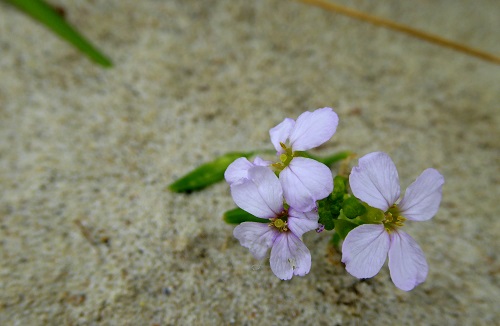
I realise that though I waxed blog-lyrical about discovering Riga for the first time last summer, I didn't revisit Pärnu in pictures, so here's another indulgent phototour of the town, because it makes me happy and longing for the summer months. Let's start on the beach, from microcosm - what is this geranium-like flower which flourishes in the sand? -


to the bay seen from the roof of the spa hotel where the senior Järvis were staying last year.


Back down to the beach: a sign for the impending visit of the Dalai Lama above the dunes


and another, closer beach shot, with, in the distance, Kristaps and Artis, my dear Riga pals who accompanied me north from my first time in Latvia,


who are seen below (A. left, K, right) at the cafe they discovered, Supelsaksad, on the road leading to the beach (Supeluse).


It really does serve the best cakes in town; at opening time, leisurely mid-morning, there's a queue for the fresh, on-premise baking. The owner is a true artist - on the inside wall of the conservatory-porch


she's painted tromp l'oeil miniatures.


More wooden houses in the garden zone: this one I liked


and this is the side of the dacha which David Oistrakh used to rent when he came, along with Shostakovich, as far west as Soviet citizens could in those days. It doesn't seem too well cared for - I'd love to buy it and set up the ground floor as a museum of Oistrakhiana (well, I'd settle for a selection of photographs).


Miscellany: roses


and sunflower,


plus a resident making repairs on a house in the shadow of the big Estonia Spa Hotel,


I almost neglected the two most splendid buildings closest to the beach - the neoclassical mud baths which have been preserved as conversion to a top hotel, the Hedon (not exorbitant by our standards)


and since one of the wings is lopped off the pic, here it is at closer quarters.


Just a bit further along is the Kuursaal from the 1880s. I'm sorry for the changes since our first visit - the menu is nowhere near as good and the dance-hall interior has been stripped of its hunting trophies, though the statue of popular singer-accordionist Raimond Valgre outside still plays music as you walk past.


Besides, the Kuursaal remains a good place to have a drink on the terrace, though probably avoid the food now unless you want a burger.

I enlarged upon the Villa Annende, the other luxury hotel,


in a previous blog visit, but it's worth taking another glimpse into the central hall.


Rather dark to stay there, I'd say, but fascinating to visit, and concerts take place here every festival.


The canal basin fringing the dacha zone is one of many pleasant park areas in the green belt; the wooded zone nearer the sea is the perfect picnic place.

Now we head for the old town, through the only surviving 17th century gateway in the Baltic countries, built between 1675 and 1686 (probably by a Swede). Ladies were selling their knitted wear either side of the portal on this occasion.


Probably the town's most famous son, Olev Siinmaa left his mark in what has been called '"Pärnu Resort Functionalism", chiefly in the splendid hotel by the beach. But the little miracle is surely his own house at 1a Rüütli Street, just behind the above bastion, constructed in 1932-1933.


It fits neatly into a triangle which continues with traditional wooden houses.


In the centre of town, the main drag depicted here with banners for the festival (and some restoration going on to the right, I'm pleased to see - building preservation seems quite hit and miss),


the interloper is the Russian Orthodox Church of 1784-8, named after Catherine the Great.


Close by is the Town Hall.


And then, if you cross Pärnu's only busy road, you're in the complex of new buildings which includes a shopping mall - can't deny the citizens something of the latest trends - and the concert hall which, needless to say, is the building in which I've always spent the most time. More, though, probably, on the beach...

Watch this space, anyway, for your chance to catch the Estonian Festival Orchestra without having to travel to Pärnu (though I can't recommend that too strongly). And meanwhile, last night at Milton Court there was another chance to hear the excellent Estonian Philharmonic Chamber Choir offering more revelations of the choral repertoire - my Arts Desk review is here.