Thursday, 13 October 2011

Reykjavík: little big city


It could so easily have been an Icelandic anticlimax. After a voyage around the glacier-topped volcano of Snæfellsjökull, one of the most impact-ful things I've ever done, and a glimpse into the interior, at least as far as the Hraunfossar waterfalls, might not the capital - previously only driven around in a nightmarish hire-car starter experience - be a bit of a disappointment?

That it turned out anything but was partly due to insights into musical life and people gleaned from the doyenne of the new Harpa Concert Hall, Steinunn Birna Ragnarsdóttir (that's to say, simply 'Steinunn' to all), and partly because our big full day there saw half the extra-Reykjavik population of Iceland - not large, about 300,000 - flood into the city for the annual giant open house, which included the official inauguration of Harpa (the reason I was invited in the first place). Plus the fact that this really does feel like a friendly small town with domestic architecture to reflect that, but also offering food and museums of world-class city standard.

Why now, by the way? Because a colleague has been writing up Harpa's Björk extravaganza, running at the moment (wouldn't have minded seeing that); and because I hadn't intended to let the Iceland experience - the biggest impression of the year - slip without amplifying what I've already written about the musicfest on The Arts Desk.

I reckon that even if you only had the conventional package weekend, you'd get a sense of this extraordinary country. The very fact that the journey from Keflavik airport lands you straight in one of the various lavafields is a good start. And even the Blue Lagoon, our only obligatory experience of mass tourism on the way back and a monstrously overpriced if well maintained set-up, is still quite something if you haven't experienced better. Though the current Mayor of Reykjavik, comedian Jón Gnarr, promised - and took pleasure in breaking that promise, I heard him laconically say on the World Service - to make all hired towels at thermal baths free of charge, which would save you over £10 for a start (no doubt this wouldn't have applied to tourist traps anyway).


The location itself in 'smoky bay' - like all place names in Iceland, the city's means something - would also give a flitting visitor intimations of what's beyond. We even saw our beloved Snæfellsjökull glowing in the sunset from the swish Harpa restaurant on the first night.


The big day began with the 29th annual Reykjavik marathon, caught as we strolled towards Harpa for a morning meeting with Olafur Eliasson and the acousticians.


All the work-y stuff I'll leave you to read about on The Arts Desk, but we ought to see a few more shots of this incredible building with its basalt-imitating 3D glass front and sweeping staircases


with the windows offsetting a couple of new premieres open to all in the foyer, featuring Iceland's flotilla of harps


a couple of carefully-placed trombonists


and, outside, the campest Chinese acrobats I'm ever likely to see.


The whole arts-centre experience is on the kind of scale any city would be proud of (and indeed a group of Manhattan architects were there to see if they could achieve a similar, viable riverside project). Yet Reykjavik's choicest central living-spaces are intimate indeed, rather like village London (but nowhere near as expensive, relatively speaking, or so I'm imagining). Take the street in which our splendid Hotel Holt was situated, Bergstaðastræti. It really merits a blog entry of its own, but since I can't say more about the little corrugated-iron, wooden and stone houses along it other than to draw your attention to Reykjavikaners' love of little things in the windows - Moomintrolls from Finland seem especially popular - there's nothing to do except to show and contrast.


On open day, the street was out in bring-and-buy sales. In some little pockets you'd find music thrown in too, though perhaps I should use inverted commas since the likes of the incredible amplified screaming and drumming which broke a quick afternoon rest wasn't exactly that. No matter; it was all offered up with love, and the likes of Pollianna ('Let me sing and I'm happy' it says on the front of her card) karaoki-ing 'I am what I am' while pancakes were served had undeniable charm.


Elsewhere games of giant and portable chess were rife


and don't ask me what these mummers intended.


There was, in short, too much to catch on festival day. Would have loved a hug from a policeman in the main drag and a dance to an accordion band, less sure about 'Surface Appearances' in which 'a well-dressed couple panhandles and collects bottles to recycle'. But I did think I ought to see at least one museum in 24 hours - a tour of medieval manuscripts in the Þjóðmenningarhusið had to bite the dust - and so I crossed the fields of cars and negotiated endless barriers to reach the Þjóðminjasafn Íslands - that's National Museum of Iceland to us - which in addition to medieval and Renaissance treasures was hosting an exhibition of carved drinking horns


and then past another residential district with odd taste in door plaques


to the compelling horrors of the Einar Jónsson Museum next to the big church on the hill.


What was going on in the mind of Iceland's best-known sculptor (1874-1954) I know not, and perhaps you don't need to grasp the meaning of his allegories; but 'Rest' this isn't.


Jónsson designed the ugly but striking building to house his giants with Einar Erlendsson. It's a fine situation on the hilltop, with an intriguing, narrow spiral staircase the only link between the different levels, and the sculptures in the garden seem happiest; here a crowd of international students were busy pavement-chalking (again, oh, don't ask why). In the even more imposing white concrete Hallgrimskirkja, congregation and choir were well in to a six-hour marathon of psalms. I do like the building both without and within, which reminds me a bit of Guildford Cathedral, though less hospital-clinical.


The chaos of Icelandic organisation turned our evening somewhat pear-shaped, though we forged our own itinerary by making sure not to spend too long at the reception hosted by comedian-mayor Gnarr in the 1909 Höfði on the harbour, famous for the Reagan-Gorbachev summit of 1986.


Our little function was less ambitious, though there was a rather charming ceremony in which native American Indians from Seattle presented the mayor (pictured below) with something significant in wood.


Whereupon we swiftly retired to eat in Harpa, and watched the sun finally sink below the horizon at about 9.30pm.


Happy memories of a near-Utopian city, or so it seemed on a day everyone seemed to enjoy in late summer. I can't wait to go back and see the volcanoes of the south coast.

Tuesday, 11 October 2011

Maestrissimo Claudio and crazy Anton


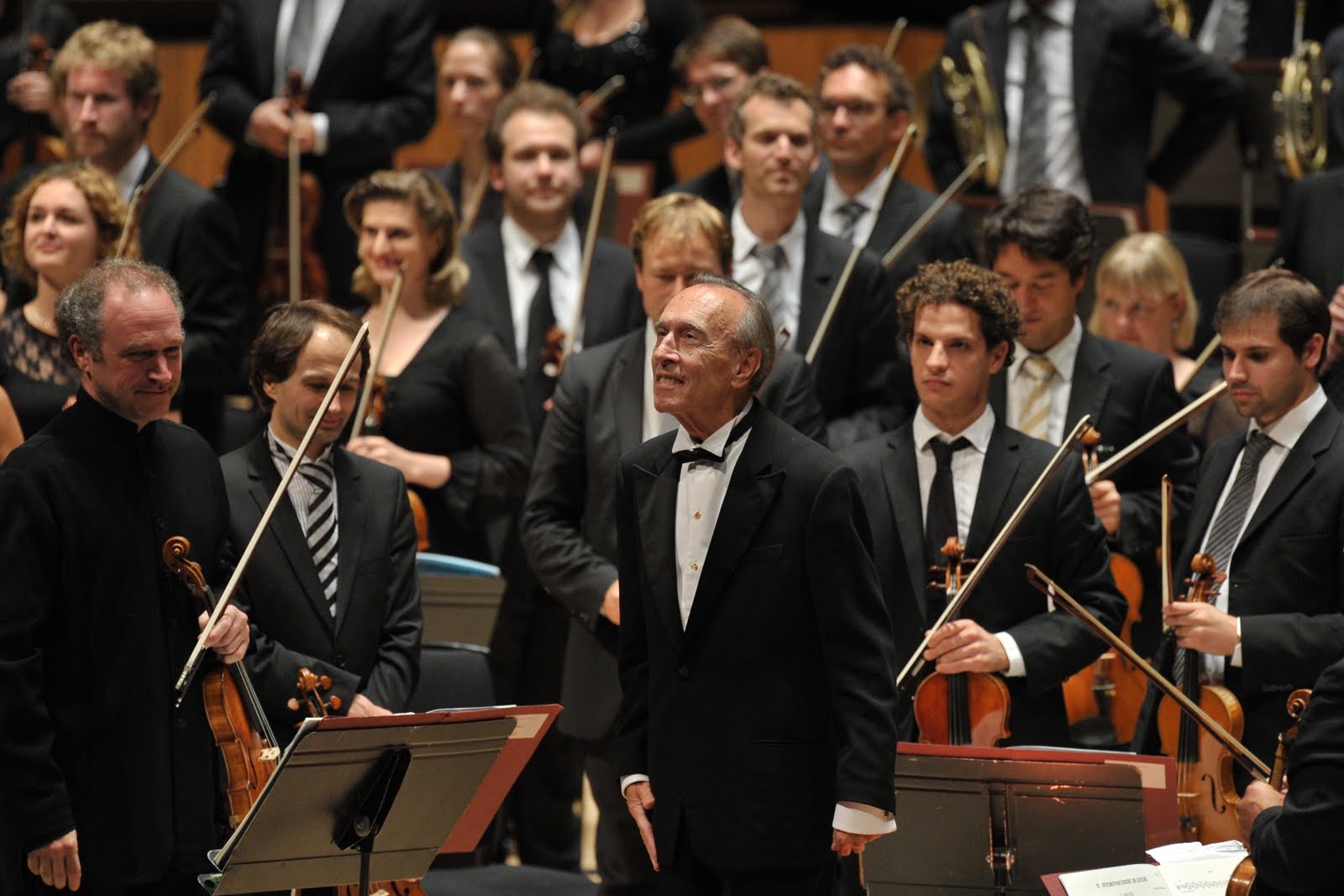
Here he is at the Festival Hall rehearsal, in one of four characteristically superb shots by Chris Christodoulou: Claudio Abbado, the greatest, with the score of one of the 19th century's weirdest symphonies, Bruckner's Fifth. Its wackiness can only seem the more pronounced in a performance of such freedom, suppleness and colour-consciousness as the one we got last night from Abbado's ever-flexible Lucerne Festival Orchestra on the Southbank: indeed, that made me wonder if there wasn't a case for going even further, totally over the top, because I nearly laughed out loud at several spots in the outer movements.

Just as well, anyway, because I can't take solemn, ponderous Bruckner interpretations. His individuality seems to me to lie in his riven quality, the way religious assurances always crumple. In the Fifth, the usually problematic (for me, again, I stress) Bruckner finale is replaced by a brilliant solution: first the clarinet's cheeky broom sweeping the old ideas away, then the tear-jerking brass chorale at the point when everything seems to have run out of steam. Abbado made no attempt to paper over the cracks, but he did pursue the chamber-musical quality that had been the chief virtue of the Schumann Piano Concerto in the first half.


As in a late Mozart concerto, Schumann's woodwind have as much of the glory as the soloist, and Mitsuko Uchida is too good a listener and collaborator not to let the fabulous Jacques Zoon and his fellow-flautist shine. The Lucerne Festival Orchestra has certainly got through first oboists - first Albrecht Mayer, then Kai Frombgen, now Lucas Marcias Navarro (wasn't there a Berlin veto thing which led to the calling upon the Concergebouw principal?) - but they're all the world's best and Marcias Navarro led the way with incredible projection last night.

If Mitsuko occasionally charged with just a hint of panic at the thicker flurries, her sensitivity and clarity of phrase-turn made it all worthwhile. And it was surely a lucky escape that Abbado had fallen out with the unmusical Helene Grimaud before the festival performances - what a substitute!


I'm coming to love most in Bruckner those twilight zones where only a handful of woodwind play. Again, Zoon had the dove's share of the best, supported only by two clarinets and bassoon at one point in the slow movement, sharing a chuckle with first violins where you really couldn't see the joins. That came in the Scherzo's trio, a Landlerish miracle as it dewily came across last night which I'd rather hear repeated than the whole damned outer portion: it's at points like this that I cry out inwardly for Mahler's constant evolution.

But Bruckner is what he is, and as Sibelius - another true original - pointed out, it may be messy, but it's always authentic. As was this interpretation (authentic, that is, never messy) from the greatest conductor-orchestra team of our time. Look at the photogenic players, who glowed and hugged each other with genuine warmth as they always do after every performance with Abbado.


Wish I could go again tonight, when Mozart's 'Haffner' Symphony replaces the Schumann, but, alas, I'm teaching - Bruckner 4, as it happens, in preparation for Belohlavek's BBC Symphony performance next week*. Less of a rush, deo gratias, than yesterday, where I biked in to meet the players of the Pacifica Quartet (more on them anon) in the Wigmore at 3, taught my Passenger class at the City Lit, whizzed back to the Wigmore to do the pre-performance talk with the Pacificas, then pedalled off to the Southbank. Only Abbado could have made me miss the first instalment of the PQ's Shostakovich cycle, but I'll catch the second on Thursday.

*later - ouch: my students reminded me it's tomorrow (Wednesday 12). Just as well they did as I'm supposed to be giving the pre-performance talk...Fortunately there's just enough time to prepare.

Monday, 10 October 2011

The ace


No question about the top choice in Radio 3's Building a Library this time - and don't read on if you still have to hear it on the BBC iPlayer - which, if you live in the UK only, I'm told, applies for the next five days - and don't want to know the outcome. We're not allowed to say 'winner', and usually I end with two or three versions with which I'd be equally happy for different reasons. But tenor Georgi Nelepp (pictured above) would be enough to stake out the 1952 recording of Tchaikovsky's Queen of Spades as easily the best.

His sensitivity, even production, characterisation and fabulous diction leave Atlantov - a more heldentenory Hermann on no less than three recordings, if you like that sort of thing, which I did at the end of the first scene and throughout the last - Grigorian (for Gergiev) and the rather interesting Peter Gougaloff (for Rostropovich) way behind. Grigorian, by the way, wore a powdered wig like the one Nelepp sports below in the very traditional Mariinsky Queen of Spades I saw in St. Petersburg, but was allowed to take it off, I seem to remember, for the filming, as it had turned him rather into the Frog Footman of Lewis Carroll's Duchess.


Decisive in the choice, though, was Melik-Pashayev's conducting: incredibly nuanced, getting superb articulation from the Bolshoi Orchestra and pacing unerringly. For once, the Pastoral of the Faithful Shepherdess that falls like a true 18th century intermezzo halfway through the opera doesn't outstay its welcome. Other recordings may have even better Tomskys and Yeletskys (Leiferkus and Hvorostovsky for Ozawa), but none comes close overall.


If you want the classic, you'll have to buy the 60-CD Tchaikovsky Edition, but it's to be found, I'm told, in some places for less than a pound a disc. There are other operatic rarities - The Oprichnik, The Maid of Orleans, The Slippers and The Enchantress are all here - though inevitably the performances are variable. I've just been listening to the Ansermet versions of the ballets which, though often cut, have such esprit.


Briefly, then, more Russian stuff this week. Tonight I interview the Pacifica Quartet (pictured above by Anthony Parmelee) in a Wigmore pre-performance event before the launch of their Shostakovich cycle; and next Saturday I plague the airwaves again, talking to Andrew McGregor about Weinberg's The Passenger before a Radio 3 relay of the Bregenz premiere. But the highlight of the week is somehow bound to be the two-concert appearance at the Festival Hall of the world's greatest living conductor, Claudio Abbado, with the world's greatest players, the Lucerne Festival Orchestra.

Sunday, 9 October 2011

More reliquary virgins


St Ursula and her putative 11,000 virgins in Cologne reminded me that I had to see the British Museum's Treasures of Heaven exhibition before it closes, alas, today. The museum has enough priceless relics to mount a show entirely from its own resources, but this one benefited enormously from the input of Cleveland, Baltimore, New York's Cloisters Museum - I WILL get there next time - and sundry small towns in Germany and France.

What I especially loved about the display were its starting-point in Roman roots and its inclusiveness of pilgrim relics from all over, spreading to Armenia, Syria and Egypt. It's a bit startling to see a tale from one part of the world represented by artists from another. I admired, for example, the early 8th Century Franks Casket, made of whalebone in (it's thought) Northumbria; but I was especially tickled that its scenes and runic inscriptions extended to the legend of Romulus and Remus, apparently an appropriated precursor of Christan redemption. The image the BM sent me - and all are copyright of the Trustees of the British Museum except where otherwise stated - isn't, sadly, of that but of the three kings alongside vengeful Germanic exile Weland.


I didn't see any Limoges reliquary chasses of copper, gilt and enamel when I was in Cologne, but the exhibits under the Reading Room dome, well displayed so you could walk round them and read information on each panel, made amends. This one from 1220 displays the martyrdom of Thomas Becket - a major figure in the exhibition, of course, with some vivid depictions of the four murderous knights (only two here), followed closely by Cuthbert of Durham.


And this one properly belongs to Limoges itself, as the martyred St Valerie is that town's patron saint.


There were plenty of bits and bobs of saints' bones etc, the nonsensical part of course, except that as Simon Winder's Germania impresses ever more upon me, the complexity of what's behind these beliefs - the consolations, the placebo effect - as well as the beautiful artworks that resulted have changed my attitude slightly. Anyway it's hilarious to think of the Virgin's breast-milk in one of those phials in a cabinet, or bits of the baby Jesus's umbilical cord (courtesy of the Golden Legend and its midwives in attendance on the Virgin). After all, as Luther pointed out, if all the bones and skulls were put together, each saint would have have half a dozen heads and bodies at the very least.

So let's stick to externals, and immortal likenesses. I seem to remember there was one saint whose outer casing had been reunited with the wooden carving inside it for the first time since their original parting. Probably not St. Baudime of the Auvergne here, who of course lost his jewels and was stolen a couple of times, but remains in Saint Nectaire when he's not touring about. Image © Francis Debaisieux, France.


And, of course, the (horrid word) iconic image of the exhibition, 'an unknown female saint, probably a companion of St Ursula' as they put it, © the Metropolitan Museum of Art, New York.


The exhibition extended to altarpieces doubling as reliquaries, like this one by Lippo Vanni from the Walters Art Museum, Baltimore (who owns the copyright), cruelly reminding us of the complimentary altarpieces exhibition we'd just missed at the National Gallery.


J thought the trail went on a bit, but it's curious historically to read of kings' competitive reliquary-treasury-building, and St Chapelle yielded a splendour or two. And then came the Reformation. Well, it was good fodder for superb art while it lasted, and it has such a talismanic, mysterious quality to us now. Three cheers for the things they put the saintly bits of bone in, whatever their authenticity.

And I can't resist, now that I have her mama's permission, featuring my latest lovely goddaughter, whom we bumped into as we came out of the exhibition. Curiously Ma Edsy had been about to ring us at 8.15 to tell us she'd got passes for the early showing, but thought it was too early. And there we all serendipitously were. Inspiration for Ma's art, to be sure, and here's Mirabel soaring angelically towards the fabulous glass roof of the BM's great court, with a little help from Pa Kit.

Thursday, 6 October 2011

Rogue cards in the library


It's a good few years since I've tackled a complete opera for Radio 3's Building a Library. Yet having handled two Russian greats already - Eugene Onegin, headlined with the old Khaikin version, and Boris Godunov, crowned by Abbado - I jumped at the chance to run a relatively small gamut of available recordings of Tchaikovsky's 'masterpiece of horror' (as Janacek called it) The Queen of Spades. Pikovaya Dama is, of course, the proper alternative title; I make no bones about redisplaying the frontispiece of the precious old vocal score I brought back from Petersburg.

It's such a baggy operatic monster, at close on three hours, and yet I've come to love every jot and tittle of the Mozartian laciness Tchaikovsky weaves in between the musical-theatrical fibre true to Pushkin's short story. Yet that makes it devilish hard to illustrate. I must have had examples and script at about the hour-long mark, and never did quite whittle them down to the requisite 45 minutes (normally, you'll have to believe me, orchestral works fit the formula very well by the time I arrive in the studio). With the trusted help of that most collegial producer Kevin Bee, I think we've got it down to 48.

But what casualties! I can't tell you anything about the trajectory until the broadcast's aired on Saturday morning - now available (9/10) on the iplayer 'listen again' facility for the next six days, but I can publicly lament the passing of snippets featuring Olga Borodina (Paulina is just TOO incidental a character), Alexey Ivanov's Tomsky and Pavel Lisitsian's Yeletsky. Inevitable we had to let pass all but a sliver of the Mozartian divertissement in Act 2, and I couldn't really show much of what Tchaikovsky so fabulously does, proto-Stravinsky-wise, with selective wind ensembles for his recitatives.

Here's a bit of side-tracking atonement, then. First, that deliberately rather frigid party chorus launching the ball scene in Act 2, and set to a Derzhavin text, simply because it gives you a chance to see Richard Hudson's set - curiously, the masterly scene of Hermann's scaring the Countess to death doesn't seem to be on YouTube - and also because the diplo-mate is, ahem, rather prominent going through the dance motions (clearly Graham Vick WANTED him to be at the front of the stage, and he does look dashing in his uniform, though the moustache doesn't inflame my desire). Even so, what an odd number for Arthaus to choose as the trailer for their DVD.


Though Building a Library is essentially about sound rather than sound-and-vision, Yuri Marusin and Felicity Palmer DO get a look-in on Saturday.


I lamented the absence of any film of Richard Jones's superlative vision, originally staged for Welsh National Opera. Yet there on YouTube are little one-minute snippets of when it resurfaced at Houston Grand Opera in 2010. Jones's greatest feat was to make ALL of the party creepy-interesting (I'll never forget the way Hermann puppet-masters Lisa while she's trying to listen to Yeletsky's aria). His solution to the Mozartian interlude-pastoral of the faithful shepherdess - which CDs reveal as interminable only if the conductor doesn't keep it lively - was pure genius:


So off with you to watch the Glyndebourne DVD - or indeed the superb film of the original story with Anton Walbrook and Edith Evans.


Alternatively you could always book a weekend in Leeds to catch Neil Bartlett's Opera North production that's opening soon (I found his Snape Maltings shoestring approach to Stravinsky's The Rake's Progress, which I caught a few years ago because I was giving a talk before it, really inventive). Worth seeing especially, I'm guessing, for a rare chance to see the glorious Orla Boylan as Lisa; when did we last see her in London - as Tatyana or Sieglinde at ENO, it must have been, and how long ago was that?

Some years since we met at Glyndebourne to record an interview about The Bartered Bride - Orla remembered the year exactly - I was delighted to chat to her again as we quaffed champagne in the Cologne Philharmonie after Markus Stenz's superb Mahler 8 the other Saturday, in which she'd played so regal a part. Little did I know, when I took this picture in the Philharmonie's recording studio, that Orla was celebrating a Significant Birthday the next day (she was hardly coy about it, but I'm supposed to be gentlemanly, I guess).


Anyway, after Saturday, I also hope you'll want to hear the leading sound version of Pikovaya Dama, too. But more of that anon.

By the way, I've yet to hear from my pals in Radio 3 exactly how the BBC cuts announced today, with nearly 2,000 jobs to go, will affect them. UPDATE: Roger Wright clarifies a bit here. It did appal me that the axing has been graced with the fair, oh-so-imaginative title of 'Delivering Quality First' (= 'Ditching Quality Fast'). And of course the sort of person who gets paid vast sums to think crap like that up should be the first to go. But middle management usually survives intact; s'ist Lauf der Welt.

Tuesday, 4 October 2011

Boulez or...


...this, the oak in autumn (except that heat- and light-wise it could have been a high-summer Sunday on Hampstead Heath)? Well, there was never any competition: I've done my galley years with Boulez and though his conducting of Ravel's complete Daphnis and Chloe with his British chums the BBC Symphony Orchestra a couple of years ago was a truly great performance, I think I've squeezed what juice there is out of his own music. So even one of the seven concerts over the weekend, since I wasn't duty bound to cover them (Igor has done a splendid job over on The Arts Desk), was not an option.

On the other hand I'm so glad a friend of ours, who shall remain anonymous for reasons TBA, decided to hold a small 50th birthday picnic in Kenwood on Sunday afternoon. The Indian summer which has been gracing us until today held out, we lost the route as usual on the way from Hampstead tube and found ourselves - which I was perfectly happy about, since I knew roughly the direction - in a glade of oak so profuse that acorns were plopping not just all around us but on my very head.


This place still amazes me, above all on such a day when the shade was both magical and welcoming. What a mixture of luck and perseverance that, as Richard Mabey tells us in The Unofficial Countryside, Sir Thomas Maryon Wilson faded in his attempts at development and enclosure in the early 19th century. A writer in Household Words, probably Dickens, laid an appropriate curse on the would-be encloser:

May his dreams be redolent of Smithfield, may nightmare tread with donkey hoofs on his chest, and may visions of angry laundresses [whom Sir Thomas tried to charge for spreading out their washing to dry on the heath] scald his brain with weak tea!

The dastardly capitalist did not prevail, and after his death, writes Mabey, 'the Metropolitan Board of Works were able to purchase the Manorial rights of the heath'. The 1871 Hampstead Heath Act resisted park-prettification, 'its natural aspect and state being as far as may be preserved'.


And it has been, to Mabey's and our delight. Mixed blessings followed: at the end of the 19th century the London County Council both tidied and tree-planted, so it seems that we may in part have this anti-natural organisation to thank for some of the shady groves. Even against this there was a swiftish reaction from the newly-formed Hampstead Heath Protection Society. The great pleasure of the northern zone is how you come out of the shadows into meadows, how you leave behind the crowds and then find them again all enjoying peaceful picnics in the sun. There's something incredibly moving about the ease and co-operation of so many people and dogs out relishing the fair weather and the public space, a kind of democratic ideal.


As we did, under a big oak near the house with its fabulous collection of paintings (courtesy of the Iveagh Bequest, may it always remain free to all). I should hasten to point out that the two cyclists below were a) nothing to do with us and b) disembarked just after striking the lawn.


Our consumption and chat, including more quality time with our lovely goddaughters, was decidedly leisurely, though there was - as in all good gatherings - a nodal point as our host donned a former girlfriend's bathing top, skirt and hat and went off to brave the women's pond. We stayed put, expecting some kind of sparagmos a la Bacchae, hairy limbs floating in the pond, but in fact all that happened were some incredulous mutterings in the queue and a bit of half-hearted stirring from two attendants. Whether the experience of being 'a lady' marks a whole new adventure in our host's more-than-midway journey I couldn't possibly say. But we all left happy and sunkissed.

Monday, 3 October 2011

Still starry-eyed about Street Scene?


Maybe not quite so much any more: from the Decca recording sessions up in Glasgow's Govan Town Hall through the two ENO runs, I stayed resolutely moony about Kurt Weill's 'American opera'. I suppose I was never blind to its flaws - the lyrics by Langston Hughes (rather than the spoken dialogue, though both have their heart in the right place), the baggy first act with a few below-par numbers.

Yet they seemed more apparent on Friday night when I revisited The Opera Group's long-running success two years on, back at the Young Vic. I can still admire what Weill, Huges and Elmer Rice were trying to do: to convey the shortfall between the urban dream - food, glorious food, Broadway, success after school graduation - and the reality within an extended multi-racial community (probably not extending, in 1947, to blacks beyond the caretaker who gets the cheesy number 'A marble and a star').

Still, it did sag at times, with not all the text coming over the admirably large orchestra - the excellent Southbank Sinfonia seamlessly conducted by Tim Murray - which faces straight out at the audience in two tiers of the 'tenement' - some weaknesses in smaller roles and not much sense of atmosphere (it was hot outside, but cool within, incidentally). Photos by Alastair Muir (show-stealing Kate Nelson as Mae Jones and John Moabi as Dick McGann above in 'Moon-faced, starry-eyed') except for the Rose and Harry Easter shot by Keith Pattison.


There have been a few cast changes, chiefly in the juve roles. Paul Curievici looks the part of the bookish young Sam Kaplan, and sings 'Lonely House' with the right ache and anger, only slightly bottling up at the very top; Susanna Hurrell, pictured below with James McOran Campbell's Harry Easter, has a dangerous spread for a young 'un above the stave, but acted neatly and of course wrung us out with Rose's devastation after the tragedy (I always think it must be a gift of a part to emote truthfully; only imagine how you'd feel as a daughter suffering a horrible loss).


We had a new, reactionary-violent father Maurrant in Geof Dolton, looking the part but not quite butch-brutal enough (I think bass-baritone, as in Sam Ramey on the Decca recording); but his numbers are the most awkward, even if the fine ensemble did paper over the embarrassment of 'I/He loved her too'. Downtrodden-radiant Anna Maurrant was played again by Elena Ferrari: where has this soprano been all my life? She's a superb, intense actress and the only one in the cast with a seemingly flawless technique. And though John Fulljames's production has never totally worked - in the stalls, you can't see what they're all chalking on the pavement - it does make poignant and believable the potentially sentimental 'A boy like you'.


The direct emotion here comes not just from Ferrari but also from 12-year old Tyler Fagan (actually not sure that's him pictured with her above), a real natural who'll surely be singing Miles in The Turn of the Screw soon (and I guess it had better be very soon). The last Willie Maurrant I saw in this production, George Longworth, was also superb, so someone's doing a good line in training treble-actors who can really project. And all the kids, as before, are spirited.

Weill's score still moves me to tears - profoundly so, I find, in some of the underscoring, or rather the melodramas: that moment when Rose finally picks up her suitcase to leave, scored for cor anglais supported by Mahlerian harp, is a heartbreaker. You can get a sense of it in the only YouTube clip - among a sea of student production films, some no doubt good, but I didn't have time to check - from either of the two excellent complete recordings (there are also excerpts from the Broadway original). This is Bonaventura 'Bonny' Bottone as Sam with Janis Kelly - who would now make another superb Anna Maurrant - as Rose in the ENO production, conducted by Carl Davis, and the duet incorporating Whitman's 'When Lilacs Last in the Dooryard Bloomed' at the end of Act 1.


We also have to hear 'Lonely House', one of the great 20th century tenor 'arias'. I've been listening again, with obvious emotion, to the late Jerry Hadley, such a genial presence during the recording sessions back in 1989 along with another great no longer with us, Arleen Auger (she and her good friend Della Jones camped it up as the nursemaids). Adrian Dwyer is pretty good here under I know not what circumstances, and not much graced with close-ups, but never mind


And in the meantime, in a quest for DVD life after The West Wing, we decided another American street scene, very contemporary, ticky-tacky Californian, was not for us: I picked up series one of Weeds, about a desperate widowed housewife who deals cannabis to keep her house and kids on the level, on the strength of the star, Mary-Louise Parker (pictured below by Gage Skidmore), a major West Wing light (she's also superb in Angels in America).


Can't fault her, not any of the other actors, but it's all so relentlessly grubby that I don't give a shit about any of the characters. I have no problem with filth out of the mouths of believable, rounded humanity, but there's next to nothing of that here.

Then we tried two episodes of Studio 60 on the Sunset Strip, also devised (like the first four series of WW) by Aaron Sorkin, but the milieu - the usual self-regarding American showbiz scene - doesn't really interest me. And the culmination of the 'new' programme the characters are all working on, with John Mauceri - only connect, last heard of recording that Decca Street Scene and a few other things - conducting a cheesy version of G&S's Major General's Song, did not inspire the confidence to continue. Will now take up John Sleopkura/Graham's recommendation of the New Orleans drama Treme since fibre is desperately lacking after The West Wing.