Showing posts with label Debussy. Show all posts

Tuesday, 6 May 2025

Debussy, Ravel and Co. on Zoom 2: 1912 to 1937


Our first term with the two French maîtres and their contemporaries brought revelations, to me, at any rate: those which stand out especially, because I didn't really know either, are Chausson's exquisite incidental music for a puppet-theatre production of The Tempest - first ever use of the celesta - and the incredible subtleties of Debussy's piano Images, enriched especially by film of Arturo Benedetti Michelangeli.

There will be less Debussy in this term's 10 Thursday afternoon classes, starting in two days' time, more Ravel, for the simple reason that Ravel lived longer, into the post-war era of Les Six and even that of early Messiaen. We start with Jeux, a score that still baffles me: is it as great and exploratory as so many people suggest? Then there will be the 'late' Debussy sonatas; at the 2024 Sheffield Chamber Music Festival I was amazed at several of the late specimens for wind by Saint-Saëns, which will also feature. Ravel then enters the jazz era, and the ferment of 1920s Paris, an amazing scene. 

Here's the flyer - click to enlarge and contact me if you'd like to sign up. You can get the videos if you can't attend any or all of the classes. Don't forget it's not too late to sign for the Monday course on Wagner's Die Walküre, as I only started last week and yesterday was a Bank Holiday.

Saturday, 15 March 2025

A beautiful goodbye to my mother


Today would have been my mum's 94th birthday. She so nearly made it, had a mostly splendid final year at the best of care homes, Greenacres in Banstead (run by the not-for-profit Anchor company), visiting which was always a joy, and seemed to be recovering from a chest infection when she died suddenly on 30 December. I've stated it already: no regrets, because she never declined in to a miserable last few months, and was adored by her carers who still tell me they miss her so much.

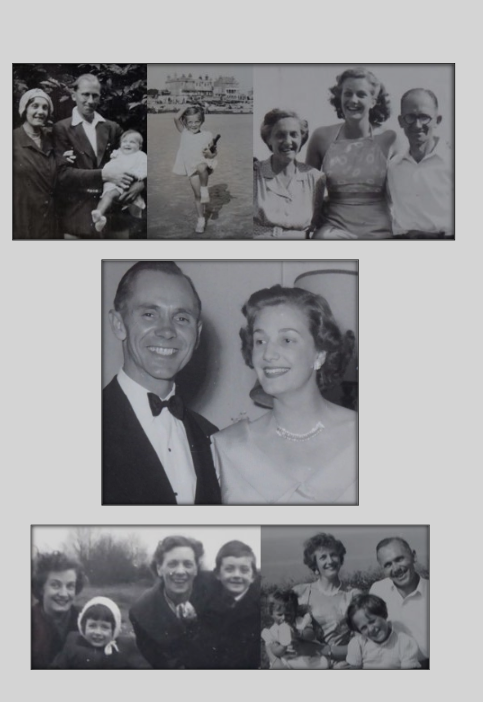
I was delighted that one of them, the lovely Myrna Ward, spoke so beautifully at the funeral alongside the physiotherapist I got in to see her every week, Bhawna Brijwani. The idea was to get people from various periods of mum's life to follow my eulogy (which I managed to get through without succumbing to tears, or at least only briefly towards the end. I'm used to speaking without a script, but the words just flowed when I wrote). So my childhood friend Gail, whom I haven't see for years, spoke about the friendship between her mum Marie and mine, which ran from aged two to the ends of their lives - birthdays and departures were astonishingly close. In the photos below (you can always click to enlarge), on the inside front cover of the order of service: mum as a baby with her parents, as a little girl prancing on the b, as a glamorous teenager not long before her beloved mum's untimely death; with my dad; with the children who loved them as their second set of parents before I came along, cousins Diana and Michael with her and mother Edith, Sara and elder sister Sue with mum and dad. 

Liz Grover from what started out as the Young Wives' Drama Group gave a vivacious tribute, and goddaughter Sara, who gave mum so much pleasure by visiting Greenacres regularly with daughter Hanna and baby grandson Lenny, read the bit from the Bible I'd requested, the famous Corinthians passage about faith, hope and love. Inside back cover: son in the picture, born eight years after they got married, with parents at Eastbourne and in the back garden, dressed in the costume mum made for me as Sir Joseph Porter in our junior school production of HMS Pinafore, with dad holding adored Zsabo; with stepfather Ron, his dog Jinty and mum at graduation; mum and Ron at another wedding; mum with friends - Marie in Sorrento, Margaret in Cambridge and Joy, who died in 2024. That's on a boat somewhere (the only one of the two of them I could find that was any good).

Of the hymns, I had no choice but to give in to mum and her friends with 'Make me a channel of your peace' - at least the words, by St Francis, are good - but got my way with 'Lord of all hopefulness' and 'Guide me, o thou great redeemer'. And of course I organised the music, knowing that mum would have loved it, though I'm still not sure what her own personal choices would have been (I'd asked, but never got very far). I am sure that she would have loved the major participation of violinist Benjamin Baker, whom she always remembered as a brilliant young violinist of the Yehudi Menuhin School, where she and Joy ushered. Even in her last year, when I mentioned him, she cited the YMS immediately. This is Ben in rehearsal with Tom Pope, one of my oldest friends, from university days.

Tom also accompanied Ben and my other half, Jeremy, in an aria from Bach's St John Passion, and Ben in the most perfect performance of the 'Meditation' from Massenet's Thais you'll ever hear. That came after George Harcourt-Vernon led the prayers. Vicar Kate had just left on holiday, but it was a blessing that lay minister George was available, as unlike Kate he'd known both my mother and myself, when I sang in the choir during the 1970s. 

He did a wonderful job and the big worry, that the service would run over and make him late in accompanying the coffin to North East Surrey Crematorium to give a valediction, didn't materialise; he, Jeremy and Liz got there in good time, while I hosted the rather jolly tea laid on by the Mothers' Union in the Open Door cafe just down from the church. Biggest joy here was to see adorable 'Auntie' Betty Reavley, who hadn't changed at all in her sweetness even at 97, and her daughter Jill, family of my youth, and Margaret Carter's eldest daughter Marese, another playmate along with her sister Katie in early days (I now realise that though an only child, I was never without surrogate brothers and sisters). Here are Marese and Betty.


 I felt so supported, too, by four friends from Dublin who didn't know mum but came out of solidarity, and a cluster of my great university pals, pictured below (from left to right Tom, Simon - who played Debussy's Syrinx so beautifully in the service - Jo, Catherine and Mary, whose dad the Rev (later Canon) Thomas New had been such a presence (he died last year, and Mary was back in her old stamping-ground for the first time in years).

I don't mind at all if people want to watch the whole service,  filmed with excellent sound by All Saints and placed on their YouTube site. The formal part starts at 11m30s, Ben playing as the coffin is brought in with more Bach (the Andante from the Sonata for violin in A minor). If you just want to witness the musical side, the Bach aria is at 38m20s, Syrinx at 46m45s and the Massenet 'Meditation' at 1hr6m7s. The playout is also worth catching - Julie Andrews singing mum's party-piece, 'Burlington Bertie from Bow'.

The splendid floral bouquet for the coffin - I wanted purple, yellow and white - should have been collected from the church by Greenacres, wasn't and actually seemed just fine on the lawn by the porch; it lasted three weeks.

The final gesture is to get mum's ashes placed as near as possible to dad's beneath the west tower of the church, and to have a small headstone made. There will be one more little ceremony for that. Meanwhile, warmest thanks to everyone who came, participated or just watched live or later. Finally, here's a repeat of mum still looking elegant on her 93rd birthday, the photo I used for the back cover of the order of service.

Happy 94th, mum - we won't forget you. 

Wednesday, 15 January 2025

French music after Berlioz: the next Zoom step


After a Zoom term and a half on Berlioz, I moved on to Saint-Saëns and Chabrier (total originals, earning their places in the front rank of composers however light they may mostly have kept it), Franck and Chausson, with the adventure in fascinating Fauré launched but to be continued. I'd originally thought of this term on Debussy and the summer spent with Ravel, but because their fellow composers still need to keep making appearances, decided to do both chronologically: this term will take us up to 1914. 

I've discovered some real rarities along the way - Saint-Saëns's early chamber music, Chausson's incidental music to a puppet-play version of Shakespeare's The Tempest (which starts with the first ever appearance of the celesta). I'm sure more will emerge from Thursday afternoon onwards (looking forward, for instance, to discovering more of Mel Bonis). Join us live from tomorrow (Thursday) afternoon onwards or get the videos if you can't attend. Details below (click to enlarge). 


Tuesday, 11 September 2018

Discovering Danco through Ansermet


Continuing to dig in to the huge discography (300 plus Suisse Romande recordings for Decca alone) of Ernest Ansermet long after the BBC Radio 3 discussion of his legacy - the edited version still to be heard for the next few days on the BBC iPlayer here starting at 53m27s - I ordered up five discs from the Australian-based Eloquence wing of Decca, not least to explore his few opera recordings. And here I came across a voice I only previously knew through the Josef Krips Don Giovanni and Erich Kleiber Figaro, Brussels-born Suzanne Danco. Her lyric soprano is not so light as ever to be dubbed 'soubrette' - she sang Ellen Orford at La Scala, Marie in Wozzeck and Mimi - but it's the personality in everything she sings that shines through.


Anyone, for instance, who gets annoyed with poor Mélisande - abused, Maeterlinck would have us assume, by her previous lord and master Bluebeard before Golaud discovers her lost in the forest - might find this characterisation stronger than usual. There's certainly nothing wan or wispy about it, and you hear the pain creep in when Debussy needs it. As for the whole of this 1952 Pelléas et Mélisande, I think this may be the most compelling version I've ever heard on CD - I wish I'd known it when I spent six Monday afternoons on the work for my Opera in Depth course.

The classic Désormière recording of over a decade earlier is also very speech-melody conscious, and there will possibly never be a better Pelléas than Jacques Jansen (Ansermet's Pierre Mollet is also excellent). But here the sound is so much better, and Ansermet, preferring a forward sense of movement throughout to 'burn off the mists' long before Boulez, makes his strings sigh with pain and love. You can more or less understand, with even just a little French, what's being sung about just by listening without a libretto. Quelle clarté! I'd still turn to some recent recordings for further beauty of orchestral texturing, but I simply don't want to listen to a non-French cast who doesn't understand every nuance.


It's curious to see Danco get top billing in Ansermet's recording of Ravel's L'enfant et les sortilèges when in fact she sings not the role of the reactive child but the meltingly beautiful aria of the picture-book princess. Again, the pointillist detail of Ansermet's interpretation as captured in the bright old Decca recording is fabulous (even if the last chords of the Five O'Clock Foxtrot seem not to be fully scored) and here's Hugues Cuénod excelling, too, as old man Maths. Danco and her Golaud, Heinz Rehfuss, turn up in the aurally otiose L'Heure espagnole, too. But she's most bewitching in the Deux mélodies hébraïques - the first of which gives the strongest sense of the power she can unleash when necessary - and Shéhérazade. So full of charm and meaning, again, even if not as luxuriously upholstered as the classic version with Régine Crespin. Which I had quite forgotten is also an Ansermet/Suisse Romande special. Real gap in the library there - must correct.


On the same set there's the first of Ansermet's Boléros with the Paris Conservatoire Orchestra. a good couple of minutes more leisurely than his Suisse Romande version. I was glad to find out that his recording of Hérold's Zampa Overture is lurid with character, explaining why I was so obsessed with this piece as a child (I took out the Ace of Diamonds LP of French overtures at least twice from Sutton Library). And the Haydn revelation continues with renewed admiration for the mixed moods of Symphony No. 83 (the hen-peckings follow a dark start) and the charm of No. 84's finale (funny how the un-soubriquet-ed symphonies often seem to be overshadowed) in the set of 'Paris' Symphonies. The discoveries keep on giving.


On a very un-French footnote, I also confirmed for myself the total-classic status of this recording of Britten's first opera, operetta, musical, call it what you will. 


Having been disappointed with so much about the Wilton's mishandling of Paul Bunyan, despite some excellent casting, I came home, and confirmed the work's masterpiece status thanks to a cast under Philip Brunelle that puts it across with exemplary clarity (that word again, not so evocative in English).   

Tuesday, 18 July 2017

After Pelléas, Ariadne and Tito


'Ah! I breathe at last!...I thought for a moment that I was going to be ill in those enormous vaults.' Following Pelléas's cue as he emerges onto a sunlit terrace after a terrifying time in the depths of the gloomy old castle, I think most of us in my Opera in Depth course at the Frontline Club were glad to get out into the sunny streets of Paddington after the last of four and a half Monday afternoon immersed in the world of Debussy's Pelléas et Mélisande. Some of us will be staying in the light for Strauss's Ariadne auf Naxos next Monday. Pelléas was hard emotional work, though. It's probably the most exquisitely refined and orchestrally ravishing operatic score ever written, but as a drama more cruel and harsh than it is soft and beautiful.


We've been aware of its multiple meanings, but above all how it functions both as the most straightforward triangle - as Richard Jones put it to me when I first met him as he was working on the ENO production, 'two men fall in love with the same woman, with disastrous results' - and as so much more, partly intimated by Arthur Symons: 'we have two innocent lovers, to whom love is guilt; we have blind vengeance, aged and helpless wisdom; we have the conflict of passions fighting in the dark, destroying what they most desire in the world'.


Ascribe that first to Maeterlinck's nightmarish play, following his obsession with the destruction of the young by the old. Of course Debussy completely transfigures it with his music of nature, reaching its most dreamlike, minimalist, barely-audible apogee in the scene at the grotto by the sea. But he knows how to unleash the full harshness  - at the end of Act Three and in Act Four, in the scenes of the insanely jealous Golaud's abusive cruelty to his son and wife, the musical violence is extreme. This made an interesting comparison with the pathology of the protagonist in Verdi's Otello, on which we'd spent the first five and a half weeks of the summer term - the difference being that Golaud has real cause for his jealousy, whereas Otello does not.


As well as snippeting sound recordings by Désormière - the classic and text-unsurpassable 1941 recording with Irène Joachim and Jacques Jansen - and by Karajan, featuring an superb José Van Dam and Frederica von Stade, we stuck for visuals with the 1999 Glyndebourne production by Graham Vick on DVD. I'm kicking myself that I never saw it at the time; apart from possibly being the most visually arresting production ever seen at the Sussex house, with its flowers under the floor, spiral staircase and peeling gold walls, the focus on nuance from John Tomlinson, Christiane Oelze and Richard Croft is ideal for video close-up. We came away devastated from the tower scene (Mélisande actually hangs backwards from a huge deco light, as you can see in the DVD cover up top) and, yesterday, from the disturbing death of Act 5, as quiet and strange as the lovers' unaccompanied 'je t'aime'/'je t'aime aussi'.


Much more to say on this, but the advertising point here is that we move on and for the next two Mondays, I've added two extra one-off classes on Strauss's Ariadne auf Naxos (24 July) and Mozart's La clemenza di Tito (31 July), tying in with the Glyndebourne productions (scene from the Ariadne opera in the 2017 revival, image by Robert Workman). Same time, 2.30pm-4.30pm, location a private house generously loaned by a friend just down the road from our usual venue. the superb Frontline Club. If you're interested in coming along - or indeed if you're interested in next season's course, which will start with La bohème, including (I hope) another visit from Richard Jones, he director of the new production due at the Royal Opera - leave a message here with your email. I won't publish it but I promise to reply.

Wednesday, 5 December 2012

Klezmer for two


BBC Symphony Orchestra violinists Celia Waterhouse and Danny Meyer visited the class last week to play and chat (I missed my chance to snap them before the instruments returned to their cases, so they obliged by getting colleague Anna Smith to take a fine double portrait in Maida Vale the following day). The outer panels of their triptych tied in with last Saturday's Mahler Resurrection and this coming Friday's Berio. Either side of very pretty 1791 variations on 'Der Vogelfänger bin ich ja' and 'Bei Männern' from Mozart's Magic Flute, they played a selection of Berio's elliptical, effect-full and melodically striking duos and three klezmer pieces (to tie in with that passage in the ever-amazing slow movement of Mahler's First Symphony, which they also demonstrated).

The klezmer arrangements were by a name I blush to say I hadn't heard before, Aleksey Igudesman. His 7/8 version of  'Hava Nagila' makes it sound absolutely fresh; there was a lively wedding number with an out-of-kilter rondo refrain, and a well-tempered meeting of Valkyries and bridesmaids in 'Richard wouldn't like it'.

The Petersburg (Leningrad) born violinist/arranger is well known - though less so in the UK, it seems - as part of a musical comedy duo, Igudesman and Joo (who is as brilliant a pianist as AI is a violinist). Now I don't usually warm to such stuff, despite - or more likely because of - being dragged along to Victor Borge concerts at a young age. Danny told me to go home and look up on YouTube  'Rachmaninov had big hands', which involves Igudesman handing Joo various notched wedges of wood to add a plethora of notes to the C sharp minor Prelude. A clip which gives a better example of both their skills submits Mozart's Rondo alla Turca to orientalisation. Do stick with this longish strand for the klezmer/eastern effect on an old favourite.


There's plenty more worth watching where that came from (try the collaboration with Kremer and Co in 'I will survive'). Anyway, we learnt a lot from Celia and Danny in the conversation which followed their playing. Danny's role as union representative and his knowledge of the politicking reassured us, among other things, that the BBC orchestras will be taking a ten rather than 20 per cent cut; had it been the latter, one of them might not have survived. But a couple of other institutions may not be with us for much longer; it would be presumptuous to name them.

Danny was interesting on one crucial  difference between two visiting conductors. The first, who shall also remain nameless though named he was and Danny made clear he certainly respects him, comes to rehearsals with everything already planned out for his interpretation. The other, Haitink, gets the orchestra to play through the work(s) in question, listens to their sound and adapts, which surely gets more inspiring results.

We also talked about contemporary pieces which get the violin to do everything under the sun except play what (perhaps narrowly) we think of as 'violinistically', in other words to make a phrase with the bow on the string. That was very much the impression in two out of the four new (or newish) pieces in the Mercury Quartet's 'Inspired by Debussy' concert at King's Place last Monday. I went with the diplo-mate, who had co-ordinated the event and supported the commissions via EUNIC. The two pieces in question were a short bit of mood-music which might as well have been an improvisation by a Polish composer and a more dynamic journey in Cypriot Evis Sammoutis's Metioron, which started randomly but gradually coalesced into a piano-led scherzo and haunting final slow section.


The real excitement was seeing the youthful commitment the Mercuries (pictured above, and led by Romanian violinist Vlad Maistorovici, who I'm told is a rather brilliant composer in his own right) brought to their contributions. There was also a trio-Nocturne for flute (Ana de la Vega), harp (Claire Iselin) and voice (soprano Patricia Rozario, who had learnt her parts at 24 hours' notice, and seemed totally in command) by Estonian Malle Maltis - pure Debussy pastiche, but superior of its kind; and a short assemblage of fragments, including the only direct reference to Debussy in a descending phrase from Nuages, by Thomas Oehler. The Debussy works we heard were a surprisingly blowsy early song, Flots, palmes, sables, with a strange, rather redundant meeting of piano and harp, and the chimerical Cello Sonata, in which pianist Antoine Francoise especially excelled. An uneven programme, then, but what vivacious guides we had in the performers.

Saturday, 5 November 2011

1911


That was the theme upon which I had half an hour to expound before the second in the BBC Scottish Symphony Orchestra's 1911 series in Glasgow's glitteringly refurbished City Halls on Thursday evening (more on the revelation of this virtually new venue, and the concert, in the next post).

Of course it's a subject which throws up further astonishing links the longer you have to think about it, and even as I was putting the finishing touches to my dozen examples, the year of Alexander's Ragtime Band turned my thoughts to checking what Ives was up to. Sure enough, it was then he composed The Fourth of July, third movement in the Holidays Symphony and the trickiest polytonal melee of the lot ('I did what I wanted to, quite sure that the thing would never be played , and perhaps could never be played' - it finally was, for the first time, in Paris on 21 February 1932 - 'although the uneven measures that look so complicated in the score are mostly caused by missing a beat, which was often done in parades').

Even in terms of what DID get performed in 1911, the musical list is perhaps the most impressive of any year. I turned to the treasure-trove chronology of Slonimsky's Music Since 1900 to compare the premieres of the twelfth year with those of the first. In 1900, the lucky public got Tosca (a lively start in January), Finlandia, The Dream of Gerontius; in 1911, another start-of-year blast with Der Rosenkavalier, Scriabin's Prometheus, chunks of Ravel's Daphnis and Chloe as well as his L'heure Espagnole, Sibelius's Fourth Symphony, Elgar's Second, Mahler's Das Lied von der Erde, Debussy's Le Martyre de Saint Sebastien and Stravinsky's Petrushka (the latter two respectively graced by designs from Bakst and Benois below).


In terms of the as yet unperformed, you can add to the list Bartok's Bluebeard's Castle, from which I took the vision behind the Fifth Door and Judith's blank response as a paradigm of the splendour-and-misery dichotomy of music in 1911, and the fourth of Webern's Op. 10 pieces, composed on 19 July, 'scored', Slonimsky sums up, 'for clarinet, trumpet, trombone, mandolin, celesta, harp, small drum, violin and viola , containing 6 1/3 measures in 3/4 time lasting 19 seconds according to the metronome mark.' (Boulez takes 22).


That made a neat contrast to the Mozart-minuet-for-breakfast that turns into a sensuous 19th century waltz in Der Rosenkavalier (taking advantage here of one of the Roller designs the Austrian National Library in Vienna gave access to during its all too short Rosenkavalier centenary exhibition).


Other polarities I used - analogous, I hope, to the Somov/Schiele split up top (both portraits painted in 1911) - were Debussy's whole-tone versus diatonic in Le Martyre, the slightly unsatisfactory 'fragments' from which were being performed in the concert; Stravinsky's tritone-into-bitonal basis for riven puppet Petrushka versus the white-note-y Russian Dance in the ballet; Sibelius's tritonal obsession in the Fourth Symphony versus the light and airy 'Way of the Lover' in Rakastava; and the dissonant nine-note scream in Mahler's Tenth as contrasted with the great string leap leading to a final becalmed F sharp major at the end of the symphony - if only to prove that human love, in the shape of 'to live for you, to die for you, Almschi' as written beneath it, was the ultimate triumph for Mahler. Who of course died on 18 May that year and was buried in Grinzing cemetery as painted by Schoenberg (an image I've already evoked on this blog, but worth repeating).


The one issue I took was with the doomy nature of the BBCSSO's blurb: 'immense change was afoot...accelerating towards the cataclysmic events of 1914...the end of the empire...the angst-ridden music of middle Europe...a time of great foreboding'. True, the world was worried by Germany's rush to arms


but once more I take my new bible on the subject, Simon Winder's Germania, as gospel against the notion that everyone sensed the world as they knew it was about to crash and burn. Winder maintains that the Habsburg end of things needn't quite have shattered in the way it did had the Austrian Empire not been tied to 'the cretinous and wholly unrealistic aims of the Germans'. He points out Vienna's pioneering brand of 'luxury modernism' and argues it could, and should, have continued to carry on defining European style and idea:

It seems more rational to be angry than mournful that a war of such a peculiar kind would end all this. The final movement of Berg's extraordinary Three Orchestral Pieces, with its lurching, macabre military march, written in the spring and summer of 1914, is generally seen as a brilliant premonition of the conflict to come - but nobody could foresee such a thing. It would be as plausible to criticize Klimt because his paintings incorrectly presaged a future mostly filled with half-nude society hostesses.

The example I took from 1911 parallel to Winder's Berg was from the Rondo in Elgar's Second Symphony, namely that juggernaut of a summer-garden ghost resurrected AntiChrist-like from the first movement. David Pownall's play Elgar's Rondo posited it as a prophetic vision of soldiers marching to their doom on the battlefields of the First World War, which may have been justifiable dramatic licence; but to me it's a private nightmare of the riven, troubled Elgar. Below is the late lamented Sir Edward Downes's performance, posted on YouTube by someone who seems to find the movement happy and joyful (though one commenter contradicts that). The apocalypse I refer to starts at 4'44, though of course the Rondo is nearly all chromatically unsettling.


At any rate a month after the unsatisfactory premiere of that divided symphony, Elgar's splendid and far from harmonically placid Coronation March for George V and Queen Mary was performed. It was recorded in abridged form - it's awfully long, probably the only reason why it doesn't join the Pomp and Circumstance Marches on concert programmes - by Landon Ronald in 1935, a year after the composer's death, for the Silver Jubilee of the same couple. Which I would compute as being 1936. In which case, as J pointed out when I played him the black-white examples, here would be another case of a significant time three years away from a big cataclysm.

Wednesday, 29 September 2010

Tiddely-om-pom-pom


Melancholy, geriatric Eastbourne is where I liked to be beside the seaside as a child. The parents would drive down there about once a month on Sundays in spring and summer, and our rituals would take us from the Wish Tower Cafe, where a difficult friend of ours more recently fled the smell of incontinence on our last revisit, to the Martello Tower, the Lifeboat Museum, the bandstand and the Redoubt.

Returning there to catch the last day of the Ravilious(es) exhibition at the Towner Art Gallery earlier this month, I persuaded my companions to indulge me on a trip down memory lane. We'd done a bit of it when J was singing in a Carmina Burana up the coast with the divine Mary Plazas and a very competent school orchestra. But we hadn't retraced the old route. And I found nothing much had changed. Maybe the older generation is marginally less in evidence, and a few cafes along the prom-prom-prom serve espresso, but that's about it.

The 1930s bandstand, replacing the Victorian 'birdcage' original, was still in full working order. My old dad used to love this music (in fact the only piece I ever heard him hum was 'The Yeomen of England' by Edward German*). And it's still playing to the same sort of crowds (since I assume that the original senior citizens are mostly no more).


This time I had a little more admiration for the design.


Incidentally, I can't remember where I recently read it, but Debussy apparently didn't actually compose La mer at the Grand Hotel nearby; he simply put some finishing touches to the manuscript. And he thought Eastbourne rather drab, though I must say the Duke of Devonshire's white stucco buildings and the gardens are a bit jollier than the post-bombing mess they made of Dieppe central.

On, then, to pay homage to the slot machines on Eugenius Birch's thousand-foot long 1860s pier


and along the East Parade to the Redoubt. Built between 1804 and 1812 as another protection against the Napoleonic invasion, it was always my favourite haunt as a child for what it housed - not so much the model village but a fantasy grotto, apparently mocked up in the early 1960s. What magic I found in its fluorescent fibreglass rock acquarium and its lilac-lit parade of Ionic columns and classical statues. All removed about a decade ago, the nice man in the military museum told me. Anyway, the Redoubt itself has been handsomely restored to something like its original state, and was completely untouristed when we arrived in the mid-afternoon.


The attendant also persuaded me to buy a little clutch of heritage walk leaflets, not by any means wasted as I wanted to explore one area I hadn't seen as a child - the old town which preceded the rail-inspired bathing resort by many centuries. There's not much to see there, and it's quite a hike inland, but worth it for the church. We approached via the posh Victorian west end and the grandiose town hall ('free renaissance' says Pevsner).


St Mary-the-Virgin, on the slopes of the Bourne stream, has suffered from - or been saved by, depending on which way you look at it - Victorian restoration. Still, it's a much-loved place of worship with a healthy 50-strong choir, we were told. The Norman nave yields to a very wide and large chancel with romanesque-style capitals.


In the Gildredge Chapel there's a very fantastical, blow-dried St Michael conquering the dragon by Hugh Easton, made after the 1943 bombing.


The church's most fascinating memorial commemorates the untimely death of Henry Lushington, who survived the Black Hole of Calcutta by drinking his own sweat only to be 'deliberately and inhumanely murdered' in Patna at the age of 26 by 'the Nabob Cossim Ally Kawn'. His parents erected a bust by Sir Robert Taylor above their long and loving inscription.


Outside, the church with its massy 14th century tower is complemented by an adjoining 16th century rectory manor.


There's not a lot of medieval building to be seen in the vicinity, so we headed down to the pretty Motcombe Gardens and a house opposite where an iron silhouette marks the home of the very late, great Tommy Cooper (!)


And just like that we were back at the station for the return train to London.

*Talk of the devil and here it is. I never thought to hear the tune my father never sang beyond the first line, and always studiously avoided an LP of Merrie England in the local library. But in the recently recreated Prom Last Night of 1910, there it was from the very unlikely, and now rather knackered, vocal chords of Sergei Leiferkus. The rendition is idiosyncratic, to say the least.


If you want less bizarre diction, Peter Dawson can be heard on YouTube too. But a minute and a half is quite enough for me. G&S's Yeomen of the Guard - now that's quite another matter.