Showing posts with label National Theatre. Show all posts

Saturday, 30 March 2019

Company at last - and a few Follies offcuts


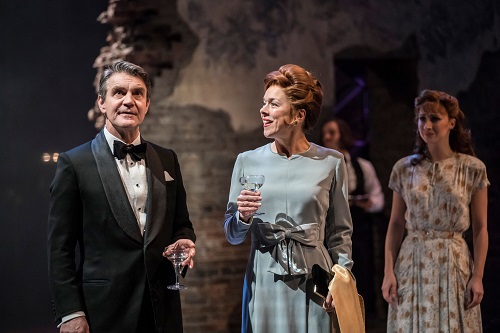
Nearly missed it - and you will, too, if you don't go today (and don't ask me if there are any tickets left, though we got half-price ones from the Leicester Square booth). Marianne Elliott's endlessly inventive production of Company hit the headlines because Sondheim's evasive protagonist, whom I last saw played by the superb Adrian Lester, has become a woman, anxious about the need to settle down and start a family while the clock's still ticking. I like the way that Elliott underlines to David Benedict in the programme how this is 'not better, just different', a concept for this particular time. All production images here by Brinkhoff/Mogenburg.


It involves some major cast changes: Bobby's lovers become men, who pull off the Andrews Sisters pastiche 'You Could Drive a Person Crazy' very much on their own terms, though one of them - George Blagden as PJ - falls a bit flat on his own, the only member of the cast to do so; it may be what his character's given to do. 'Getting Married Today' is now 'owned', as they say, by Jonathan Bailey as Jamie, not Amy (pictured above o the right with Rosalie Craig and Alex Gaumond), and that 'should I?' aspect applies equally well to the ramifications of a gay marriage (it could stay in any future production, and I don't see why Bobby - here Bobbie - shouldn't be a gay male, either).


Anyway, Rosalie Craig is bewitchingly wonderful and funny as our heroine. She has that admirable habit of delivering key numbers as if they were improvised on the spot (which stops 'Someone is Waiting' from getting sugary). 'Being Alive', which I also have difficulties with out of context (and without the spoken interjections), is rightly her magnificent zenith. Her situations are a gift to designer Bunny Christie, who springs on us an Alice 'Eat Me/Drink Me' situation shortly before the 11 o'clock number so vibrantly delivered by Patti LuPone (pictured below), 'The Ladies Who Lunch' (perhaps too vibrantly; one just can't imagine this powerful woman sensing futility or mortality).


Way more brilliant things than not so good, then. But I had some doubts. About the dynamic between Bobbie and her lovers, especially air steward Andy, camp as his breed tends to be - though I have to gush about Richard Fleeshman's Greek-god body. About the sound of the band - folk whom I'd spoken to thought that was only under-par thing about the show, but I feel the problem is due to not using Jonathan Tunick's orchestrations, still sounding splendid on the original cast recording. About the de luxe edition - were the extra movement people necessary in 'Another Hundred People'? About the dialogue, above all. Reams of it. All the songs are winners, but I found myself waiting too impatiently for some of them. Spoilt of course by having seen Follies again a couple of weeks earlier, in which, as Peter Forbes pointed out, the dialogue is so minimal and takes us up to the musical numbers which then further the action. Only a year later than Company, Sondheim had discovered how to 'do' musical theatre rather than a play with songs.

Still, when I enjoyed it, I adored it - and came back for further fixes of both Follies and Company on CD. Spent some time and small amounts downloading from Amazon Follies numbers which either hadn't made the original show or were added for the first London production. This is the most, well, beautiful, a Ben/Sally duet that is just as haunting as 'Too Many Mornings'.


The text may be unambiguous; it's the music with its bittersweet downward slips that works the magic: Sondheim in Ravel Valses nobles et sentimentales mode. Surprising he didn't re-engage it in A  Little Night Music, but then words for him come first, and the melody couldn't be twisted to fit another text. Lovers of Follies will recognise it as the opening of the Overture - ah, so that's what it is! - along with a number for Buddy, 'That Old Piano Roll'. I could only find Wynton Marsalis's arrangement on Amazon, but here it is as sung and played by the master in his demo sequence (at 7m25s). What's more, the sequence starts with the original version of what became the 'Beautiful Girls' we know (much better).


From 38m40s onwards you get three more numbers you probably won't hear in any production of Follies today. All this began because I mentioned to Peter and my friend Simon after the revival performance we attended that I preferred 'Ah! But Underneath' - composed for Diana Rigg in the only previous London production - to 'The Story of Lucy and Jessie' until I saw what was made of the latter, with Janie Dee giving us the Rita Hayworth-as-Gilda look and dancing splendidly; 'Ah! But Underneath' is for a singer, first and foremost.

No-one does it better than Cleo Laine on a treasured Sondheim disc with all orchestrations by Tunick. Heck, she could probably still sing it well at 90, as she did a fair number of songs around the time of the birthday. Weirdly neither of the YouTube clips are embeddable, but try this: https://www.youtube.com/watch?v=x4TeGlDETTs. As I couldn't find one comparable that I could embed, let's leave it there. And onwards to the Buñuel musical on which Sondheim is currently working...and that's definitely in progress, since I was told he and Thomas Adès communicated on taking The Exterminating Angel as a subject (one of two in Sondheim's case). Will mortality be the main theme? It would certainly be right.

Sunday, 3 March 2019

Follies of 2019


To declare the National Theatre's revival the best ever production, with the best ever cast, of Sondheim and Goldman's layered masterpiece, you'd have to go back as far as the 1971 premiere. My theatre editor on The Arts Desk, Matt Wolf, was sitting next to a man who'd been there, and he declared this was tops. What I do know is that I laughed, cried and cheered my way through the 2017 press night of Dominic Cooke's subtle staging, already the stuff of five-star raves like mine, and that it just got even better (Marianka Swain seems to me to hit the nail on the head, and eloquently so, for TAD this time). Production photos throughout by Johan Persson.


It sounds curmudgeonly to say so, but while Imelda Staunton brought her usual perceptiveness and truth to the role of Sally Durant Plummer, the former Weismann Girl who's been eating her heart out over decades for the man she should have married while wed to the one she doesn't really love, it didn't fit her like a glove in the way that her definitive Mamma Rose in Gypsy absolutely did. The lines lie quite high, really needing an accomplished singer - some numbers were transposed for IS, I'm told - and one hears Barbara Cook sometimes in the true show voice of Joanna Riding.


But oh, we get so much more. It's interesting that, as before, the production images don't give away what happens in the climactic 'Loveland' Follies of the four main characters, working all the better for not coming after an interval. So you see the sweet facade of Sally above, not the raging monster that breaks out of 'Losing My Mind'. The image - slight spoiler notice - of her ripping off her wig and staring terrifyingly with her clown-face at the audience is up there with the great moment of her Julie Jordan bursting out of the house in Act Two of Carousel and crying 'where is he?' (of the 'ghost' Billy Bigelow). I remember how our row rocked with tearful heavings at that point.


The way that key song is played underlines what Cooke does with so many numbers - has them start naturalistically and quietly, at a mirror ('Broadway Baby' and, more stylised, this one) or conversationally to friends, admirers or husband (Tracie Bennett's ever-stupendous 'I'm Still Here' - pictured above, given in full in the YouTube film at the end of this piece - and Janie Dee's cool-beginning 'Could I Leave You?' - Dee pictured below with Alexander Hanson and Christine Tucker) and then rise to heights either of theatrical defiance, on with the motley, or sheer fury. The stage persona can be as 'real' as the inner turmoil revealed.


I was struck this time by how much the young 'ghosts' were interacting with their older selves, more palpably aghast at the way they'd turned out. Having a drink after the show with our former Edinburgh University Theatre Company buddy, and the best Buddy you'll ever see, Peter Forbes (pictured below), he confirmed that Cooke, even in absentia for part of the rehearsal period as he was finishing off a film, had wanted more of this. The excellent junior show singers, therefore (Christine Tucker, Gemma Sutton, Harry Hepple and Ian McIntosh) had to be 'present', emotionally speaking, the whole time. So you looked at them much more often. In any case, 'Waiting for the Girls Upstairs' is as perfect an ensemble (an octet, in fact) as Sondheim ever devised.


Alexander Hanson gave us a different Ben from Philip Quast, the cracks showing from the start, some very sensitive singing going on. Perhaps that meant that the ultimate breakdown felt inevitable rather than surprising, but none the worse for that. I assumed we were seeing the same Hattie 'Broadway Baby' Walker as first time round, since they looked identical, but this was Claire Moore (pictured below) rather than Di Botcher, absolutely terrific.


I was hoping to see Felicity Lott, taking over the veteran Austrian diva Heidi Schiller from Josephine Barstow for this stretch of the run, but she was stricken with laryngitis, and though she felt better on Tuesday morning, she gave it one more day before she was back in the bosom of people she absolutely adores (and it's reciprocated).


I went, lucky me, as a guest of Meyer Sound, celebrating its new partnership with the NT, and it may come across as the kind of commercial plug you keep getting, in knowing inverted commas, throughout RuPaul's Drag Race (welcome, Season 11 - it's going to be good) if I say that, yes, the quality of orchestral balance with well-miked singers really showed their part in the overall success. But what ravishing playing! Jonathan Tunick, Sondheim's master orchestrator, is hugely, sincerely impressed. Peter told us how he was there at an orchestral rehearsal at which Peter's son, a double-bassist, was allowed to sit alongside the professional player. Tunick would tweak a note here and there, hearing everything with the ear of a Boulez, re-allocating a line or two to make all the difference.

That's professional genius. And lest you ever doubted it about the master, I came across an amazing 55 plus minutes of Sondheim in conversation with André Previn which absolutely nail it, making no allowances at all for what the TV audience might or might not know. I found it when I was looking, on the advice of my Arts Desk pal Graham Rickson, for Previn's Pittsburgh Mahler 4 to add to the TAD homage I put up yesterday. I didn't find that, but I came across this - and, better still, it has the three wonderful first performers of Side by Side by Sondheim - Julia McKenzie, Millicent Martin and David Kernan - bearing out what Sondheim says about duet form, pastiche - a chance to hear the first song he wrote for 'Phyllis's Folly', not even heard in Side by Side, and breaking the song-mould. A true and generous insight into the creator's workshop, and what a brilliant interviewer Previn makes.


And we have to end with Bennett's 'I'm Still Here', as performed at an awards ceremony feting the last run. Now, I have to catch Company before it closes. Meant to go over Xmas, but ended up in hospital instead...


Saturday, 7 December 2013

Three Emils


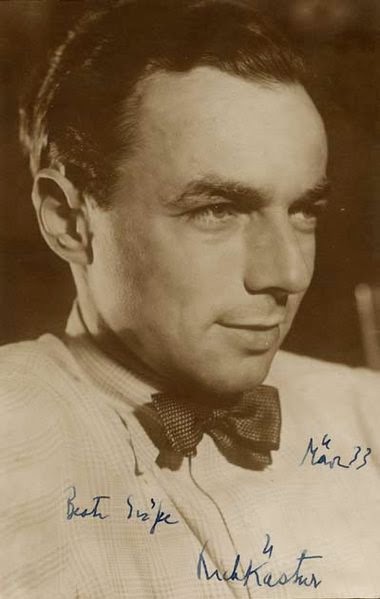
Erich Kästner's 1928 masterpiece for juniors Emil and the Detectives wastn't on the radar in my own childhood, though so many contemporaries remember reading it and wanting to be one of the 100 Berlin boys who pursue crook Grundeis through the city streets (in much the same way, I imagine, as I so wanted to be one of Fagin's boys after seeing the musical film Oliver! and dreaming about that sequence where they cross the rickety 'bridge' singing 'We'll be back soon'). I think I'd heard the title, but it was only reading John Bridcut's Britten's Children and especially the nine pages he devotes to the 19-year-old composer's obsession that made me curious to see the 1931 film directed by Gerhard Lamprecht, with a screenplay by Billy (then still Billie) Wilder and an uncredited contribution by Emeric Pressburger.


Even that had to wait until I ordered up the BFI special edition and we watched it yesterday night, two days after going to see the joyous National Theatre adaptation by Carl Miller and directed by Bijan Sheibani. I was lucky enough to be allocated that to review by The Arts Desk, and felt a good deal more generously disposed towards it than some of the carpers.

Two write from lack of knowledge of the book (which I was sure to buy a copy of while I was there and read it later that evening). No, Michael Coveney, Kästner's original has no dark undertow (though the film certainly has in Fritz Rasp's rather alarming portrayal of the villainous Grundeis, The Man in the Bowler Hat). And it's no surprise to find the odiously opinionated Quentin Letts - whose one-star reviews always guarantee an adventurous show worth seeing, though he grudged this one three - vilifying the social commentary. 'The show's programme drones on about how Emil's single-parent mum is poor' (a reference to the excellent article by Miller on Kästner's relationship with his own troubled mother). 'Oh poverty, woe, alack. Yet all I remember from boyhood is that this was a ripping yarn'. NT production photo, like the third of the leads, by Marc Brenner - this one featuring Naomi Frederick as Ida and one of the three Emils, Daniel Patten.


Would it have hurt Letts to read again? One of the most charming things about the book is that some of Walter Trier's classic, indispensible illustrations have extra texts by Kästner underneath. The one below the drawing of Emil's mum Ida Tischbein washing a neighbour's hair runs:

Emil's father was a master plumber, but he died when Emil was five. So his mother became a hairdresser, trimming, washing and setting the hair of all the mothers and girls in her neighbourhood. She has to do all the housework as well, of course, and the washing and cooking. She is very fond of Emil and glad she can earn enough money for them both. Sometimes she sings lively songs. Sometimes she's ill. Then Emil does the cooking. He can fry eggs, and steak and onions too.

Kästner has a light touch with the social commentary, and usually lets actions speak louder than explanations, but here's one more observation he makes in the story proper:

You may possibly be thinking that this is a lot of fuss to make about seven pounds [140 marks in the original; the NT programme helpfully tells us that this would be about £360 today]. Well, perhaps it is, and people who earn a hundred or a thousand pounds a month certainly would not think twice about spending that amount. But, believe me, most people earn a great deal less than that, and to anyone who earns, say, thirty-five shillings a week, seven pounds seems a great deal of money to have saved. Plenty of people would think themselves millionaires if they had five pounds to spend, and in their wildest dreams could not imagine anyone actually possessing a million pounds.

It seems that for Mr Letts, the reverse is true: he simply thinks that poverty is the stuff of fiction (you ask what on earth I was doing reading the Daily Mail. The answer is that I was at my ma's for a night and a day on her emerging from hospital - praise be - and now that she's not dependent on me taking that loathsome rag to her - I flatly refuse to buy it - she's back to it again. And what a horror yesterday's edition was, with Jan Moir telling the woman who wants her dead husband's child that she shouldn't, an 'open letter' from the film critic to Daniel Radcliffe advising him to stop seeking out 'sordid' roles and a 'before and after' picture nonsense about the beauteous Nigella Lawson, making out that on day two of the admittedly rather compelling trial she's stressed and tired because she's caught with eyes and mouth downcast).

Anyway, enough of all that rubbish. I'd say that the play version is simply a third telling very different from the book and the film - which of course are already different from each other. The film creeps us out with Grundeis' leering, sinister behaviour on the train - no wonder Rolf Wenkhaus's Emil looks so stricken.


As he is right to be - good gracious, drugged sweets inducing a trippy dream (with brilliant special effects for 1931, which, remember, is very early on in the history of the Talkies). But the Berlin in which Emil wakes up is a lively rather than a scary place. Lamprecht was an experienced recorder of street life, and it shows. And of course all this has both charm and horror, when you think of how this everyday life was so shortly to be decimated. Other books by Kästner, a pacifist and freedom fighter, were burned in 1933, and though proscribed by the Nazis he stayed on in Berlin until the end of the war, moved to Munich and died in 1974. Clearly many more are in need of translation, above all his childhood autobiography and the ecologically-minded Animals' Conference outlined in this blog entry.


Young Wenkhaus was shot down on a German bomber expedition off the coast of Donegal in 1942. It's also heartbreaking to learn that Hans Albrecht Löhr, the nine-year-old playing 'little Tuesday', a character so many kids identified with during rehearsals for the play, died that same year on the Eastern Front at Saplatino. His mother Lotte went to see the first post-war performance of Emil at Berlin's Metropol - her son had been in the 1930 stage premiere, too - and wrote a rather moving letter to Kästner on his 64th birthday.


Lotte Löhr was, happily, incorrect in her assumption in the letter that all the other children had been killed in the war. Just a few weathered the storm.  Hans Richter, the funniest kid of the lot, 'The Flying Stag' (the freckly one on the right below) who delivers his message to Emil's granny with the utmost sense of self-mportance, appeared in more than 130 films before his retirement in 1984.


Inga Landgut, charming Pony Hütchen (also pictured above with Emil and Olga Engl's Granny) - who, alas, seems destined for the housewife's kitchen rather than the emancipated life promised in the National Theatre's much more girl-friendly version  - had as long a career as Richter if a less prolific one.

Ultimately, the film's tone and touch remain light (I'm not sure I'd read much other than suspense into the scene where Emil hides under the villain's hotel bed, though Bridcut does). Amazingly, it was copied action for action, with the same musical soundtrack but a Kent/London setting, in the 1935 English film, which I've yet to see on the BFI DVD - let's give it another week before making too much of a good thing. Meanwhile, long may the NT Emil run. It's a perfect seasonal treat for kids of all ages.

Sunday, 3 November 2013

Bergman on stage


Referring not to mighty Ingmar's own towering productions, of which I count myself lucky to have seen two - more on that further down - but to a triumphant version of the eminently stageworthy Scenes from a Marriage newly transferred from Coventry's Belgrade Theatre to London's fine newish venue of the St James Theatre. It seems odd to place Olivia Williams and  Mark Bazeley , two actors I'd not encountered in the flesh before, above/above Liv Ullmann and Erland Josephson in the unsurpassable film/TV series (I have the Criterion - Region 2 - set which luxuriously offers both long and short versions).


Yet our Brits made as persuasive an alternative couple as one could hope to see, not emulating the Norwegian and the Swede but creating a slightly different dynamic.

Trevor Nunn can be conventional these days - maybe he always was - but steered the perfect course here. I imagine certain scenes resonated with his own three marriages (we used to encounter a fractious Trev and Imogen with noisy kids atop shopping trolley in the Hammersmith Marks and Spencer's). At any rate it all felt plausibly real and universal. Peripheral details were updated in Joanna Murray-Smith's superlative adaptation; crafty little films between scenes showed what was going on in between - we knew we were in for trouble when Johan dressed younger than his age, took up basketball and skateboarding; the strains, stresses and shocks rang true.

The only question is how much gets taken on board by each couple in the audience, straight or gay, and how deeply they recognise themselves in it. We both felt there were certain man-woman differences which aren't replicated in same sex relationships, but the honesty game and Bergman's disconcerting habit of making people say what they think they mean at the time which may not hold good on another occasion stood out in bold, sometimes frightening relief.


The dynamic here is that you start off - or rather we did - disliking bumptious, slightly smug university lecturer Johan and rather feeling for Marianne's awkwardness. But later she comes across as killer queen bee when the power starts to slip from Johan's grasp, and I felt more for the pain of Bazeley's Johan than for Josephson's never quite likeable male.


The anguish of the central crisis, taken like much else from a dark night in Bergman's own life and mirrored in the Liv-directed film Faithless, has you sympathising with both; the unexpectedly violent later climax - again, I won't say more - felt a bit stylised, perhaps - at close quarters fake slaps and kicks are bound to look a bit odd - but the quiet coda was as moving as it is in the film. Among the fast-transformed supporting cast, Melanie Jessop is as good as the leads, playing a client of lawyer Marianne who's never loved her husband and is so objectively bleak that she makes us - and Marianne - laugh nervously.


Do go see the production;  there's less than a week left. I'm curious, too, to see how Toeneelgroep Amsterdam handle it at the Barbican later this month: three couples are promised to three different sets of audience members, starting mid flow and going backwards or forwards depending on where you are. It seems to me that realism is best, that you really need to follow one pair only and that in their development over years lies the fascination of the acting, but we'll see.


It's an appropriate time to rekindle memories of the first Bergman production I saw on the London stage, Hamlet at the Lyttleton, since as you've probably heard the National Theatre is currently celebrating its 50th anniversary. It serves only to remind me that they've not done enough continental European drama, at least not recently, and that the stagings were rarely cutting-edge, conventionally handsome at best (Stephen Daldry's Machinal with Fiona Shaw was one exception; more recently Edward II shone as a dangerous light in a safe theatrical environment). The Hytner era has been notable for polished middlebrowdom only. But in Peter Hall's day they did import a great deal of major world theatre, an honour which has since devolved to the Barbican.

Hall wrote in the 1987 programme how in 1973 the innovation of Peter Daubeney's World Theatre seasons for the RSC had come to an end:

Since then, London has been practically starved of large-scale theatre from abroad. When we opened on the South Bank 10 years ago we did have visits by German, Spanish and French companies: Peter Stein, Nuria Espert and Roger Planchon came to cheer us on our way. We believed at the time that similar visits would be a regular part of the NT's life. But then - despite ample evidence that paybacks to the Treasury arising from the arts probably reduce their cost to the taxpayer zero - the long, painful freeze on arts subsidies began.


Plus ca change, everything goes in cycles, choose your cliche. Anyway, I'll never forget the violent scenes in Bergman's much cut-about and (often excitingly) transposed Shakespeare between Peter Stormare's raging Hamlet and Pernilla Östergren's Ophelia (she also played the lame redheaded maid Maj in my favourite film ever,  Fanny and Alexander, and came to the Barbican, now married to Bille August, in Bergman's equally revelatory production of Ibsen's Ghosts). One image branded itself on the memory: out of the flock of black-clad umbrella holders at Ophelia's rainy funeral stepped the girl herself as we'd seen her in an early scene, garlanded. Ghost-like, she walked straight down the centre of the stage, along the front and off.


Gay films sweet and grim have impacted on our perception of relationships in a different key. North Sea Texas is a beautifullly filmed work by Flemish director Bavo Defurne about the pain and the happiness of teenage love, with a final stress on the happiness. The love is a given, or becomes so shortly after we've been introduced to ordinary 15-year old Pim (Jelle Florizoone) and his older friend Gino (Mathias Vergels), both children of very different single mothers. OK, so the actors are maybe a little too good looking for this to be a drama of everyday life, especially fairground worker Zoltan (Thomas Coumans), likely to be any teenage gay boy's object of desire.


But the truthfulness is low-key and affecting; if there's a bit of wish-fulfilment in it, what's the harm in that? The main thing is that Pim is neither oppressed nor repressed, showing how far we've come in gay narratives that just are. Alas, I suspect that the very different tone of the horrible Afrikaans film Beauty (Skoonheid) from Oliver Hermanus, about a twisted older man's pursuit of a straight boy (Charlie Keegan), is possibly all too true of a still macho, dirty-secrets society.


Even less is made explicit here; we simply follow a closeted factory boss (Deon Lotz) with anger management problems watching, waiting, saying very little, and know we're in for a bad time from fairly early on.


The deeply upsetting climax of the film gave me palpitations, and I almost wished I hadn't watched it. But powerful and open-ended it certainly is, and the performances are brave indeed. Tonight it's back to the stylish world of Paolo Sorrentino and his stupendous leading actor Toni Servillo in Il Divo, an earlier film about Andreotti's awful reign in Italian politics*. J watched it yesterday evening while I was finishing off the fourth of my night-after-night speaking engagements, and raved about it. So now it's time to ease the pressure a little before getting to grips with the two dozen Parsifals - not that I haven't had a wonderful week.

Scenes from a Marriage production photos by Nobby Clark 

*or it would have been had my friends and neighbours Juliette and Rory not already seen it. So it was Hollywood screwball comedy time, with the fast patter of His Girl Friday not quite as funny as I'd remembered it - if only Hildy had been played by Katherine Hepburn and not the somehow charmless Rosalind Russell.

Tuesday, 13 April 2010

Born to dance


First of the Bedlamites' 30th anniversary jaunts was organised by the bonhomous Andy Beale - a trip to the National to see his Less Well Known Brother Simon Russell in the irresistible Boucicault farce London Assurance. More of that in a moment. I should first report that SRB's biggest joy, when we trooped backstage to his Dennis Quilley Room, was a report from NYT ballet critic Alistair Macauley praising his fleetness of foot, declaring that his ballet steps would grace a full choreography, and that he hoped to see him as one of the Ugly Sisters in the Ashton Cinderella soon.

While, on the evidence of seeing the hard work put in by Wayne Sleep and Luke Heydon on Saturday afternoon, I think that might be beyond him unless he can afford a year off to train, I grant him superb nimbleness in the few steps, including a splendid entrechat, he claimed to know. It was clear from what he said to Giles Brandreth, apparently a pal, that he felt ready for new challenges. What more can he want? He's a superb music presenter, from the little I've seen, and one of my students was talking about 'the greatest living actor' when I entered the class a couple of weeks ago.

Anyway, great SRB certainly was. Here he is with Andy and Lord Harcourt Hartley's wig, another backstage shot from me in between Catherine Ashmore's production photos.


And the performance? Helpless laughter from a bewitched audience at every entrance, every pose and grimace, so that it was a bit tough on the other actors in the First Act when left alone. But the rest of the cast in Hytner's handsome production didn't let us down: there was a spirited juve lady, Michelle Terry, as the determined not-to-be bride-to-be, a class launch from Nick Sampson's valet Cool and two great tottering, wheezing entrances from the ineffable Richard Briers.


But of course the other star role is - wait for it, if you don't know - Lady Gay Spanker, a horsy joie-de-vivress in the sublime hands of Fiona Shaw, who even seems to have worked on an ever more resonant chest voice (apparently her singing is good, too, as those who saw her Mother Courage assure me).


What's the gist? Town meets country, Sir Harcourt can't outwit Lady Gay, young love triumphs. The plot fizzles a bit in the second half, but some of the language is Shakespeare worthy and if some of the gags feel as if they might have been added, they're fun: Sir Harcourt muses on how his wife ran off with his best friend - 'I still miss him' - and servant Pert (a witty Maggie Service) accuses the attorney Mark Meddle of hanging about 'like a stain looking for a sheet'. I'd happily sit through it all again, but I'd be lucky to find another ticket.

No real laughs to be had last night at the London premiere of Rufus Wainwright's earnest divafest Prima Donna; nor was it as bad as I'd feared. Read what I thought worked and what didn't in the Arts Desk review, which is being much 'hit'. Anyway, there's something about our boy wonder and bits of his score that I do find irresistibly touching. And there he was, canoodling with his lovely boyfriend, right in front of me, only an aisle between us. So how could I resist taking Rufus from behind?