Thursday, 14 September 2023

Serious wit: the genius of Molly Keane


I thought more doses of Molly Keane in her earlier incarnation as M J Farrell were what I needed for a bit of light reading after the epic Transylvanian Trilogy of Miklós Bánffy. I found I'd underestimated her more lethal powers and the depth of her observations about nature (and the decadence of a huntin', shootin' ruling class out of place, in this case the Anglo Irish, has many points of correspondence; like MB, MK experienced the milieu she writes about, and both can be ruthlessly objective about it). The situation comedy I remembered from Good Behaviour and Time after Time, the later works which I'd adored when they first appeared, may occupy the brittle first third of Devoted Ladies in the manner of Compton Mackenzie, an earlier admirer. But when the action moves from an (untypical) London social setting to Ireland, the poetry of place comes gradually to the fore. As it does more swiftly in Full House, one of the two I especially love:

They were walking nearer to the sea now, and the evening light was the same now over the land and over the sea, not as in the daytime when the difference would be strangely marked. Now there was a level flow of light. Quiet pigeon-like colours were steeped in the sea and the turning birds were as white as old lime wash. The noise of the waves too was a quiet pigeon-breasted noise, and the turning of the river water sweet and deep, and without any vulgar brawling. The roughest streams were quiet and the few dark flats delayed themselves under the stoop of fuchsias that grew in the banks as willows do, delayed and flowed on, carrying red flowers to the sea. 

Sadness hangs over so much of Full House - John, the young man walking in the above landscape who is an unquestioning part of the natural scene, has just returned from a spell in a psychiatric institution - and Two Days in Aragon, my other favourite, is a tragedy, giving a voice to a character with IRA connections, the one novel in which relations between British officers (usually invisible in this novelistic world) and natives turn truly nasty. There is no real nostalgia here, in 1941, for the country-house life of two decades earlier, but a sense of difference and complexity:

Death and new hats, tea and fear and pain - Aunt Gipsy's remembrance of Doatie's pain. Grave clothes and lilies and mourning, grandeur and power, old grudges and mistrusts, the tremblings and small gaieties of Aunt Pidgie's life, all these things were so thick they were almost within the touch of hands on the old nursery air that evening. What was there then in the air of houses that is not now? Was it more stirred by the emotions of the past than now when the life of the present is gay and firm in the ether with the radio ministering to the loneliest [?] Radio has stirred away the hauntings and stillnesses in old rooms. There is not the same heaviness and languor in the air of afternoons, air that can at any moment be broken by the good, the vulgar, the wholesome, the beautiful, the terrifying, the useful things of the present. The waves of the past cannot lap and lap quietly encroachng on the solid sands of now. Houses and memories have less power to injure, less power to assuage. But this afternoon was April, 1920, an afternoon in the time of long memories and quietness and dull ageless stretches of time. A time when a bitter little war went untidily on, and news of its progress went from mouth to mouth in whispers. Many old and beautiful houses that year had their last hours of life. They were stilled for death that summer. They waited in beauty and quiet for fire and the end. Did they have a foreknowledge of their deaths? Was that air of desolate distance, of exquisite sadness, that lesser fainter appearance which Irish houses have in comparison to the stability of their kind in England, was it foretold in their stars, grown sadly in their very stones? An awareness and an acceptance of violence and desertion, desertion far more tragic than any sudden ending?

The author, as young Molly Skrine, knew something of this: the family house, Ballyrankin, was burned to the ground, her parents made to sit and watch outside, while their daughter was away at a French school in Bray. The ruins are described in this article, a link to which gives me I hope permission to use one of the photographs higher up (fair use and all that). 

A wider context for what happened between 1920 and 1923 is given in this excellent book accompanying an exhibition I saw in Dublin (essentially just panels with the same information and photographs as in the book). The brutal executions of patriots from the 1916 uprising onwards, the stationing of British troops, senators targeted in reprisal for their mercilessness towards anti-treatyite prisoners all give reason enough (and some of the houses were bloody ugly, though that's beside the point). As the novelist observes, there were other base motives on both sides, personal envy and grudge being high on the list.

The houses that survive are subject to decay and collapse, a view more subject to sharp irony and wit in Treasure Hunt and Loving and Giving, where the neglected building is more vivid a personality than any of the human characters. Eccentrics are more vividly drawn in earlier works, like Aunt Pidgie, dominated by the perscuting, powerful and ultimately tragic figure of 'carer' Nan of Aragon House (her niece has 'a chill moment before the customary way of seeing Aunt Pidgie came back to her, and she was blinded again by custom to that moment's vision of a different creature: alive, rather wild, strong in its desires'. No-one stays fixed in a semi-comic pose: of the Aragon butler, Keane/Farrell writes 'in his own extreme self Frazer had a loose way of talking that would have shocked deeply the self he had made'. Treasure Hunt comes closer to both caricature and kindness in Aunt Pidgie's resurrection as Aunt Anna Rose, who uses her drawing-room sedan chair to 'go travelling'. But then this is a novelisation of a successful, well-made play directed by John Gielgud with Sybil Thorndike playing the great eccentric. Here are a couple of production photos from The Sphere of 1 October 1949, reproduced in the biography.
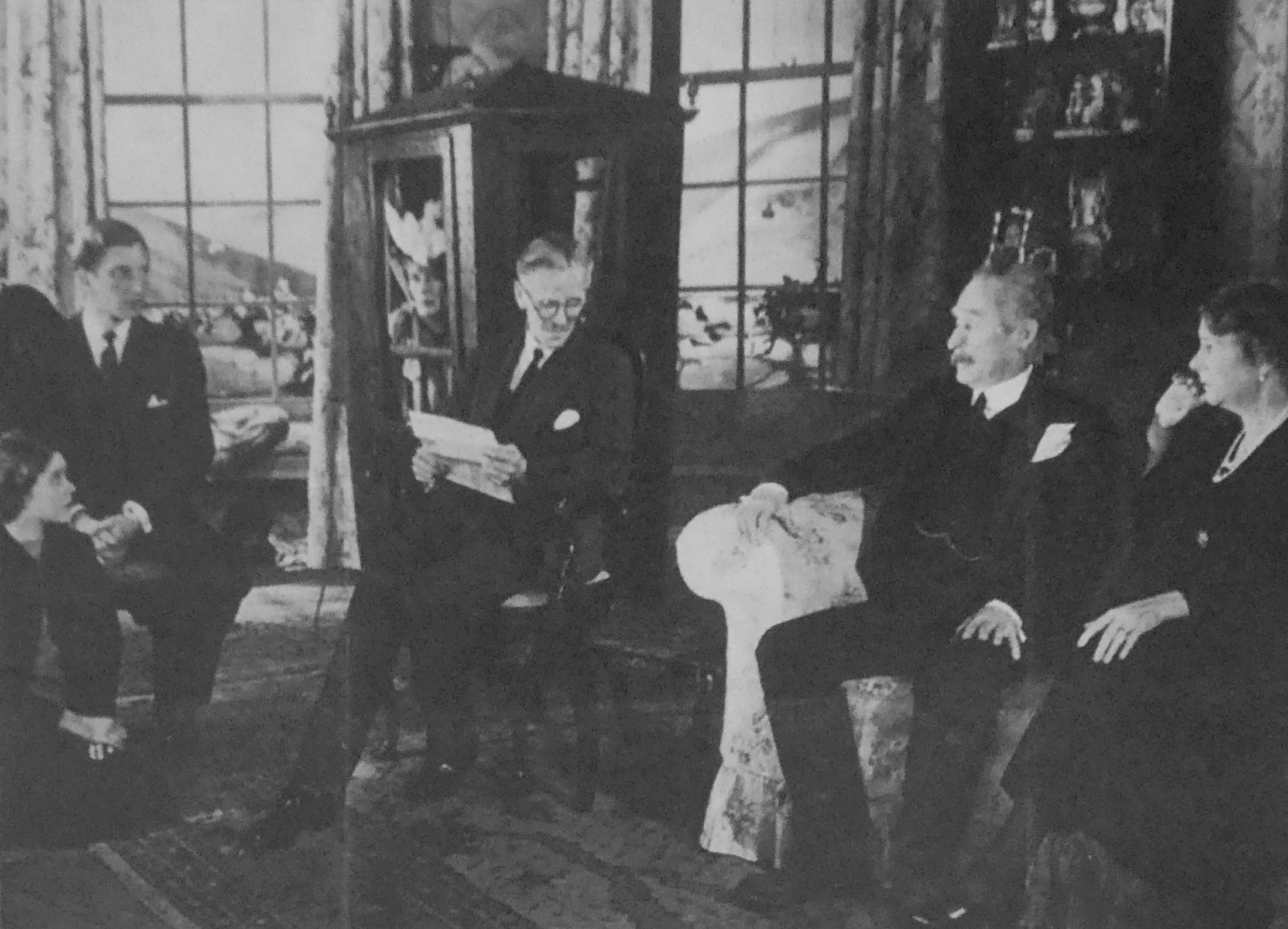

Both great thespians, along with Peggy Ashcroft, were friends who gave Molly a wider scope for fun, social differences and joyous observation. Their takes in the beautifully-written biography by daughter Sally Phipps - who rises to her mother's daunting challenge to make a novelistic job of her life - are a breath of fresh air after the outward restrictions of Anglo-Irish life. Phipps sums this up especially well:

They lived in a half-mythical place and they deluded themselves about the nature of Ireland. Their empathy with the landscape made them feel part of it, and because they mostly got on well with the people around them, and with those who worked for them, they thought they were loved. They were loved up to a certain point, but the Ireland they chose to ignore, the lost country (untainted by anything English) nurtured in people's hearts and carried in code by music, song, and poetry, was always there. It was usually submerged but from time to time it erupted and overturned all other loyalties.

The one real drawback about the daughter-biographer is that I don't think she quite grasps how remarkable the Farrell novels of the late 1930s, running in to 1940, truly are. Conversely she surely overrates Loving and Giving, a swansong with descriptions full of Keane's literary flair that aren't rooted in depths of feeling (in her 80s, she was now decidedly frail). I still have no idea what to make of the protagonist, and there are gaps in the drawing of other characters. At the other end of the literary output, the early novels seem to take an uncritical, mythical view of the horsey hunting life; I just started Conversation Piece (1934) and had to give up.

It's certainly fascinating to have Phipps's take on the many sides of her mama, veering between kind and cruel, but far more on the kind side. She may have been conservative in nature, but she had the serious novelist's rare gift of seeing so much from so many angles. Judgmental sometimes, yes, but more often inclined to will on young love, for example, even between conventional folk (the crucial love-match in Full House wins us round by degrees). Her attitude to hunting is typically complex, or at least covers more danger than we tend to think about. Grania of Two Days in Aragon, on the cusp of womanhood, is 

dirty and passionate and generous. She was greedy and had only begun to live. She had not learnt to grow steady, learnt to fear danger, or settled to any soberness in life. She wanted danger from horses [she is in love with the master horse trainer Foley], and hardship any way she could get it. There was something between her and river water, and the blood of rabbits she shot, and the feel of wind in her bleached untidy hair, and the feel of running, and the new-found sight of something wild - an otter blowing out its cheeks on a little shaley river beach, dark beneath alders - there was something between her and these things which made her strong.

For Molly Skrine, Phipps writes, 'hunting was romantic, elegant, savage, and the ultimate escape from the frustrations of home into the glorious life'. And later:

 her identification with wild things was deep. The vacillation of empathy between the hunter and the hunted, so apparent in her books, was perhaps the chief paradox besetting her own nature. The pull of conflicting elements is her natural habitat. It is evident in her leanings towards glamour and austerity, courage and nervousness, the call of the wilderness and the aspect of her that liked to see "rushes well trimmed, and gravel raked carefully, and money saved through thought and denial.

This perhaps explains how the teenager who got her first novel - one she later disowned, yet it was still reprinted - published by Mills and Boon, giving her pin money for party frocks became the great writer who married wildness and discipline, careful prose and tumbling chaos both within and outside characters. Yes, she's up there with the very best.

Tuesday, 12 September 2023

Norfolk Churches Walk 2023: Norwich preludial

The others seem more surprised at me than I myself, on Saturday six plus weeks after my big op: in heat that peaked at 32 degrees, we covered the churches of Norwich central north on Saturday, and collected 24 including the Cathedral. Which I know well, but never more intimately than on Friday afternoon, when our lovely hosts Kate and Fairless (pictured above in the cloisters) accompanied us to a 'festal' Evensong. Before I go further, because you might just flick down the pictures, let me tell you here that for a change, I'm raising money for Maggie's this time, because of the support they've given me over the past year. 2022, Loddon to Surlingham, was for the Norfolk Churches Trust as usual, but I'm taking a little holiday from asking friends for the same old cause, excellent though it is. You can give as little or as much as you like to Maggie's - UPDATE: Gift Aid gets them far more if you go to 'donate' on the main website here -  via bank transfer using these details

Maggie's Centres

Bank: Bank of Scotland

Branch: 38 St Andrews Square, Edinburgh, EH2 2YR

Account: 06049705

Sort Code: 80-11-00

And add XLDN so that it goes to the West London centre I love so much. Drop me an email so I can keep track of totalling.

Norwich Cathedral, of course, I know well. The glorious edifice's added spire is visible from the garden of K and F, but more of the building is clearer a little further along the road. Friday was hazy; we were luckier with the blue skies on the day of the walk.

Then - and this is one of the two most atmospheric approaches, the other being through the Water Gate at Pull's Ferry a bit further along the Wensum, a much better way of getting in to town from the station than the rather dreary road that leads directly upwards and bends round - we crossed the medieval Bishop Bridge into Bishopsgate . We passed the Great Hospital, where the religious part of St Helen's would be our starting-point next morning, and round the East End, past the grave of Edith Cavell, 

and into the cloisters, where I wanted to be reacquainted with the handsomest of Green Men.

The cloisters were begun in 1297 with the wing featured up top and including this particular Green Man, and finished c. 1430 with the north wing. pictured below; the Black Death interrupted the stonemasons' work.

The special beauty of the interior proper is its unbroken beauty from east to west, even if that has two different periods matched throughout: the massive Norman outline, inaugurated by Herbert de Losinga in 1096, at the lower levels, with several patterned pillars the equal of those in the nave of Durham Cathedral, while the vaults of nave and chancel date from the late 15th and early 16th centuries, after the wooden roof burned. These are very much its glory, though the bosses here need a good zoom lens or binoculars to see in detail.

We made straight for the back row of choir stalls shortly before 5.30 evensong began, and the sets are among the finest in England (as I hadn't previously realised). Obviously I didn't snap during the service, but went back to capture something of the carved bench ends on both south and north sides. One day I'll have time to tip up the seats to see all the misericords, but one of the most inventive was showing, so that will have to do for now.


The choir had just begun the new year, and there were quite a few unsurpliced novices among the trebles, looking a bit dazed, as well they might be in their first week. The music was ambitious: Sumsion's Responses; James MacMillan's Short Service, simple with a bit of signature token Celtic twiddle thrown in for the trebles at 'He hath filled the hungry with good things', and an extended 'Amen' in the second Gloria; Britten's vivid treatment of the Hymn to the Virgin, composed while he was a pupil at not-so-far-away Gresham's School. This being The Day of the BVM (as well, incidentally, as the anniversary of the Queen's death and de facto Charles's accession, plus our friend Fr Andrew Hammond's 60th birthday - we celebrated it last night at the Garrick Club), we all processed to the Bauchon Chapel for a blessing and some fine Tudor polyphony in the form of Parsons' Ave Maria. 

Afterwards we were allowed to linger (sometimes the officials usher you out straight away). A cat seemed perfectly at home in the chancel

and this was a good way to see the Norman-Tudor achievement throughout. As Peter Sager writes in his magnificent East Anglia, 'nowhere else in England has the Norman outline been so perfectly maintained, and rarely is there such an harmonious link with the Gothic. On the Norman crossing tower

is a Gothic spire;

above the Norman nave is a Gothic vault - different architectural styles inspired by the same spirit.

'The Late Gothic fans of the vault spread out like palm leaves from the Norman columns. Here too timber was replaced by stone [the timber spire was destroyed by a hurrican in 1362]; the vaults of the nave in the middle of the 15th century, the choir c.1480


the transepts afer 1509'. The building was virtually empty, but awaiting the arrival of Norwich School pupils and their parents for a prizegiving ceremony.

There was pleasant evening time to kill before we went to celebrate Fairless's 70th birthday at Bishop's Dining Room - simple fare, but every aspect of the experience good - so we walked down to the Adam and Eve, 'probably Norwich's oldest pub', which would be perfect and rural if it weren't for the city car park opposite.

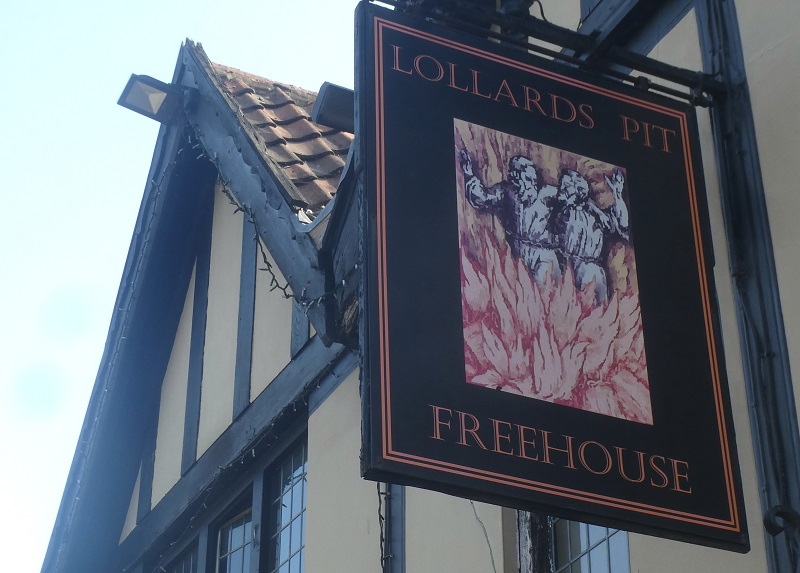
And it has to be better in every way than the disastrously named Lollards [sic] Pit over Bishop Bridge (1342, nearly demolished in the 1920s, can you believe), which seems to glory in the burning of heretics. In the 16th and 17th centuries the unfortunates were incinerated in a chalk pit on this side of the Wensum.


We figuratively roasted on our walk the next day, but amen to the cool of each and every church which welcomed us. I'll write it all up when I have more time.

Sunday, 3 September 2023

Slow-progress report

It's coming up for six weeks since I had my Big Op, a month since I came home from the hospital. Maybe I expected progress to be quicker than it is, but the plastics in my rear still make walking difficult, and so far I've limited myself to a radius which includes South Kensington to the east, Fulham Palace to the south-west (pictured above by J, self with bag containing my medical cushion, which goes everywhere with me, at the Tudor arch into/out of the fabulous walled garden).


While I hope not to be self-pitying, I can say with some objectivity it had been a bit tough for some weeks since J returned to Dublin after his month-long vigil. I was despairing one day, but found myself immensely bucked up the following morning by lovely plastics person Abigail at Charing Cross Hospital, who told me to my amazement that the surgery on my behind was 'healing beautifully'. And then I saw so many of my favourite people who've helped me - Sushma the stoma nurse (second from left in this pic, which I'm happy to repeat), Lena who did my plastics dressing while I was in hospital (third from right), 

the wonderful Mary and Louise in the Maggie's Centre which I hadn't visited for ages. I wish I'd had my camera with me because the view from where I sat while they spent time talking to me revealed the grape-rich vine and a silk tree in flower (Louise identified it for me). The below picture from one of my first excursions after radiotherapy sessions in February, so stark by comparison, will suffice (more on all that in an earlier blog entry). 

This time some of the regular visitors were there too, fresh from a yoga class, including Morris (Maurice?) who remembered my 'radio voice', and when a venerable ancient bent down to pick up the things I'd left on the floor and I told him he shouldn't be waiting on me, he turned out to be a Thursday volunteer, Tony, I think, has been helping out since the Richard Rogers-designed building first opened in the early 2000s. We talked about musical performances there, and he told me he'd donated to the fund for the restoration of the chapel organ at Christ's Hospital School, where he was a pupil during the Second World War.

Then through Margravine Cemetery, where the Marbled Whites, Gatekeepers and Meadow Browns have ceded to later species such as this Speckled Wood

and the even more common Small White, still beautiful to look at with veins showing on bramble leaves.

to lunch with Cally at our bright new local cafe, PopIn, and on to St Mary's Paddington (quite a shock to hit the mean streets and a hospital which, compared to Charing X is a bit of a mess) to see surgeon Maria. The wonderful Macmillan nurse who made it possible to me to go to Pärnu, Ann, was also there. So good to get the all clear - hopefully a definitive one this time - from two more people who have meant so much to me.

Not so sure my poor 92-year-old mum has been getting the same level of attention in her two hospitalisations following two falls at home (below is her having baked her first cake for some time not long ago, when I visited her in July). 

It was bad timing: her first fall came just before my op, when I was still in Estonia. The second happened in spite of the fact that she had people coming in four times a day at home in addition to her regular carers. I'm sure she was tended to in Epsom Hospital where necessary, but I got no calls from any of the wards she was in until last week, when I finally spoke to a lovely doctor, Flavia, who reassured me that the antibiotics had cleared up a chest infection. Physically she's in OK health, though needs help walking (if she'd not tried to do it by herself at home neither fall would have happened). 

She was sent to a convalescent wing the day after it opened, so that was all a bit at sixes and sevens. Alas, North East Epsom Cottage Hospital, where she had such a good time making friends on the ward two summers ago, closed its restful country quarters and moved to within the main hospital grounds. Her mood when I phoned her varied - sometimes I really wondered if she'd gone to a very dark place within, as it were.

Yet a stressy week or so trying to find her a respite care home for three weeks after discharge seems to have paid off: she's now in Greenacres, The Horseshoe, Banstead, so her friends can come and visit. I spoke to her last night and she was her old self - quipping and laughing. It's been an eye-opener how greedy the private care homes can be. Signature Banstead, the posh place, quoted me £1400 per week including nursing care. That had gone up to £2000 and the stay had to be for at least a month. Beaumont Care in Epsom, recommended by a wonderful district matron, seemed to be in the hands of a pushy person I couldn't quite understand over the phone, who had gone taking a phone assessment with a nurse before I'd asked. Too expensive, anyway - also £2000 - and when she said 'but we can do a deal', it felt like I was dealing with a second-hand care salesperson.

Meanwhile home life has been on a reasonably even keel. No way can I get to Banstead yet, but I've managed four live Proms (walk to West Ken, short tube journey, standing, to South Ken, then to the Albert Hall).

Knackering to various degrees, and not all great, but the first - when J was still here, and took the above pic - had the National Youth Orchestra predictably shining in Hindemith and Strauss's Four Last Songs, with the stunning Masabane Cecilia Rangwanasha. 

They played well in Copland 3 but I just don't 'get' the work. The encores were - also predictably - superlative, especially Errolyn Wallen's arrangement of "Got the Whole World in His Hands", irresistible. Watch the whole thing here. Thursday night's Prom was the best I've been to as a whole - brilliant programming as usual from Vladimir Jurowski, bringing his Berlin Radio Symphony Orchestra to the Proms. Sitting for long periods is out, so J and I listened to Glyndebourne's Poulenc on the radio, and I reviewed it as a broadcast experience. One more to go, just before braving this year's Norfolk Churches Walk. It can't be anything like the big loop of last year, so from our base at Kate and Fairless's lovely house, we're going to assail 40 plus churches in Norwich. I'll do as many as I can. The alternative was driving between far-flung remote churches, and I don't think I could manage sitting and getting in and out. Thinking I might depart from fundraising for the Norfolk Churches Trust this year - J can do that - and donating to Maggie's.

Visits and meetings have kept me going. Another film night here on Tuesday, the choice made as before from my stock of classic movie DVDs - this time Adam's Rib with Katherine Hepburn and Spencer Tracy as married lawyers Pinkie and Pinky - was accompanied by cooking from Cally and Maxine. Edwina is coming to cook again tonight. Her lilies and cucumber from Kent garden did so well.


I like it that I can read so much, between reviews and preparations + execution of my Parsifal Zoom classes. Molly Keane is due a big eulogy soon - so much deeper and richer than I realised; I was also beguiled by Neil Gaiman's vivid retelling of Norse mythology, surely designed to read aloud - it will be useful for Rheingold, but interest was stimulated by the fascinating Norwegian drama Ragnarok, so good at balancing the contemporary mundane with the mythical. Just reached the end of that, and caught up with the very moving final instalments of Derry Girls. What next?

Saturday, 26 August 2023

ENO Xerxes, Class of '85


The wonderful Jean Rigby (on the right top in the above Zoom class, with Ann Murray top left and Christopher Robson bottom right) played her part, back when I was running my five classes on Britten's Albert Herring, getting others to come along who'd been in the immortal Glyndebourne production directed by Peter Hall. So we had, not all at the same time but all with so much to say, Nancy (Jean), Sid (Alan Opie), Albert (John Graham Hall, so funny), Mr Upfold (Alexander Oliver, ditto) and Florence Pike (Felicity Palmer, another hoot). I think that counts as some sort of historical reunion - and of course all concerned said it was among their favourite operatic experience of a lifetime. 

With Serse, I'd originally hoped that we might reassemble some of the stars of the new English Concert recording following on from an electrifying live performance. It's become my Desert Island Handel. Emily D'Angelo, Lucy Crowe and Paula Murrihy are megastars, but the first two very kindly told me they were busy (Emily on a new Handel production, Lucy on end-of-term stuff with her kids), while Paula I'd already prevailed upon to talk Octavian just before the Irish National Opera Rosenkavalier, along with conductor Fergus Sheil (and what a triumph that turned out to be). In the end Harry Bicket, whose skill is total in entwining orchestra with voices and who was working on a new production of Pelléas et Mélisande in Santa Fe, came along for a much-appreciated ten minutes at the beginning of one class. Before I move on, tell me if you know a more fiery piece of Handel than D'Angelo singing 'Crude Furie' (there is an equal, below, from La Murray, but can you get better than either?)

Get this recording: it's superlative in every way. 

Then we hit another bullseye - not only Jean, who'd played Amastre, Xerxe's discarded lover disguised as a man, in the groundbreaking ENO Xerxes directed by Nicholas Hytner, but also Christopher Robson, the Arsamene - and, wonder of wonders, the great Ann Murray, thanks to an Irish friend who knew her well, Joe Brennan.

She turned out to have as wicked a sense of humour as La Palmer, and had us all in stitches with candid reminiscences (not least about Charles Mackerras, who of course was never the easiest conductor to work with, but rightly a perfectionist). Yes, it was history: the production which marked the start of the Handel opera revival. It's been revived frequently and would still work now. The whole Channel 4 film is up on YouTube, but horribly distorted (I picked up a second-hand DVD). Three clips are, I hope, to the point. In the first Jean's major solos as Amastre have been stitched together.

The second has a duet everyone remembers - and not just because duets are rare in Handel operas, more because the English translation helped to make it such fun (the whole thing works in English, I think): Robson's Arsamene in a lovers' spat with the wonderful Valerie Masterson's Romilda.

And finally, the English version of 'Crude furie' from Murray. Piquant that the subtitles are the Italian original. Special visual rewards here, as always thanks to Hytner and the commitment of his singers. Ticks all boxes as a Great Operatic Performance.

What miracles of substance and design the ENO programmes were in those days. I still miss the chameleonic and brilliant Nick John, whose untimely sudden death was a shock to all of us. This is the cover of my first Xerxes programme - I caught it for the first time in the 1988 revival, which included the above three singers.

Inside, style and useful detail were one.

Now three weeks into my summer Wagner course on Zoom, and enthralled as ever by the peculiar world of Parsifal, I dug out my ENO programme from 1986. The articles and quotations within are numerous and useful even now. I confess to some shame in not remembering more about it than I do, since Goodall was conducting (I wasn't a fan in those days of his extended lengths) and - will you look at this insert, placed to the right of the programme cover. Jerusalem singing in German to an otherwise English cast was parallel to an earlier experience I had at the Royal Opera, when Rita Hunter sang the Trovatore Leonora in English to Carlo Bergonzi's very Italian Manrico ('what are you saying? I cannot understand you').

Only ten two-hour-plus Zoom classes will do for Parsifal, especially as I have to make way for guests. John Tomlinson will return towards the end, when we go back to his Gurnemanz in the Kupfer production, but already in the second class we had sense and inspiration from Andrew Gourlay, whom I saw in action live for the first time in a terrific complete Firebird score with the National Youth Orchestra. He's made a very careful selection of music to form a suite, with minimum interference and hardly any filling-in of vocal lines. Here he is top right, and this time I've done a close-up in case it's too difficult to make him out (I have 60 students and even though not all can make it live, we're still on two screens).


You can watch Andrew conduct the LPO in the whole suite here on YouTube, though I heartily recommend the Orchid CD:

Still my favourite performance of the Prelude is Bruno Walter's.


Wednesday, 23 August 2023

From Tweet to X-crete to X-it


Well, dammit, I DID go, in the end. Cutting off nose to spite face? After all, there are so many lovely musical folk on there, and I found out about performances of whichI wouldn't otherwise have been aware. But the endless procession of hated faces being cursed - Letby, 30p Lee, Sunak, Braverman etc - was lowering to the spirit, and when along with endless gadget ads Marjorie Taylor Greene turned up in my feed, where the despised are usually only there because like-minded folk are shouting about them, it was time to go.

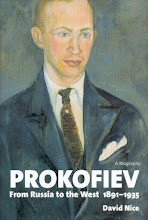
Nor are alternatives left. Mastodon proved hopeless, my guilty return to LinkedIn was terminated by another blocking - here's the post about the previous one - because my objection to brave Russians being arrested, imprisoned, tortured, even killed in Putlerland was classified as bullying. Would I recant? No. So I'm out of there for ever too. Do I regret it? No. Once the decision re Twitter was taken, pop-ins to pick up private messages showed how small and toxic a world it was, even if I didn't get the haters piling in. And when a supposed colleague lashed out at me over a criticism of an artist with 'who cares what you think?', I realised the headspace occupied thereby wasn't worth it. Much better to spend more time on this, reading, maybe even getting on with Prokofiev Vol. 2 when I return to health. And remember, Tweeters stuck in Muskville, there is a world elsewhere.

Saturday, 19 August 2023

Bánffy's Transylvanian Trilogy: not found wanting

To call it 'the Hungarian War and Peace' doesn't do justice to Miklós Bánffy's three-volume chronicle about politics and the aristocracy in the decade leading up to the First World War: it is of equal fascination in the nuancing of its characters, that very Tolstoyan way in which we find sympathy even for those who start off as dislikable. It has a special value in that the Count lived through all this and, writing from the perspective of the 1930s, pours much of himself into the main character, Balint Abady. 

Like Abady, Bánffy had diplomatic experience before he became an independent member of the Hungarian House of Representatives, fighting for the rights of the Romanian-speaking population in his native Transylvania. At the time of the novel, 1904-14, Transylvania was part of Hungary; after it, part of Romania. Between the wars, Bánffy made a crucial contribution to his shattered country's reappearance on the world stage as Foreign Minister from 1921-2 and later resettled on his home estate, Bonczhida (Denestornya in the novel); in 1945 the retreating Germans trashed it. I understand that with the Bánffy family's assistance, it's being gradually restored, but even the shell is fascinating (Bonczhida Castle pictured below in 1893-4). Nearby Kolozsvár, now Cluj-Napoca, is also described in loving detail. 

With its three subtitles taken from the 'writing on the wall' episode in the Book of Daniel which ends with the downfall of sybaritic Belshazzar, the trilogy can seem forbidding before you start reading - and then, in the very first chapter,  Bánffy sweeps us straight into the world of the doomed aristocratic milieu as young Abady finds his carriage one among many heading for Var-Siklod, the country place of Count Lacock who's holding a house party following the Sunday races at Vasarhely. With incomparable vividness  Bánffy introduces us to many of the main characters, expanding upon their behaviour in the following chapters devoted to the house-party. The first two volumes especially teem with vivid descriptions of hunting meets (to shoot foxes and hares), balls and other social extravaganzas. Bánffy doesn't intrude too much with authorial judgment, but we know he's telling us that so much of this is TOO much. They're paralleled with sensitive evocations of the beautiful countryside and the mountains: time for a visit next spring. 

Parallel to this is the charting of Abady's growing social conscience, his observations of a parliament in Budapest obsessed with matters of local and national interest only. The wider European picture only really emerges when Balint learns of it from a cynical political operator, Hawlata, well in to the second volume: 'at that time [1907] no one believed in the possibility of war in Europe. Everyone accepted that the race for armaments was just a device of the great powers which was nothing more than a safety-valve used to save everyone's face'. A placid patriot up to this point, 'it hurt him to hear such a low opinion of his countrymen coming from a foreigner'. Part Two Chapter Six ends with a breathless Abady at the window of his room, wondering 'what price would be paid by his own country, by Hungary, and by his beloved Transylvania which had always stood as a proud fortress on the road from Rome to Constantinople?' He looks down on the distant light of a train passing through the Vag valley and realises

That would be the road down which would go so many of the flower of the nation's youth to the horrors of war, to their death in battle...and against such a vast enemy their sacrifice would surely be in vain...in vain...

The very last chapter of They Were Divided sees the nightmare come to pass in a nihilistic (or realistic) epilogue, as Abady, defeated in his personal as well as his public life, curses his generation and his people. Among others,

He saw before him the magnates and noble families, who thought only of social prominence, who forgot their European affiliations and threw the weight of their great fortunes and moral influence behind all that nationalistic nonsense of which they did not believe a word and which, in consequence, had poisoned the nation's politics...

Now this land would perish, and with it that deluded generation that had given importance only to theories, phrases and formulae, that had ignored all reality, that had chased like children after the fata morgana of mirage and illusion, that had turned away from everything on which their strength was based, that denied the vital importance of power and self-criticism and national unity.

One virtue alone remained: the will to fight.

And that too would prove in vain.

A truly great novel, though, stands not by the power of its rhetoric but by the living, breathing complexity of its characters, and here Bánffy yields nothing to Tolstoy in detail and shifts of register. The author makes us aware of his alter ego's weaknesses - we follow his early attempts at speechmaking with concern - while making sure that Abady holds the moral compass. The other main character is his cousin László Gyerőffy, a young man of potential genius as a musician who throws it all away on gambling and a dissolute life due to a fatal weakness of character stemming from his early orphaned state. Surely we all know someone like this, someone with friends who want to help him (or her) but ultimately prove powerless. In Book Two, there's a very moving and unexpected scene between László and the outwardly crabby 'Crookface' Kendy, who determines to help the dead-drunk young man because he remembers his irredeemable second cousin Daniel being in the same state.

The psychology of László's angry defensiveness and his surprise capitulation is masterly, but the most moving words belong to 'Crookface': 'There isn't enough love in the world for anyone to throw it carelessly away'. But László does, every time. And it's in connection with his capacity for destroying others that the two strongest women in the novel make their mark.  First is the ravishingly beautiful Countess Fanny Beredy, puma-like in her movements, who has musical talent to equal the man with whom she falls in love, resourcefulness and a fascinating personality. László's pride ruins both their lives; incapable of loving anyone else, Fanny's only realm of power remains in wielding what influence she can as the mistress of various powerful men - though Banffy makes it clear that she doesn't hold all the cards. Her disappearance half way through the saga is very troubling; we expect her to re-emerge, but she doesn't, and I wonder if the mysterious benefactor who keeps the destitute László going for as long as possible is supposed to be Fanny. But we never find out. This portrait by Jozsef Rippl-Ronai isn't quite how I imagine Fanny, but it has elements.

Another woman's Calvary, as Bánffy puts it, with even more of a 'don't do it' on our part when faced with László's ongoing self-destruction, is placed in the personage of handsome and independent Sara Lazar, farm manager and better at it than most men in the district. Bánffy's chronicle of how she comes to help the once again degraded youth out of practical sympathy, and falls in love with him, is infinitely nuanced and touching. We think it doesn't have to end badly. But Gyerőffy's character ensures there can be no happy ending.  

Alongside Fanny and Sara, the great love of Balint's life, Adrienne Miloth, cuts a less consistent picture. Banffy is frank about sex, and rape within wedlock, which makes the early stages of Adrienne's miserable married life very shocking. And her Mephistophelian, perverse husband Pal Uzdy doesn't always behave quite as one expects - this is another of those complex portraits at which Banffy excels. But even though she's modelled in part on a Bánffy muse, Carola Szilvássy (pictured below), Adrienne remains a frustrating and elusive figure - perhaps that's half the point. 

The big set-pieces tail off in They Were Divided, and this is no doubt deliberate: the rapid unfolding of events leading to war overshadows everything, though there are two brilliant narratives which bring a kind of light relief - the ridiculous circumstances of a duel challenge resulting from a spat between two comical Anglophiles at a reception for the French Prince Gaston d'Orleans promotion of his anti-duelling league, and the ridiculous Pityu Kendy's 'execution party' for Brandy, which amuses Balint and then disgusts him as the epitome of Hungarian fatuousness. The political disquisitions mount, making the final volume a different kind of book; but I'm sure Bánffy intended no less.

If the author was unlucky to be neglected under Communist rule, the endless hard work of his daughter Katalin Bánffy-Jelen and Patrick Thursfield in translating it all has to be acclaimed as a miracle - without them, so many Bánffy admirers would know nothing of his genius. It's fascinating to find references to his diplomatic and artistic lives which minimise the 'writer' aspect. But even Bánffy's surprising championship of Bartók's ballet The Wooden Prince and opera Bluebeard's Castle as Intendant of the Hungarian State Theatres is underdocumented, at least in English. Scenarist and librettist Béla Balázs has a very caustic style in his recollections of Bartók for the composer's 60th birthday,  but concedes that the Count was 'a talented and intelligent man, and painted lovely scenery'. I suspect you have to go to Budapest to look in the Raday Library for these designs; the only photos I could find were in a lively piece of Banffyana on the website of the tour company Reality & Beyond: I hope the link is enough to reproduce these two images, for what it isn't clear, but the landscape could well be for The Wooden Prince.


A biography of the great man in English is clearly overdue. Thanks to the indefatigable work of Bánffy-Jelen and Thursfield, though, we do have two substantial chunks of memoirs which take us beyond where the novels stop, From My Memories (1932) and Twenty-Five Years (1945). It seems cruel to have gathered them together under the title The Phoenix Land, because Bánffy makes it clear in his introduction to the latter how 'the annihilation that the second catastrophe Fate has brought down upon us is infinitely worst than the first'. He died in 1950, and would be horrified anew at the cynical manipulation of nationalism to feed prejudice that continues under Orbán's ever more disastrous 'Führerdemocracy'.

There's a queasy parallel between the two sets of memoirs. The first begins with Bánffy's imaginative role, as theatre intendant, in creating the spectacle of the last Habsburg coronation in 1916, right in the middle of the First World War. The second includes the comic-operetta haplessness of 'King' Carl's first attempted putsch within Hungary, and the potentially lethal consequences of his second, which could easily have seen Bánffy and others executed had it succeeded (fortunately the vanity and weakness of this impossible creature put fatal delays in the way of a proper Budapest siege, and as Bánffy points out, the Czechs and Romanians would have invaded immediately). I still see Habsburgists waxing lyrical over this coronation without any thought for what the pathetic Carl became. Anyway, it was Bánffy's theatrical instinct to swathe the entire Coronation Cathedral in deep red.

There is some comedy in Bánffy's descriptions, but Part Two of 'From My Memories' turns dark as revolutions threaten his country and he finds himself first trapped in Berlin just as the Spartacist uprising begins, then not too unpleasantly marooned in The Hague, where he turns his hand to portrait painting (plenty more humour here). His most important time as a politician, detailed in Twenty-Five Years, follows the fall of Béla Kun's communist regime, when he serves as Foreign Minister to the honourable István Bethlen, trying to minimise the damage done by the Treaty of Trianon. There's a totally dazzling character sketch of Bethlen adapted from an article originally in the Nouvelle Revue Française, comparing his political emergence to the evolution of life on earth from amphibians to four-legged mammals. I'd love to quote it in full, but I'll let you have the pleasure of seeking it out. At any rate Bánffy also turned out to be a first-rate caricaturist during his time at the 1922 Genoa Conference; it's frustrating not to find more than a couple of reproductions online, and no version of the book subsequently produced, but this is his Bethlen

and this Maxim Litvinov of the Russian Delegation, the arrival of which had all nations holding their breath.

I find it fascinating that my other polymathic, complex discovery of the year, Count Harry Kessler, whose diaries I should have tried to encapsulate here, overlaps with Bánffy at the Genoa Conference. Both give equally vivid impressions of the charismatic Lloyd George especially. Both also had so much in common, balancing diplomacy with their many cultural interests, both fluent in other European languages. Bánffy encapsulates the essence of good diplomacy: always tell the truth in what you actually say - what you don't say is also important - and the essential maxim that 'if one is to confer successfully with foreigners, it is essential to know their way of thinking and be able to put oneself in their place'. Working so assiduously with slippery characters, though, brought him to the edge of a nervous breakdown.

In a way I wish Bánffy had kept diaries like Kessler, but the 'Red Count', as the latter was called in a much more dramatic volte-face than the Hungarian's flexible sympathies, wasn't entirely honest, so it comes to more or less the same thing. Kessler left us another important legacy, but Bánffy's must be seen as the greater literary figure, creating a masterpiece on a level with Tolstoy and Lampedusa. And so readable - when I announced that I'd picked it up halfway through Vol. 2 in hospital, some were concerned that I wasn't going in for lighter material. But I was soon in that world again. I urge you to go for total immersion - once you start, you should be hooked.