Wednesday, 7 February 2018

Brompton and Chelsea galanthophilia


Chelsea Physic Garden was advertising the first of its 'snowdrop weekends'. Though as a Friend I can pop along at any time, I thought it was a good opportunity to have lunch once more at the Physic's Tangerine Dream Cafe. Which in the end we didn't do, since I was so sidetracked by the masses of galanthi in Old Brompton Cemetery, always on my cycle route southwards, that I turned up a bit late.


They always cluster off the northern part of the great avenue which leads - in a modelling based on the approach to St Peter's Rome - to the chapel, currently under restoration.


Looking north:


Croci, too, were making appearances here and there,


not least to the side of this cross,


and the first of what I always think of as a special late-winter light, silver-brown, was illuminating one of the cemetery's most striking angels


as well as what is now established as a copy of a memorial for a 13th century Sienese saint containing the remains of artist Valentine Prinsep.


Overhanging the Swan Walk wall of the Physic Garden are the remaining pomegranates, symbol of Persephone's winter sojourn in the underworld


while within there were some rather gimmicky arrangements of snowdrops, though this one is at least  part of a tradition.


The most fascinating, for us at least, is a variety called 'Blewbury tart', which our dear friend Juliette Seibold claims was named after her by the Oxfordshire neighbour who claimed it. My favourite actually turned out to be a snowflake rather than a snowdrop, a relation in the family Amaryllidaceae: Leucojum vernum, the Carpathian variety.


The only other flourishers in late January were hellebores, not normally plants I'd chose for the garden, but look at the exquisite markings on this one.


A rose, 'Graham Turner', was doing surprisingly well


while berries add a splash of colour in the otherwise dormant order beds


and the striking remains of Helianthus annus 'Tall timber' remain sculptural,


complemented by the peppers in the medicinal garden.


One other specimen doing well: Brassica oleracea.


By way of west London coda, my three or four times-weekly visits to the gym in Normand Park, two minutes' walk away, give me passing insights into the great outdoors, and the other evening, as I was returning, I just caught the rising full moon through trees.


 Last daylight on the gym side:


Everyone got excited that this was a Super Blue Blood Moon  - the papers are making a thing of moons now, though that's fine if it gets more people looking - though it turned out that the UK wasn't getting the blood red effect. Still, how exciting for the fourth time since early November 2017 to see the craters on our nearest neighbour in space.


Monday, 5 February 2018

Pärnu friends reunited


Not all at once, mind you. Musicians I got to know, to a greater or lesser degree, at the Pärnu Festival (first report of three to date here) are playing, or have played, in various events spanning just over a week as follows: clarinettist Matt Hunt and bassoonist Amy Harman in one of Ensemble 360's Wigmore concerts (not Matt, alas, in the second, which I caught on Sunday morning - though there he is below, anyway, with Amy as pictured by top Estonian photographer Kaupo Kikkas - they've given duo programmes too), violinist Ben Baker and cellist-conductor Jonathan Bloxham, our Europe Day 2017 duo, at Kings Place; still to come, Estonian Festival Orchestra leader Florian Donderer with Christian Tetzlaff and company next Sunday, and horn-player Alec Frank-Gemmill with the Scottish Chamber Orchestra winds the following lunchtime.


Pictured up top are Ben, Jonathan and Ben's regular duo partner Daniel Lebhardt. Their Sunday evening concert at Kings Place, held under the auspices of the London Chamber Music Society, was a showcase for the astounding chamber music to be heard at Jonathan's Northern Chords Festival. The addition for the third of three great works was viola-player Eivind Holtsmark Ringstad (pictured below by Nikolaj Lund), whose playing first impressed me when he was introduced by Leif Ove Andsnes at the Dulwich Picture Gallery as one of two outstanding young Norwegian performers. His first CD is just out, of the Walton and Sinding viola concertos - can't wait to hear it.


He had, relatively speaking, the easiest deal of the evening, Ben and Daniel the toughest since they played in all three works - and the piano parts in both the rippling Mendelssohn Second Piano Trio and Brahms's G minor Piano Quartet are absolute killers; Lebhardt hardly seemed to break a sweat as he played with both weight and total clarity, sounding fabulous in Kings Place acoustics and never overpowering the strings (and oh, those light rapid runs in Brahms's Rondo alla zingarese!). In both the enigma of Janáček's Violin Sonata, the elusive ideal fading to a ghost voice, and the Mendelssohn uncannily perfect movement endings and transitions were the signs of absolute mastery, chamber musical playing of the highest order. And the articulate energy could take the breath away in the two tidal waves of Mendelssohn's opening movement as well as the fairy music of his scherzo. The arrival of the chorale in the finale is always such a great moment, too - shall never forget how it followed on the heels of the muezzin's call to evening prayers in an open-air concert at the D-Marin Festival in Turkey the summer before last.


With Brahms, it's the barline-dissolving genius of his unique songs without words that I get to love ever more; the greatest miracle in that respect, shared between Lebhardt and strings, is the Intermezzo's second melody which breaks into laughing triplets. But the revelation of the day was the Andante, un poco adagio of the Piano Quintet as played in the Wigmore morning coffee concert by - yes, these superb artists in Ensemble 360's army of generals all have to be named - Benjamin Nabarro, Claudia Ajmone-Marson, Ruth Gibson, Gemma Rosenfeld (pictured above, I think, also by Kaupo) and Tim Horton. This is a song that just goes on into seeming infinity, and its little adornments make the heart leap. Another one you can play at my funeral. I must have heard the work before, because I remember the vintage Brahms shadowy/big-boned scherzo; but the performance can't have been anywhere near as good as this otherwise the slow movement would have been carved on my heart back then.

No less miraculous is Martinů's Nonet. The more I hear of his huge output, the more I'm in awe: is there actually a dud? Certainly not among the later pieces, and this one is vintage in its wavering between major and minor tonality, the harmonic no-man's-lands, the sudden shafts of sunlight which quickly go behind the clouds (especially in the emotional slow movement).


The above photo looks like it must be of the Nonet, but of course with Matt playing clarinet rather than Tim Orpen (the other musicians not so far encountered are double-bassist Laurène Durantel, very much the central underpinner, oboist Adrien Wilson and horn-player Naomi Atherton). Apparently the Estonian Festival Orchestra's international treasure had had to fly off in the small hours after Saturday evening's concert, which I had to miss in favour of the musically less rich LPO Stravinsky launch. That did at least mean that I got a double helping of the sublime Juliette Bausor, recently appointed the orchestra's principal flute, and a better is not to be found anywhere (though Philharmonia principal Samuel Coles was also amazing in Paavo Järvi's Thursday Dvořák).


In a serendipitous footnote - which I hope didn't come across to our flautist as potential stalking - I'd brought along a second-edition copy of Martinu's Julietta in the Supraphon recording for my concert companion David Thompson  (I already have the original CD format). He'd bought it only a couple of weeks earlier, so I thought - Juliette/Julietta for Juliette Bausor? Why not, as a tribute to the exquisite playing? And she was very gracious and natural about accepting it, didn't seem to think me weird at all. Anyway, I was careful not to outstay my welcome in the Green Room, but quickly took my leave after exchanging a few words with Amy. The main point is that I've now heard Ensemble 360 for the first time - resident as they are in South Yorkshire, we don't get to witness them much down south - and it was love at first sight-and-sound.

Friday, 2 February 2018

Magnificent severity from Bach and Dante


This week's Monday lecture-reading at the Warburg with our Dante and Virgil (though it would be hard to say which was which), Dr. Alessandro Scafi and Prof. John Took, seemed daunting: we entered the Inferno's Forest of Suicides with harpies above in Canto XIII and heard the unhappy end of Pie(t)ro delle Vigne (della Vigna, 1190-1249). Frederick II's right-hand man, he was brought low by envy and slander, and in desperation took his own life (the scene below, of Piero in prison before his suicide, is taken from a 1911 silent film based on the Inferno).


Our artists, including Blake up top and Joseph Anton Koch below, are at a bit of a loss how to illustrate Dante's depiction of the suicidal souls. He has them not as human figures trapped within trees, but voices coming from the spiny branches, which ARE the souls. The one which Dante snaps off, on Virgil's instruction, asks: 'Have you no spirit of pity at all? We were men, and we have become plants'. That seems a harsh fate when people are driven to take their own lives for all sorts of desperate reasons; one of the students in the class asked how it would be applied, say, to Holocaust survivors who years after their persecution can no longer live with themselves.


John Took's answer was, as before, that Dante's overwhelming compassion tempers the harshness (and I also read online a reader who had toyed with suicide during a depression deciding that the thorny-tree image is apt for how one feels when every moment of life is pain - I know something about that from my past episode too). The key stanza is

   L'animo mio, per disdegnoso gusto,
credendo col morir fuggir disdegno,
ingiusto fece me contra me giusto.

 ('My spirit, at the taste of disdain, believing by death to flee disdain, made me unjust against my just self'). There it is, in one line, the essence of so many of the Inferno's suffering souls, no less applicable to Francesca whom we visited the previous week - 'ingiusto fece contra me giusto'. Again there is the alienation of blame, the strategy for self-justification, the infernal circularity with no way out. We all know about that, so we can identify with Piero, too.


But there's more. As a master of Latin prose and rhetorical skill, Piero needs the eloquence of his calling, and Dante provides it in the arrangement of repetitions, extending even - slightly absurdly - to the surrounding narrative as well as the speech: 'Cred'io ch'ei credette ch'io credesse', 'My belief is that he [Virgil] believed that I must believe...'). Whereupon someone recalled Sir Humphrey saying something similar in Yes Minister ('oo eez Sir Amphrey?' asked Dr. Scafi, to general amusement - and why, as an Italian, should he know - though while in India, we saw a candidate on that country's Mastermind answering questions in his specialist round on that classic BBC comedy). And there was a fun parallel - for Sir Humphrey, too, was 'he who held both the keys to the heart' of his master.


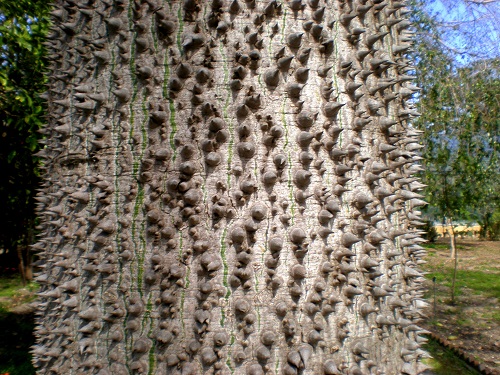
As for the topology, which stays the same for the rather puzzling sequel to Piero's explanation (the chase of prodigals pictured above), although Dante talks about Piero being a 'great thornbush' ('gran pruno') in Line 32, he has earlier described 'not green leaves, but dark in colour, not smooth branches but knotted and twisted no fruit was there, but thorns with poison', which gives me licence to think of those terrifying thorny giants from Brazil which are to be found in abundance in Palermo's amazing Botanical Gardens. Any excuse to wheel out three specimens I snapped on our first visit:


I find fascinating the link between these mortal trees and the metamorphoses of antiquity; Dr. Scafi cited Daphne and the three sisters of Phaeton, while Dante seems to invoke Virgil's tree-bound Polydorus whom Aeneas discovers transformed in Thrace. My question was whether Dante was doing something completely new in giving his trees the voices of former humans - again, not figures within the wood, but the wood itself? Yes, came the answer, as with so much else, he has transformed the original transformations.


I expected to find something sweeter in the Bach cantata for Septuagesima Sunday, BWV 144, which takes its title from Matthew 20. 14 - 'Nimm, was dein ist, unde gehe hin' ('take what is yours, and go your way'), from the Parable of the Workers in the Vineyard. But all is austerity here. The men plunge in without preface in the opening chorus, a short fugal elaboration with multiple repetitions of 'gehe hin'; the alto air is wonderfully severe, with its low, rich pulsing strings. Rilling and that superb contralto Helen Watts conjure the necessary grandeur here.


There's some softening with the two chorales, but even the soprano solo (Auger again) is in the minor, with spare support from oboe d'amore and bassoon.  A short but far from conventional cantata for the Leipzig choristers in 1724 to get through quickly before the winter cold inside the Thomaskirche froze them to the spot.

It's such a rich time, with this weekly Bach and Dante running alongside my Monday classes on another work of inexhaustible riches, Wagner's Das Rheingold. Our only genius of the stage Richard Jones returned this week to talk about his Ring, as well as his recent Royal Opera production of La bohème, and he was more relaxed and funnier than ever. Maybe more on that anon; but suffice it to say that once we've left Wagner's 'preliminary evening' behind, we'll be moving on to another strange masterpiece, Janáček's From the House of the Dead, so the revelations should keep on coming.

Wednesday, 31 January 2018

Estonian Festival Orchestra: on a high


For me, the players and their inspiring conductor Paavo Järvi always were (on a high), at each of the three festivals in the lovely southern Estonian seaside town of Pärnu I've been privileged to attend: reports on The Arts Desk of 2017 here, 2016 here and 2015 here. But now the rest of the world is getting a chance to catch up. So far it's been Europe, with triumphant visits to Turku, Stockholm, and Copenhagen following last summer's festival, and at the start of Estonian Centenary Year Brussels, Berlin, Vienna and Luxembourg.

Kaupo Kikkas, photographer without peer - and not just in the world of classical music - took the images I'm posting here from the most recent mini-tour, starting on home turf in Tallinn (first photo). As a respected colleague, and a musician himself (clarinettist, I seem to remember), he is well placed to catch the spirit of his friends, that heady mix of Estonians and leading players of great character from other famous orchestras.


The second shot reminds me of how the Lucerne Festival Orchestra players used to react at the emotional ends of their miraculous concerts with Claudio Abbado. I'd place the Paavo effect on a level very close to that - now the great Abbado is no longer with us, and the LFO, though still superb, sounds like many other top orchestras, the EFO experience is the next best thing. Below, the orchestra in Berlin's Philharmonie.


The Pärnu 'family', as part of which I'm honoured to have been included, does have its concerns: will too much touring change the special identity? What happens when (as happened on the recent tour) some key players can't leave their other posts to join their colleagues? Will Paavo and the orchestra be able to resist excess demands from the big agents now in on the act?

In the meantime, the worldwide launch has been ballasted by their first CD together. Quite a few of us put our oar in as to what we'd like to see/hear. For me personally, the best combination would have been a mix: their unforgettable performance of Arvo Pärt's short but significant orchestral-version Swansong, maybe the electrifying Mullova performance in Pärnu of Sibelius's Violin Concerto or the radical characterisation of Strauss's Duett-Concertino by principal clarinet Matt Hunt and Estonian sometime principal bassoon Martin Kuuskmann (though now I have the live performance on file, I realise it would need a patching or two).


Certainly the Shostakovich symphony we have here is the right choice; Nielsen would have done just as well. I personally wasn't so sure it should be all Shostakovich, and though the Stassevich version of the Eighth Quartet shows off the adaptability of the strings to fine effect, I don't much care for the timpani role; Barshai's 'Chamber Symphony' is still best.

No question, though, the Sixth Symphony is the most powerful of calling-cards; I'll never forget the shock of the bass-vivid opening in Pärnu. The booklet is graced by Kaupo's photos, but I also get a spread (thanks, Lucy) with some amateur shots of the beach and town, dramatic cumulo-nimbus clouds doing much of the work. Very honoured indeed to be in such company.


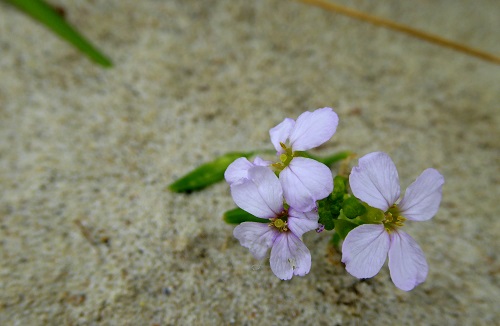
I realise that though I waxed blog-lyrical about discovering Riga for the first time last summer, I didn't revisit Pärnu in pictures, so here's another indulgent phototour of the town, because it makes me happy and longing for the summer months. Let's start on the beach, from microcosm - what is this geranium-like flower which flourishes in the sand? -


to the bay seen from the roof of the spa hotel where the senior Järvis were staying last year.


Back down to the beach: a sign for the impending visit of the Dalai Lama above the dunes


and another, closer beach shot, with, in the distance, Kristaps and Artis, my dear Riga pals who accompanied me north from my first time in Latvia,


who are seen below (A. left, K, right) at the cafe they discovered, Supelsaksad, on the road leading to the beach (Supeluse).


It really does serve the best cakes in town; at opening time, leisurely mid-morning, there's a queue for the fresh, on-premise baking. The owner is a true artist - on the inside wall of the conservatory-porch


she's painted tromp l'oeil miniatures.


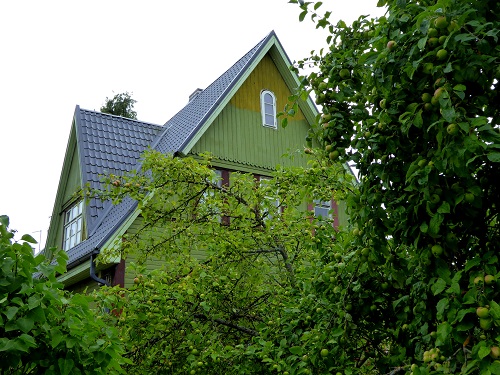
More wooden houses in the garden zone: this one I liked


and this is the side of the dacha which David Oistrakh used to rent when he came, along with Shostakovich, as far west as Soviet citizens could in those days. It doesn't seem too well cared for - I'd love to buy it and set up the ground floor as a museum of Oistrakhiana (well, I'd settle for a selection of photographs).


Miscellany: roses


and sunflower,


plus a resident making repairs on a house in the shadow of the big Estonia Spa Hotel,


I almost neglected the two most splendid buildings closest to the beach - the neoclassical mud baths which have been preserved as conversion to a top hotel, the Hedon (not exorbitant by our standards)


and since one of the wings is lopped off the pic, here it is at closer quarters.


Just a bit further along is the Kuursaal from the 1880s. I'm sorry for the changes since our first visit - the menu is nowhere near as good and the dance-hall interior has been stripped of its hunting trophies, though the statue of popular singer-accordionist Raimond Valgre outside still plays music as you walk past.


Besides, the Kuursaal remains a good place to have a drink on the terrace, though probably avoid the food now unless you want a burger.

I enlarged upon the Villa Annende, the other luxury hotel,


in a previous blog visit, but it's worth taking another glimpse into the central hall.


Rather dark to stay there, I'd say, but fascinating to visit, and concerts take place here every festival.


The canal basin fringing the dacha zone is one of many pleasant park areas in the green belt; the wooded zone nearer the sea is the perfect picnic place.

Now we head for the old town, through the only surviving 17th century gateway in the Baltic countries, built between 1675 and 1686 (probably by a Swede). Ladies were selling their knitted wear either side of the portal on this occasion.


Probably the town's most famous son, Olev Siinmaa left his mark in what has been called '"Pärnu Resort Functionalism", chiefly in the splendid hotel by the beach. But the little miracle is surely his own house at 1a Rüütli Street, just behind the above bastion, constructed in 1932-1933.


It fits neatly into a triangle which continues with traditional wooden houses.


In the centre of town, the main drag depicted here with banners for the festival (and some restoration going on to the right, I'm pleased to see - building preservation seems quite hit and miss),


the interloper is the Russian Orthodox Church of 1784-8, named after Catherine the Great.


Close by is the Town Hall.


And then, if you cross Pärnu's only busy road, you're in the complex of new buildings which includes a shopping mall - can't deny the citizens something of the latest trends - and the concert hall which, needless to say, is the building in which I've always spent the most time. More, though, probably, on the beach...

Watch this space, anyway, for your chance to catch the Estonian Festival Orchestra without having to travel to Pärnu (though I can't recommend that too strongly). And meanwhile, last night at Milton Court there was another chance to hear the excellent Estonian Philharmonic Chamber Choir offering more revelations of the choral repertoire - my Arts Desk review is here.