Showing posts with label Alpine flowers. Show all posts
Monday, 21 March 2016
Kew: alpines and magnolias
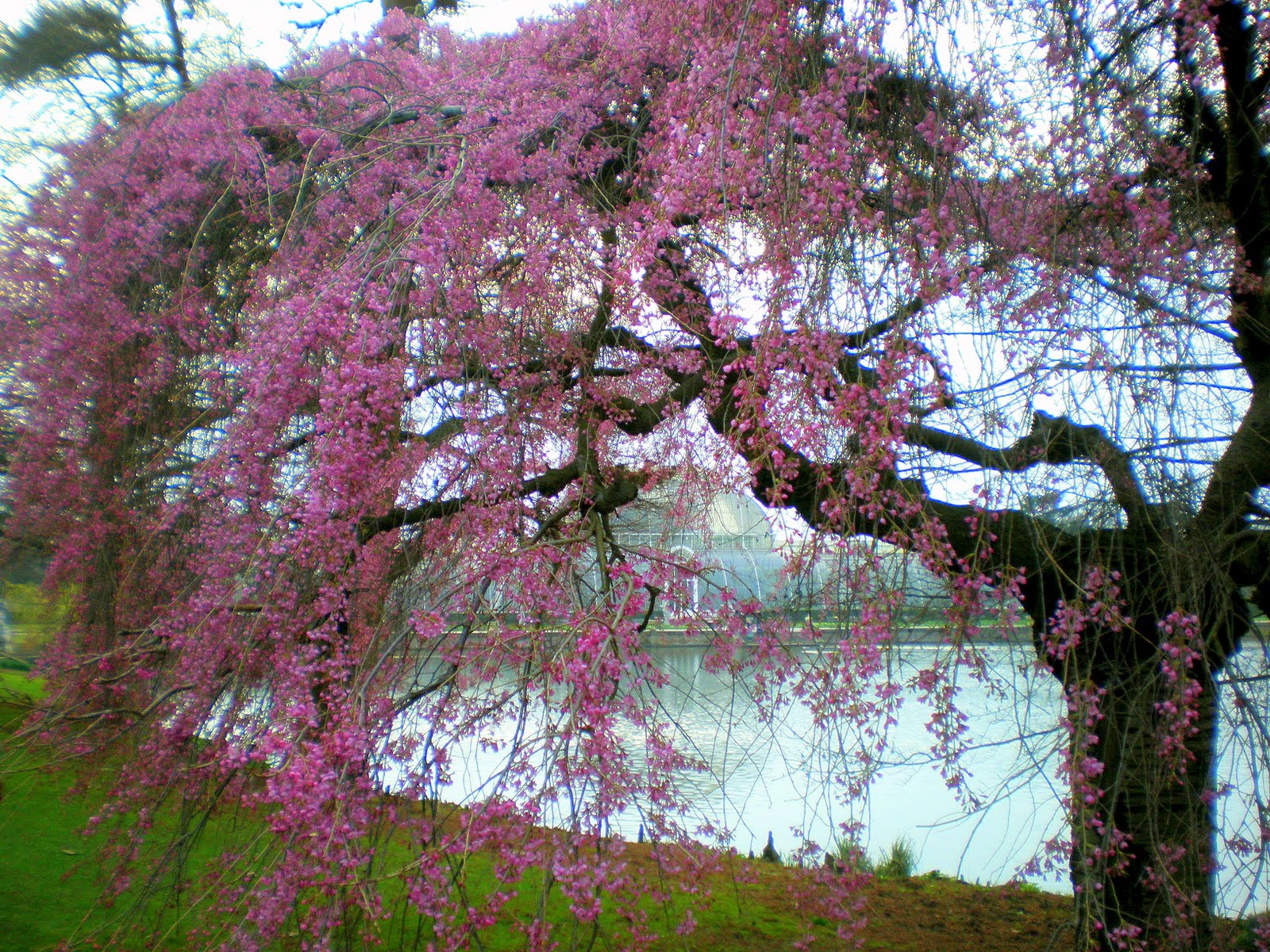
It's officially the first day of spring, though nature rarely obeys human deadlines; it's dull and cold. There were plenty of signs of life at Kew Gardens the Sunday before last, though, with everything looking sharp and shadows lengthening in the late afternoon sun. A solitary clump of pulsatillas - appropriately, in Easter week, also known as the pasque flower - was flourishing in the Alpine garden (top image) while some magnolias were doing better than others after some sharp frosts - and there was a little bit less of that moon-in-daylight which had been such a backdrop on a frozen January day.
Now, of course, the crocuses are nearly all over which had provided some of the much-needed colour back on a dark February afternoon
along with the fruit of the monkey-puzzle tree
as well as an early magnolia by the Japanese temple
and the usual gaudy but welcome orchid riot in the Princess of Wales Conservatory.
Now, as then, the impressively-designed Alpine House has to be a main port of call.
A few things flourish outside it, like a meadow of anemones
but the real wonders are within, with generous potted clumps of an exquisitely-marked miniature iris (annoyingly I didn't snap the tag)
an abundance of Scilla peruviana (not from Peru at all, in fact), this one silhouetted in the sun,
and small, perfectly-formed rarities like Saxifraga X megaseiflora 'Jan Neruda'.
Our time was limited, so I thought we should head for two magnolia zones. The first, near the Elizabeth Gate, still included a fine spectacle of Magnolia stellata from a distance
but either frost had blighted the rest, or they were still only in bud.
The spectacular magnolia arboretum, however, did not disappoint, with swathes of daffodils forming a background to the branches
and a few big blowsy flowers not frost-bitten
with giant buds promising more to come.
That moon as pictured up above added delight to the detail of this Magnolia kobus var. borealis, the biggest of the group
and then we hit the tree-lined avenue from the river at Syon back towards the main hothouse. The sun was lighting the way for the last strollers of the day.
On a final floral note, I should note with gladness that my mother passed her 85th birthday test with flying colours and here, for once, I've caught her looking natural and happy at home with the 50 tulips I brought back from Amsterdam the other week.
The Concertgebouw Orkestival narrative, meanwhile, hangs fire, but it's up next for extensive treatment.
Labels:
Alpine flowers,
anemones,
Kew Gardens,
magnolia,
miniature iris,
saxifraga
Thursday, 23 August 2012
Chamonix trails 2: Vallon de Bérard
A slightly busier route, this, than the Loriaz way I happily recalled yesterday, as it's part of the mouthfully-named 'Grande Randonnée de Pays du Tour du Pays de Mont-Blanc'. Yet the lovely Bérard valley is quite unlike anything we encountered in the vicinity, not least in its variety of Alpine flowers once you reach the first of several plateaus on the way from Le Buet up to the Refuge de la Pierre à Bérard at 1924m. Before those, there's a shady gorge to climb after the first easy meander.
Then you're out among discreet handfuls of picnickers and a fair few myrtille-gatherers, en plein air with Alpine flowers in abundance.
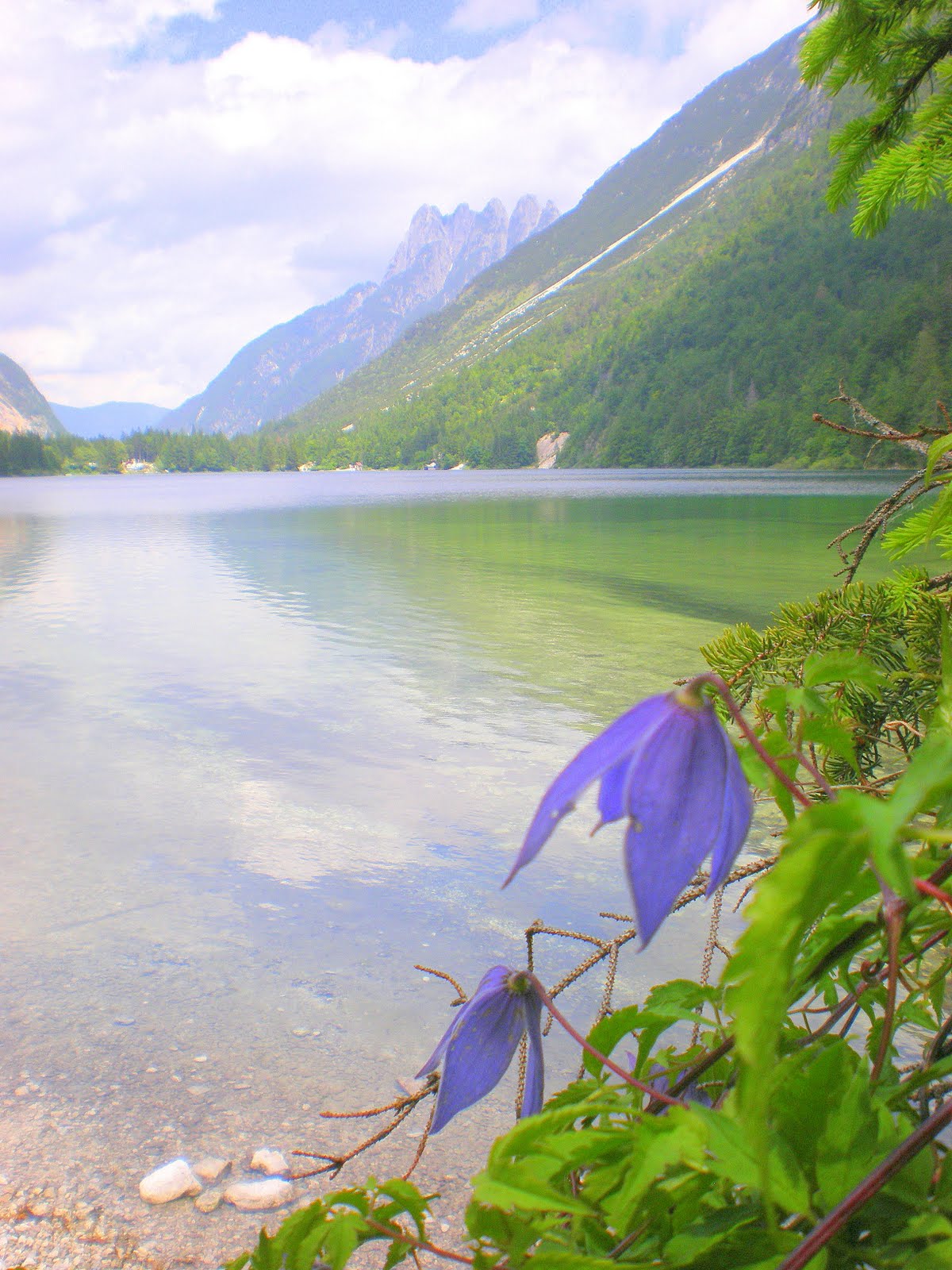
Very well, so this didn't quite match the botanical wealth of the Lago del Predil in Italy's Julian Alps, but that we saw at an earlier time of year; August may not be the best month for flower-spotting even this high up. But I was delighted to see, in lonely ones or twos, the famed Martagon lily
the brilliance of Potentilla aurea
the Alpine Rosa pendulina - my Predil photo is much better than the slightly out of focus one I took here - and several varieties of orchid.
I misattributed this exquisitely-wrought specimen; if anyone knows better, do let me know.
Wild strawberries are everywhere, of course, refreshing the way
and once you reach the slopes towards the Refuge, nestling attractively directly under the rock which gives it its name and protects it against avalanches, the purple-and-white foreground enhances a view down much of the valley.
We made the mistake of not bringing sandwiches on this excursion; the set lunch was wretched. But it didn't matter so much, sitting at a table outside and commanding the view. And it was no hardship to walk back, with a slight detour along a looser path by the waters.
For those intent on further refreshments - we weren't - there's also a pretty-looking chalet-cafe by the Cascade de Bérard. But by then, of course, the enchanted uplands have long been left behind.
Monday, 14 March 2011
In search of early Alpines

What would I like to be in another life (not that I can really imagine being anyone else, but it's fun to fantasise occasionally)? At the moment, in the wake of my Darwin phase - which partly turns out to be something of a father-fixation - either a geologist or a botanist. Reading about the great man has brought about a realisation that classification doesn't diminish a sense of wonder about the natural world. And though my knowledge about plants has focused on a mere handful of species, I'm getting to know what I like. So, after our many Apennine walking holidays, and above all last year's excursions to the Julian Alps and the Valais, Alpine plants are my current craze.
Dipping into Jim Jermyn's Alpine Plants of Europe - helpful because it covers the zones from the Pyrenees to the Carpathians and tells you what's unique to each - coincided with an article on the Pulsatilla family in the Kew magazine. That's pasque flowers to the average punter, and being fascinated by their hairy leaves and their early appearance - though the flowering is staggered according to subspecies from the eastertime suggested by the nickame through to early summer - off I went along the river on my bike to the Royal Botanic Gardens. In fact the bloomers in the rock garden were few but splendid, chiefly Pulsatilla halleri subsp. slavica, a Carpathian spring visitor pictured above in one small but noteworthy group and below in a bigger cluster.

I think I snapped the Pulsatilla vernalis - or alba or alpina or even Anemone baldensis, to which the pulsatillas have always been related, and how's an amateur to tell the difference? - on that extraordinarily rich floral trail around the Lago del Predil in the Julian alps (see last year's entries on the place and about the flowers). Here's the putative Pulsatilla

and a reminder of the location, just over the border from Slovenia - which we walked in to, very exciting - with the monstrous dolomitic Cinque Punte in the distance.

One of the most heavenly places on earth, and the south end of the lake has no road, only tracks, hence the abundance of plants.
Anyway, the rock garden at Kew is very bald at the moment, which makes its few flourishings all the more impressive. Here are a crop of Balkan tulips

and can this really be a type of Galanthus, as the label by it indicated? I know they come in more shapes and sizes than just the plain white snowdrop.

Inside the Alpine House, there were a few bright treasures, mostly in pots: the Chilean Tecophilaea cyanocrocus

and the Scoliopus bigelovii or Californian fetid adderstongue (no bad smell detected here), a damp-loving member of the lily family which nestles under redwoods.

Spring is still only half-formed at Kew now, though I get more excited at the early buds and shoots than I once did. The healthily lichened magnolias are all furry and incipient

and there are some spectacular blossoms, not least a rare type of prunus by the lake.

Naturally the daffodils host the way along the main north-south path

and the trees are mostly budding but not yet in leaf; again, I find much more poetry in the bare outlines than I used to. Perhaps I'll return to them for comparison in a month or so's time. Anyhow, I left well satisfied with a couple of Pulsatilla purchases, white and red, along with a Primula denticulata, though I'd actually been on the lookout for Sempervivens. Here's a final reminder of one such kissed by the bee high above Verbier

part of a precipitous clump, which I can't resist including with a look forward to the months when the snow clears and we can go a-wandering again in the heights.
Labels:
Alpine flowers,
Julian alps,
Kew Gardens,
magnolia,
Pulsatilla,
Verbier
Thursday, 8 July 2010
Flowers round a lake

When last I rambled on about the stupendous Lago del Predil in the Julian Alps, I took us out of Italy into Slovenia and then didn't have time to continue the flower-strewn circuit of the lake. Much water under the bridge since then, but I take the liberty of doing so now.
Well, after descending through pine and beech forests, we found one of the most perfect picnic spots ever to eat our salami and tomato panini, at the southern end looking north towards the Cinque Punte. The waters are truly, luminously green in patches. I'm not much interested in the old story of the Virgin and Child seeking sanctuary, only finding it in one house and submerging the rest of the sinful village, but there's certainly something magical about the place.

I couldn't resist trying a paddle but truly, it was so painfully cold that I was hopping after 30 seconds' immersion. In my unselfconscious haste to get out, here I was snapped in balletic mode:

And what millefiori! I don't think that even up on the Piano Grande in the Sibillini Mountains of the Marche in May I've ever seen a greater variety. What happy coexistence of different species: analogous to the co-operative Slovene, Italian and Austrian miners just up the river. I suppose it's foolish to ask anything of the imagined readers - answer usually comes there none - but if anyone can put a Latin name to any of the below, I'd be grateful. I'm aware the catalogue includes wild rose and several types of orchid.


That's it - though I've by no means included everything I saw and maybe I've featured some common species while missing several rarities less exciting to look at. What a marvellous natural counterpart to our walk around the man-made lake at Wotton. Of course it struck me that when Capability Brown and co wanted to make sure that no part of the walk would look the same as any other, in that too they were mirroring nature. A final shot, then, of shimmering waters from the west side.
Subscribe to:
Posts (Atom)